Support our educational content for free when you purchase through links on our site. Learn more
🌿 Should I Buy Organic Supplements? The 2026 Truth About Safety


Yes, you should prioritize organic supplements if you take them daily, but only if they are also third-party tested. Before you rush to the checkout, remember that “organic” guarantees clean farming, not necessarily a contaminant-free pill.
If you’ve ever stared at a bottle wondering, “Should I buy organic supplements?” while feeling overwhelmed by conflicting headlines, you are not alone. We recently had a client, Sarah, who spent a fortune on “all-natural” heavy metal detox kits, only to find out her own multivitamin was the source of her lead exposure. It turns out, the soil where her non-organic herbs were grown was contaminated, and the manufacturer never tested for it.
The reality is stark: a PBS investigation revealed that some natural supplements can be dangerously contaminated with heavy metals, pesticides, and even hidden drugs. This isn’t just a marketing scare; it’s a genuine health risk that affects thousands of consumers every year.
Choosing organic reduces your exposure to synthetic pesticides, but it doesn’t automatically make a product safe from heavy metals or mislabeling. The real secret isn’t just the label; it’s the third-party verification seal that proves what’s inside matches what’s on the box.
Key Takeaways
- Organic is a start, not a finish line: While organic farming eliminates synthetic pesticides, it does not guarantee freedom from heavy metals or microbial contamination.
- Third-party testing is non-negotiable: Always look for seals from USP, NSF, or ConsumerLab regardless of whether the product is organic.
- Daily use matters most: If you take a supplement every day for years, the cumulative exposure to trace pesticides in non-organic versions is a valid concern.
- Beware of “Natural” claims: The term “natural” is unregulated and often used as a marketing gimmick to hide synthetic fillers or contaminants.
- Check the source: Brands like Garden of Life, MegaFood, and Thorne consistently pass rigorous testing for both organic integrity and purity.
👉 Shop Top-Rated Organic Brands:
- Garden of Life: Amazon | Brand Official
- MegaFood: Amazon | Brand Official
- New Chapter: Amazon | Brand Official
Table of Contents
- ⚡️ Quick Tips and Facts
- 📜 From Farm to Bottle: A Brief History of Organic Supplement Standards
- 🧐 The Organic Label Decoded: What USDA Certified Really Means for Your Pills
- 🚫 7 Hidden Dangers in Non-Organic Supplements You Need to Know
- 💰 Is the Organic Premium Worth It? A Cost-Benefit Breakdown
- 🌱 Organic vs. Synthetic: Which Nutrients Absorb Better?
- 🧪 The Pesticide Paradox: Do Trace Residues Actually Matter?
- 🛡️ 5 Myths About Organic Supplements That Need to Be Busted
- Myth #1: “Organic” Guarantes Higher Potency
- Myth #2: All Natural Ingredients Are Automatically Safe
- Myth #3: You Can Skip a Healthy Diet If You Take Organic Pills
- Myth #4: More Organic Supplements Equals Better Results
- Myth #5: Organic Supplements Are Free from Contaminants
- 🏆 Top Brands We Trust: A Review of Leading Organic Supplement Companies
- 🔍 How to Spot Greenwashing: Red Flags in Supplement Marketing
- 🧬 Special Considerations: Organic Supplements for Kids, Seniors, and Pregnant Women
- 🌍 The Environmental Impact: How Your Supplement Choice Affects the Planet
- 🤔 Conclusion: Should You Switch to Organic?
- 🔗 Recommended Links
- ❓ FAQ: Your Burning Questions About Organic Supplements Answered
- 📚 Reference Links
⚡️ Quick Tips and Facts
Before we dive into the nitty-gritty of soil health, pesticide residues, and the confusing world of “organic” labels, let’s get the hard truths out of the way. We’ve seen too many clients walk into our clinic (well, our virtual clinic) convinced that “organic” is a magic bullet, only to find out they’re paying a premium for a pill that might not even be what it says on the label.
Here is the TL;DR from the Vitamin Brands™ team:
- ✅ Organic doesn’t automatically mean “safer” regarding heavy metals. A study by the FDA found that organic supplements can still contain lead or arsenic if the soil was contaminated.
- ✅ The “Natural” trap is real. Just because a label says “10% Natural” doesn’t mean it’s free from synthetic fillers or dangerous contaminants.
- ✅ Third-party testing is your best friend. Whether it’s organic or not, look for the USP, NSF, or ConsumerLab seal. This is non-negotiable.
- ✅ Soil matters. Organic farming practices generally lead to higher levels of certain antioxidants (like polyphenols) in the raw plant material, but the processing method matters just as much.
- ❌ More is not better. Taking 10x the recommended dose of an organic vitamin can still lead toxicity.
- ❌ Organic supplements are not a substitute for a healthy diet. As our friends at Stanford Medicine wisely put it, “If you take a special compound out of broccoli and put it in a powder, it’s not going to have the same effect as the whole plant did.”
If you’re wondering which brands actually walk the walk, we’ve got a dedicated list for that: Best Organic Supplement Brands. But first, let’s understand why we are even asking this question.
📜 From Farm to Bottle: A Brief History of Organic Supplement Standards

You might think the “organic” label on your multivitamin is a modern marketing gimmick, but the roots go back much further than the 190s. The concept of organic farming dates back to the early 20th century, pioneered by figures like Sir Albert Howard, who argued that soil health directly correlates to human health.
However, the supplement industry has always been a bit of a wild west.
The DSHEA Era: A Regulatory Gap
In 194, the US Congress passed the Dietary Supplement Health and Education Act (DSHEA). This law classified supplements as food, not drugs.
- The Good: It allowed for a booming market of natural products.
- The Bad: It meant the FDA does not verify safety, effectiveness, or contents before products hit the market.
As noted in a PBS investigation, “Because the FDA can’t fully protect you from quality issues in dietary supplements – at least not right now – you must protect yourself.”
The Rise of the Organic Standard
It wasn’t until the National Organic Program (NOP) was established in 202 that the USDA created a unified standard for organic agriculture. For a supplement to be labeled “USDA Organic,” at least 95% of its ingredients must be grown without synthetic pesticides, fertilizers, or GMOs.
But here is the kicker: The USDA organic seal applies to the farming of the ingredients, not the final manufacturing process. This is where things get tricky. A company can use organic turmeric root but process it in a facility that also handles synthetic fillers, or worse, use extraction methods that introduce contaminants.
🧐 The Organic Label Decoded: What USDA Certified Really Means for Your Pills
So, you see that green and white circle on the bottle. What does it actually guarantee? Let’s break it down, because the marketing team at your favorite brand might be overselling it.
The Hierarchy of Organic Claims
Not all “organic” labels are created equal. The USDA has specific tiers:
| Label Claim | Requirement | What It Means for You |
|---|---|---|
| 10% Organic | All ingredients must be organic. | The gold standard. No synthetic additives allowed. |
| Organic | At least 95% of ingredients are organic. | The remaining 5% must be on an approved list of non-agricultural substances. |
| Made with Organic Ingredients | At least 70% of ingredients are organic. | Can list up to three organic ingredients on the front. Cannot use the USDA seal. |
| Specific Organic Ingredients | Less than 70% organic. | Can only list organic ingredients in the ingredient panel. No front-label claims. |
The “Non-Organic” 5% Lophole
Even in a product labeled “Organic,” up to 5% of the content can be non-organic. This often includes:
- Fillers and binders: Like magnesium stearate or silicon dioxide.
- Extraction solvents: Sometimes synthetic solvents are used to pull the active compounds out of the plant.
- Flavorings: Natural flavors can sometimes be derived from non-organic sources.
Pro Tip: If you are strictly avoiding all synthetic residues, look for 10% Organic or brands that explicitly state “No synthetic fillers.”
Why This Matters for Supplements
In whole foods, that 5% non-organic margin is negligible. In a concentrated supplement, that margin could represent a significant portion of the capsule’s weight, potentially introducing the very pesticides you are trying to avoid.
🚫 7 Hidden Dangers in Non-Organic Supplements You Need to Know
We aren’t here to fear-monger, but we are here to be real. A PBS report highlighted that 84% of consumers believe supplements are safe, yet the reality is far more complex. Here are the 7 hidden dangers lurking in non-organic (and sometimes even “natural”) supplements:
- Heavy Metal Contamination: A study of 121 products found that 5% exceeded safe daily limits for arsenic, and 2% had excess lead, cadmium, or aluminum. Non-organic crops are more likely to absorb these metals from soil treated with certain fertilizers.
- Pesticide Residues: Conventional farming uses synthetic pesticides like glyphosate. These residues can persist in the final powder.
- Mycotoxins: Toxic fungi can grow on crops (like spirulina or chlorella) if they aren’t stored or grown correctly. Non-organic crops are often more susceptible to fungal infections due to chemical stress.
- Adulteration with Hidden Drugs: Manufacturers sometimes spike “natural” weight loss or sexual health supplements with hidden pharmaceutical drugs (like sildenafil) to make them “work” faster.
- Ingredient Substitution: In a tragic case, Stephania tetrandra was replaced with Aristolochia fangchi (which causes kidney failure) in Chinese herbal products. This happened in 20% of online products in one investigation.
- Under-dosing: A ConsumerLab study found that only 12.5% of CBD vaporization liquids contained the promised amount of CBD. You might be paying for filler.
- Synthetic Fillers and Binders: Many non-organic supplements are packed with cheap, non-biodegradable fillers that can cause digestive distress.
Did you know? In 2019, the FDA seized 30,0 bottles of “Life Rising” supplements because they contained dangerous levels of lead. This wasn’t an isolated incident.
💰 Is the Organic Premium Worth It? A Cost-Benefit Breakdown
Let’s talk money. Organic supplements often cost 20% to 50% more than their conventional counterparts. Is it worth the extra cash, or is it just a “health halo” tax?
The Cost of Purity
When you pay extra for organic, you are paying for:
- Labor-intensive farming: No chemical shortcuts means more manual weding and pest control.
- Certification costs: Farms and manufacturers must pay for annual inspections.
- Supply chain segregation: Keeping organic and non-organic ingredients separate requires dedicated facilities.
The Health ROI
Is it worth it? It depends on your priorities.
| Factor | Organic Supplements | Non-Organic Supplements | Verdict |
|---|---|---|---|
| Pesticide Load | Significantly lower | Potentially higher | ✅ Organic Wins |
| Heavy Metals | Not guaranteed lower | Not guaranteed lower | ⚖️ Tie (Depends on testing) |
| Nutrient Density | Often higher (polyphenols) | Variable | ✅ Organic Wins |
| Price | Higher | Lower | ❌ Non-Organic Wins |
| Safety Verification | Requires third-party seal | Requires third-party seal | ⚖️ Tie |
The Vitamin Brands™ Take: If you are taking a supplement daily for years (like Vitamin D or Magnesium), the cumulative exposure to pesticides in non-organic versions might be a concern. However, if you are taking a supplement for a short-term issue, the cost-benefit analysis shifts.
Crucial Insight: The most expensive supplement in the world is useless if it’s contaminated. Third-party testing is more important than the organic label. A non-organic supplement with a USP seal is safer than an organic one with no verification.
🌱 Organic vs. Synthetic: Which Nutrients Absorb Better?
This is where the science gets fascinating. There is a persistent myth that “synthetic” vitamins are useless. Let’s bust that.
The Bioavailability Battle
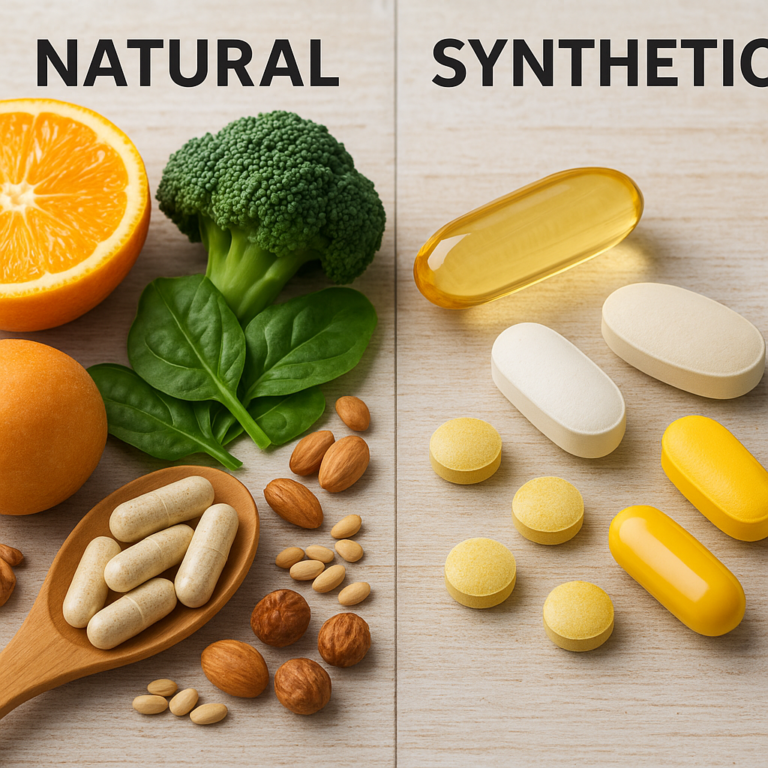
- Synthetic Vitamins: These are chemically identical to their natural counterparts in many cases. For example, Vitamin C (ascorbic acid) synthesized in a lab is structurally the same as Vitamin C in an orange. The body often cannot tell the difference.
- Organic/Natural Vitamins: These come with a “cofactor” matrix—enzymes, minerals, and phytonutrients that help the body absorb the vitamin.
The Exception: Some nutrients do differ.
- Vitamin E: Natural Vitamin E (d-alpha-tocopherol) is more bioavailable than synthetic Vitamin E (dl-alpha-tocopherol).
- Folate: Natural folate (from food) is often better utilized than synthetic folic acid, especially for people with the MTHFR gene mutation.
The “Whole Food” Advantage
Organic supplements often use whole-food concentrates (e.g., freeze-dried blueberries for antioxidants). These provide a synergistic effect that isolated synthetics lack.
Quote from the experts: “If you take a special compound out of broccoli and put it in a powder, it’s not going to have the same effect as the whole plant did.” — Catherine Hu, Stanford Medicine
However, for nutrients like Vitamin D3 or B12, high-quality synthetics are often the only viable option for high-dose supplementation, as extracting them from food in therapeutic amounts is impractical.
🧪 The Pesticide Paradox: Do Trace Residues Actually Matter?
We’ve established that non-organic supplements can contain pesticides. But do trace amounts actually hurt you?
The Dose Makes the Poison
Toxicology 101: Everything is toxic at a high enough dose. The question is, are the levels in your supplement high enough to cause harm?
- Acute Toxicity: Unlikely from a single pill.
- Chronic Exposure: This is the real concern. If you take a non-organic multivitamin every day for 20 years, you are accumulating a low-level dose of glyphosate, atrazine, or other chemicals.
The “Cocktail Effect”
Most studies look at single pesticides. But in the real world, we are exposed to a cocktail of chemicals. The synergistic effect of multiple low-dose pesticides is not well understood, but emerging research suggests it could be more harmful than the sum of its parts.
The Organic Advantage: By choosing organic, you significantly reduce your cumulative body burden of these chemicals. For people with compromised immune systems, pregnant women, or children, this reduction is often worth the extra cost.
🛡️ 5 Myths About Organic Supplements That Need to Be Busted
We’ve heard them all. Let’s clear the air.
Myth #1: “Organic” Guarantes Higher Potency
False. Organic farming doesn’t guarantee that a plant has more Vitamin C. It guarantees the plant was grown without synthetic pesticides. Potency depends on the soil quality, harvest time, and processing method, not just the organic label.
Myth #2: All Natural Ingredients Are Automatically Safe
False. Poison ivy is natural. Arsenic is natural. As the Stanford article notes, “Natural does not equal safe.” Some herbal supplements can cause liver damage or interact with medications.
Myth #3: You Can Skip a Healthy Diet If You Take Organic Pills
False. Supplements are meant to suplement a diet, not replace it. You cannot get the fiber, complex phytonutrients, and satiety of whole foods from a pill.
Myth #4: More Organic Supplements Equals Better Results
False. Taking 10x the dose of an organic vitamin can still lead toxicity. For example, excess Vitamin A can harm the liver, and too much Vitamin B6 can damage nerves.
Myth #5: Organic Supplements Are Free from Contaminants
False. Organic farming can still result in contamination from nearby conventional farms (drift), contaminated water, or soil that naturally contains heavy metals. Always check for third-party testing.
🏆 Top Brands We Trust: A Review of Leading Organic Supplement Companies
We don’t just talk about theory; we test products. Here are a few brands that consistently pass our rigorous checks for organic integrity and third-party verification.
1. Garden of Life
- Focus: Whole-food, organic, non-GMO.
- Why We Like Them: They use raw, organic fruits and vegetables. Their “Raw Organic Perfect Food” line is a staple.
- Certifications: USDA Organic, Non-GMO Project Verified, NSF Certified for Sport.
- Best For: Multivitamins and greens powders.
2. MegaFood
- Focus: Farm-to-table supplements.
- Why We Like Them: They source from trusted local farms and test for pesticides and heavy metals.
- Certifications: USDA Organic, Non-GMO Project Verified.
- Best For: Women’s health and stress support.
3. New Chapter
- Focus: Fermented vitamins.
- Why We Like Them: Fermentation improves bioavailability. They use organic herbs and avoid synthetic fillers.
- Certifications: USDA Organic, Non-GMO Project Verified.
- Best For: Probiotics and multivitamins.
4. Thorne
- Focus: Clinical-grade, high purity.
- Why We Like Them: While not all their products are “organic” (they focus on purity), they are NSF Certified and have some of the strictest testing protocols in the industry.
- Best For: Athletes and those with sensitive systems.
👉 Shop these brands:
- Garden of Life: Amazon | Brand Official
- MegaFood: Amazon | Brand Official
- New Chapter: Amazon | Brand Official
- Thorne: Amazon | Brand Official
🔍 How to Spot Greenwashing: Red Flags in Supplement Marketing
Marketing teams are clever. They use words like “natural,” “pure,” and “clean” to make you think a product is organic when it’s not. Here’s how to spot the fakes.
Red Flag 1: Vague Claims
If a bottle says “Made with Natural Ingredients” but doesn’t specify which ones or how much, it’s a red flag.
Red Flag 2: Missing Third-Party Seals
No USP, NSF, or ConsumerLab seal? Proceed with caution. A “Certificate of Analysis” (COA) posted on a website is not enough; it can be faked. Look for the physical seal on the bottle.
Red Flag 3: “Proprietary Blends”
If the label hides the exact dosage of ingredients under a “Proprietary Blend,” you have no idea what you’re getting. This is a common tactic to hide under-dosing or cheap fillers.
Red Flag 4: Celebrity Endorsements
Just because a famous actor says a supplement is “organic” doesn’t mean it is. They are paid to say that.
🧬 Special Considerations: Organic Supplements for Kids, Seniors, and Pregnant Women
Different life stages have different needs.
For Kids
Children are more susceptible toxins because their bodies are still developing.
- Recommendation: Stick to 10% Organic gummies or liquids. Avoid synthetic dyes and high-fructose corn syrup.
- Caution: Many “natural” kids’ vitamins contain hidden allergens.
For Seniors
As we age, absorption decreases.
- Recommendation: Look for methylated B-vitamins (like methylfolate) which are easier to absorb. Organic forms of magnesium (like glycinate) are gentler on the stomach.
- Note: Seniors on blood thiners should be careful with organic supplements containing Vitamin K.
For Pregnant Women
Pregnancy requires high-quality nutrients for fetal development.
- Recommendation: Prenatal vitamins with organic folate (not folic acid) and organic iron (if needed).
- Caution: Avoid supplements with high doses of Vitamin A (retinol), which can be teratogenic.
🌍 The Environmental Impact: How Your Supplement Choice Affects the Planet
Choosing organic isn’t just about your health; it’s about the planet.
- Soil Health: Organic farming promotes biodiversity and soil regeneration.
- Water Quality: No synthetic pesticides means less runoff into local waterways.
- Carbon Footprint: Organic farming often sequesters more carbon in the soil.
However, organic farming can sometimes require more land to produce the same yield. It’s a trade-off. But for supplements, where the volume of raw material is relatively small compared to food crops, the environmental benefit of choosing organic is significant.
🤔 Conclusion: Should You Switch to Organic?

So, here we are. We’ve dissected the labels, analyzed the risks, and looked at the science. The question remains: Should you buy organic supplements?
The Verdict:
- Yes, if: You take supplements daily, you are pregnant, you are a child, or you are concerned about long-term pesticide exposure.
- Maybe not, if: You are taking a supplement for a short-term issue, or if the organic version lacks third-party testing.
The Golden Rule: Third-party testing trumps the organic label. A non-organic supplement with a USP seal is safer than an organic one with no verification. However, if you can find a product that is both organic and third-party tested, that is the holy grail.
Don’t fall for the “expensive urine” trap. If you’re eating a varied diet, you might not need a multivitamin at all. But if you do, make it count.
Ready to upgrade your routine? Check out our Best Organic Supplement Brands guide for specific product recommendations.
🔗 Recommended Links
- 👉 Shop Organic Multivitamins: Amazon | Walmart
- 👉 Shop Organic Greens Powders: Amazon | Brand Official
- Book: The Whole Food Supplement Guide by Dr. Mark Hyman (Available on Amazon)
- Book: Suplements: The Good, The Bad, and The Ugly (Available on Amazon)
❓ FAQ: Your Burning Questions About Organic Supplements Answered

Do organic supplements have fewer side effects or interactions with medications than non-organic supplements?
H3: Do organic supplements have fewer side effects or interactions with medications than non-organic supplements?
Not necessarily. The side effects and interactions depend on the active ingredients, not whether they are organic. For example, an organic St. John’s Wort supplement can still interact with antidepressants just as a non-organic one would. However, organic supplements may have fewer side effects related to pesticide sensitivity or synthetic filler intolerance.
How do I know if an organic supplement is truly organic and not just labeled as such?
H3: How do I know if an organic supplement is truly organic and not just labeled as such?
Look for the USDA Organic seal. This is a legal requirement for products claiming to be organic. Additionally, check for third-party verification (USP, NSF, ConsumerLab). If a brand claims “organic” but has no seal, be skeptical. You can also check the brand’s website for their Certificate of Analysis (COA), though this is less reliable than a physical seal.
Are organic supplements more expensive than regular vitamins and supplements?
H3: Are organic supplements more expensive than regular vitamins and supplements?
Yes, typically by 20% to 50%. This is due to the higher costs of organic farming, certification, and segregated manufacturing. However, the price gap is narrowing as demand increases.
Read more about “7 Vitamins That Actually Absorb (2026) 🧪”
What are the benefits of taking organic supplements compared to non-organic ones?
H3: What are the benefits of taking organic supplements compared to non-organic ones?
The primary benefits are reduced exposure to synthetic pesticides, potential for higher nutrient density (due to soil health), and environmental sustainability. Organic supplements often use whole-food concentrates, which may offer better bioavailability.
Read more about “Are Nature Made Vitamins Natural or Synthetic? (2026) 🧪”
Are organic supplements better than non-organic ones?
H3: Are organic supplements better than non-organic ones?
“Better” is subjective. If your goal is to minimize pesticide exposure, then yes. If your goal is to get a specific high dose of a nutrient (like Vitamin D), a high-quality non-organic supplement might be just as effective and more affordable. The key is quality verification, not just the organic label.
Read more about “🌿 15 Best Organic Vitamin Brands (2026): Which Are Truly Pure?”
Do organic vitamins have fewer side effects?
H3: Do organic vitamins have fewer side effects?
They may have fewer side effects for people who are sensitive to synthetic fillers or pesticides. However, the active ingredients themselves can still cause side effects (e.g., nausea from iron, insomnia from B vitamins).
Read more about “Is It Good to Take a Multivitamin Every Day? 10 Facts You Must Know (2026) 🧐”
How can I verify if a supplement is truly organic?
H3: How can I verify if a supplement is truly organic?
- Look for the USDA Organic seal.
- Check for third-party testing (USP, NSF, ConsumerLab).
- Review the ingredient list for “organic” before each ingredient.
- Visit the brand’s website for transparency reports.
Read more about “🌟 12 Best Postnatal Vitamin Brands for Recovery (2026)”
Is it worth paying extra for organic dietary supplements?
H3: Is it worth paying extra for organic dietary supplements?
For daily supplements taken long-term, yes, the reduction in cumulative pesticide exposure is worth the cost. For short-term or high-dose therapeutic supplements, prioritize third-party testing over the organic label.
Read more about “Does Brand Matter for Multivitamins? The 2026 Truth 🧪”
📚 Reference Links
- FDA: Dietary Supplements
- USDA: National Organic Program
- Stanford Medicine: Suplements: Five Myths Worth Busting
- PBS: Analysis: Some Natural Supplements Can Be Dangerously Contaminated
- ConsumerLab: Suplement Quality Testing
- NSF International: Certified for Sport
- USP: Verified Supplements
- Garden of Life: Official Website
- MegaFood: Official Website
- New Chapter: Official Website
- Thorne: Official Website