Support our educational content for free when you purchase through links on our site. Learn more
Where to Find Reliable Supplement Reviews 🧪


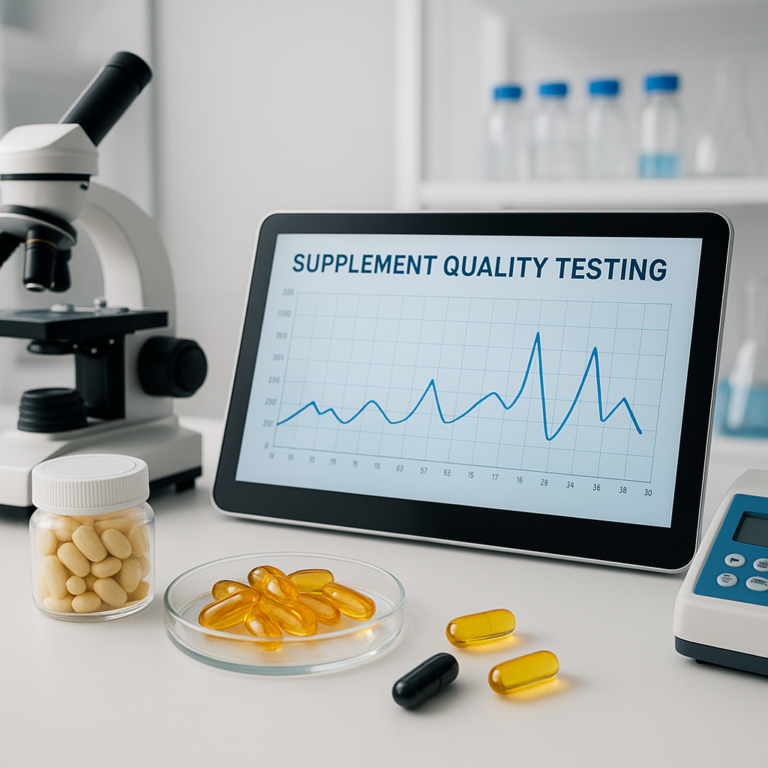
For reliable reviews of supplement brands, start with independent testing organizations such as ConsumerLab, USP, and NSF, then check ingredient evidence and safety with the NIH Office of Dietary Supplements or a qualified clinician. No single rating tells the whole story: product testing can assess quality, but it doesn’t prove a supplement will work for your health goal.
Here’s the catch: a gleaming five-star customer review may tell you a capsule is easy to swallow, but not whether it contains the amount listed on the label. That’s why we look for the test method, the exact product tested, and any conflicts of interest before trusting a recommendation.
Key Takeaways
- Check independent, product-specific testing through sources such as ConsumerLab, USP, or NSF.
- Use NIH ODS and NCCIH to review evidence and safety for ingredients—not to rank brands.
- Treat certification as a quality signal, not proof of health benefits.
- Read review methods and disclosures: check what was tested, when, and whether affiliate links or sponsorships are disclosed.
- Verify current product details and safety alerts with the FDA; formulas and warnings can change.
- Ask a pharmacist, doctor, or dietitian about interactions and whether a supplement suits your needs.
Table of Contents
- ⚡ Quick Tips and Facts
- Why Reliable Supplement Brand Reviews Matter
- How Supplement Review Sites Evaluate Brands
- Evidence, Ingredients, and Dosage
- Third-Party Testing and Quality Certifications
- Transparency, Conflicts of Interest, and Review Methods
- 12 Trusted Places to Find Supplement Brand Reviews
- 1. ConsumerLab.com
- 2. NSF Certified for Sport
- 3. USP Verified Products
- 4. Labdoor
- 5. U.S. Pharmacopeia Dietary Supplement Verification
- 6. NIH Office of Dietary Supplements
- 7. National Center for Complementary and Integrative Health
- 8. FDA Dietary Supplement Updates
- 9. Independent Testing Laboratories
- 10. Medical and Academic Health Systems
- 11. Review Publications With Clear Testing Standards
- 12. Pharmacists, Dietitians, and Other Qualified Clinicians
- How to Read Supplement Reviews Without Getting Misled
- Spoting Sponsored Content and Affiliate Links
- Separating Customer Ratings From Scientific Evidence
- Checking Review Dates, Product Versions, and Recalls
- Supplement Testing Seals: What They Do—and Don’t—Prove
- Brand Comparison Checklist: Ingredients, Safety, and Value
- Where to Check Supplement Recalls, Warnings, and Adverse Events
- How to Find Reviews for Specific Supplement Categories
- Vitamins and Minerals
- Herbal Supplements and Botanicals
- Protein Powders and Sports Nutrition
- Probiotics, Fish Oil, and Specialty Supplements
- Questions to Ask Before Trusting a Supplement Review
- Conclusion
- Recommended Links
- FAQ
- Reference Links
⚡ Quick Tips and Facts
Looking for reliable reviews of supplement brands? Start with independent testing and transparent methods, then check whether a brand’s claims make sense for the ingredient and your health needs. Our broader guide to top supplement brands in the USA can help you build a shortlist—but a brand’s reputation is only the beginning, not a quality certificate.
| Quick check | What to do |
|---|---|
| Product quality | Look for a current, product-specific seal or listing from USP or NSF. |
| Evidence | Check ingredient-specific guidance from the NIH Office of Dietary Supplements (ODS) and NCCIH. |
| Independent reviews | Compare review methods at ConsumerLab and Labdoor, noting what each actually tests. |
| Safety alerts | Search the FDA’s dietary supplement notifications and recall notices. |
| Marketing claims | Be skeptical of “miracle,” “detox,” “clinically proven” without details, and testimonials presented as proof. |
| Your personal safety | Ask a doctor or pharmacist about interactions, especially if you take medication, are pregnant, or have a medical condition. |
Key distinction: a product can pass a quality check without being proven effective for your goal. Conversely, research on an ingredient does not automatically validate every brand or formula containing it. 🧪
Why Reliable Supplement Brand Reviews Matter
Dietary supplements are not reviewed like prescription medicines before they reach store shelves. The FDA explains that it does not approve dietary supplements for safety and effectiveness before they are marketed. That makes careful label-checking and independent quality information especially useful.
Harvard Health puts the gap plainly: supplement products may not contain exactly what their labels say, and voluntary verification can help reduce uncertainty. Its article, “Supplements: A scorecard”, also makes a crucial distinction: verification can assess product quality, but it does not prove the supplement works for a particular health outcome.
A trustworthy review helps you examine several separate questions:
- Identity: Is the listed ingredient actually present?
- Potency: Does the amount match the label?
- Purity: Are contaminants or undeclared substances a concern?
- Evidence: Is there credible research for the ingredient, dose, and intended use?
- Fit: Is it appropriate for your diet, medications, age, and health status?
These questions matter whether you’re comparing essential vitamins, health supplements, or multivitamin supplements. A five-star customer review can tell you that a capsule was easy to swallow. It cannot tell you whether the batch was independently tested or whether the ingredient is clinically useful.
What a review can—and cannot—tell you
| Review information | Useful for | Does not establish by itself |
|---|---|---|
| Independent laboratory test | Whether selected samples met specified quality checks | Clinical effectiveness or future batch quality |
| Certification or verification | Whether a product met the certifier’s stated standards | That the product treats, prevents, or cures disease |
| Clinical research summary | What evidence exists for an ingredient or use | That every brand uses the same form, dose, or quality |
| Customer ratings | Taste, packaging, shipping, and personal experience | Safety, purity, or reliable health benefits |
| Brand transparency | How clearly a company shares sourcing and testing information | That all claims are independently confirmed |
Our practical rule: use a review as a starting point, verify its claims at the source, and take medication or medical-condition questions to a qualified clinician.
How Supplement Review Sites Evaluate Brands
Review organizations do not all use the same scorecard. One may buy products anonymously and test their contents; another may summarize clinical research, inspect labels, or assess manufacturing standards. That is why the best question is not simply “Which site is number one?” It’s “What did this organization test, and what does its result mean?”
Evidence, Ingredients, and Dosage
Start by separating evidence about an ingredient from evidence about a finished product. For example, studies of a nutrient may use a specific chemical form, population, and dose. A supplement label that lists the same nutrient does not automatically match those conditions.
The NIH ODS fact sheets are useful for checking what is known about vitamins, minerals, and other ingredients. NCCIH offers evidence and safety information for complementary health approaches, including many botanicals.
When reading a review, look for:
- The exact ingredient form, not just the broad category.
- The amount per serving and the suggested daily serving.
- Whether the evidence applies to the same population and intended use.
- Known side effects, upper limits, and medication interactions.
- A distinction between preliminary research and well-designed human trials.
The National Academies’ Dietary Reference Intakes provide reference values for many nutrients. Those values are not a personal prescription, but they can help flag labels that warrant a closer look.
Third-Party Testing and Quality Certifications
Independent testing can reduce uncertainty about a supplement’s identity, strength, and contaminants. Certifications have boundaries, though: a quality seal is not an efficacy stamp.
- USP Verified: USP’s program evaluates products against specific quality criteria, including whether ingredients and amounts match the label, along with manufacturing and contaminant checks under its program.
- NSF: NSF’s supplement certification information describes testing and certification programs, including products intended for athletes.
- NSF Certified for Sport: This program is particularly relevant to athletes seeking screening for substances prohibited in sport. Check the official product search rather than relying on a logo photo alone.
A certification usually applies to a particular product or facility under a defined program, not every item a company sells. Confirm the product name and certification status in the organization’s own directory.
Transparency, Conflicts of Interest, and Review Methods
A good review explains how products were selected, whether reviewers bought them independently, what tests were performed, and how the organization handles sponsorships or affiliate links.
For example, ConsumerLab describes access to reviews and tests across more than 1,400 health products. Its homepage says users can “find the best products with instant access to our latest tests & reviews,” and promotes safety information and expert answers. That breadth can be helpful, but before relying on a specific result, read the product review’s test scope, sampling details, and date. Some full reports may require membership.
Labdoor publishes supplement ratings and testing information. As with any review site, check what its score measures: an ingredient-content test, label accuracy, contaminants, and evidence review are different things, even if they appear together in one rating.
A rating is a summary, not a substitute for the methodology. If the site does not clearly explain how it reached its score, treat the score cautiously.
12 Trusted Places to Find Supplement Brand Reviews
No single source answers every question. Use several sources together: a testing organization for product quality, a government or academic source for health evidence, and a clinician for your personal situation.
1. ConsumerLab.com
ConsumerLab publishes supplement and health-product reviews, testing, clinical information, warnings, and expert answers. It says its review library covers more than 1,400 products, including categories such as vitamin D, magnesium, B vitamins, and fiber.
Why it can help: It focuses on product comparisons and testing, and its recommendations can change as reviews are updated. Its homepage describes the service as a way to “save money by finding high-quality products at lower cost.”
What to check: The exact product tested, test date, review criteria, and whether the report is available without a paid membership. Membership counts or email-list size show audience reach, not proof that a particular product is effective.
2. NSF Certified for Sport
For athletes, the NSF Certified for Sport directory can help identify products screened under that program. It is designed to address concerns about label contents and substances prohibited in sport.
Best use: Search the official directory by product name. Don’t assume a company-wide certification covers every flavor, size, or product line.
3. USP Verified Products
The USP Verified Mark is a voluntary quality-verification program. Use USP’s own information to understand what the mark covers, then confirm the specific product rather than relying on a retailer listing.
Best use: A quality signal when you want help assessing whether a product meets defined identity, strength, and manufacturing criteria. It does not establish clinical benefit.
4. Labdoor
Labdoor provides supplement ratings and product information. Read its methodology and the individual product page to see how testing, label accuracy, and other criteria contribute to the score.
Best use: As one comparison source among several—not as a universal ranking of which supplement is best for everyone.
5. U.S. Pharmacopeia Dietary Supplement Verification
The U.S. Pharmacopeia (USP) develops standards and operates verification services. Its public information helps explain the meaning and limits of the USP Verified mark.
Best use: Confirming that a product is included in the relevant program. A brand’s statement that it “uses USP standards” is not the same as a product carrying USP verification.
6. NIH Office of Dietary Supplements
The NIH ODS fact sheets summarize evidence, recommended intakes, safety considerations, and interactions for many nutrients and supplements.
Best use: Understanding an ingredient before judging the brand. ODS generally provides evidence information rather than a consumer-style ranking of brands.
7. National Center for Complementary and Integrative Health
NCCIH reviews evidence and safety topics related to complementary health products and practices, including herbs and botanicals.
Best use: Checking what research says about an ingredient, possible risks, and where evidence remains uncertain. It does not certify supplement products.
8. FDA Dietary Supplement Updates
The FDA’s dietary supplement hub links to consumer information, safety notifications, and regulatory updates. Its health fraud product database is useful for checking products flagged for potentially dangerous claims or hidden ingredients.
Best use: Safety alerts and regulatory information. The FDA does not pre-approve dietary supplements for effectiveness before marketing, so the absence of a warning is not a product endorsement.
9. Independent Testing Laboratories
Laboratory reports can provide direct information about selected samples, but the report should identify the methods, analytes, product lot, and testing date. Ask the brand for a lot-specific certificate of analysis (COA) if it claims one is available.
A COA is more useful when it comes from a credible lab and reports actual results—not simply “pass.” A test of one lot also does not prove every lot is identical.
10. Medical and Academic Health Systems
Academic and medical sources can help explain evidence and safety. Examples include Harvard Health, Mayo Clinic, and Cleveland Clinic.
These sources generally are not product-testing labs. Use them to understand health claims and clinical context, not to infer that a brand has passed independent quality testing.
11. Review Publications With Clear Testing Standards
Some editorial publications compare products using a mix of ingredient review, expert assessment, and hands-on testing. Before acting on a recommendation, check whether the outlet:
- Names its reviewers and qualifications.
- Explains product selection and scoring.
- Discloses affiliate relationships.
- Links claims to primary research or independent tests.
- Separates testing results from sponsored content.
An article that says “we tested” should make clear what was tested and how.
12. Pharmacists, Dietitians, and Other Qualified Clinicians
A clinician can help connect product information to your medications, medical history, and nutrition needs. A registered dietitian can also help assess whether a supplement is needed or whether food sources may be a better fit.
Bring the actual bottle or a clear photo of the Supplement Facts panel. Include your medication list and other supplements. That small step can reveal duplicate ingredients and interaction risks that a generic online review cannot assess.
How to Read Supplement Reviews Without Getting Misled
A polished ranking can still leave out the one detail you need: how the score was earned. Use this step-by-step method before buying or recommending a product.
Spoting Sponsored Content and Affiliate Links
Commercial relationships do not automatically make an article inaccurate, but readers should be able to see them. The Federal Trade Commission’s endorsement guidance explains disclosure expectations for endorsements and testimonials.
Check whether the page:
- Clearly labels advertising, sponsorship, or affiliate links.
- Explains whether the reviewer received a product or payment.
- Includes negative findings as well as advantages.
- Makes product claims that are supported beyond a retailer description.
- Encourages medical advice when appropriate.
A link to a shopping page is not proof the article is biased; an undisclosed incentive or unsupported health claim deserves closer scrutiny.
Separating Customer Ratings From Scientific Evidence
Customer reviews are useful for everyday details: taste, capsule size, packaging, and whether a product caused an unpleasant experience. They are weaker evidence for whether a supplement caused a health improvement.
Why? People differ, effects may be influenced by other changes, and testimonials lack the controls used in clinical research. Harvard Health cautions that personal success stories and celebrity endorsements cannot establish a supplement’s safety or effectiveness in its scorecard article.
Use reviews like this:
- Helpful: “The softgel is large and hard for me to swallow.”
- Worth investigating: “The label changed; the serving size is now two capsules.”
- Not proof: “This cured my condition in three days.”
Checking Review Dates, Product Versions, and Recalls
A review can become stale when a company changes ingredients, serving sizes, manufacturing sites, or packaging. Before relying on an old article:
- Compare the current Supplement Facts panel with the product reviewed.
- Confirm the flavor, formulation, and serving size match.
- Check whether the review states when samples were tested.
- Search FDA updates and the brand’s own notices for recalls or formulation changes.
- Confirm a certification in the certifier’s current directory.
This matters especially for products sold through marketplaces, where listings may combine different versions or sellers. A familiar product title doesn’t guarantee the bottle in your cart matches the one in an older review.
Supplement Testing Seals: What They Do—and Don’t—Prove
Think of a testing seal as a specific checkpoint, not a universal gold star. It may indicate that a product met a program’s standards for label accuracy, contaminant screening, or manufacturing practices. It generally does not show that a supplement treats a condition or benefits every person.
| Signal | What it may indicate | What it does not automatically prove |
|---|---|---|
| USP Verified Mark | Product meets criteria in USP’s verification program | That the product is effective for your goal |
| NSF certification | Product meets relevant NSF program requirements | That every product from the brand is certified |
| Certified for Sport listing | Product is listed under NSF’s sport-focused program | That it improves athletic performance |
| Brand-provided COA | A test report exists for a product or batch | That the lab is independent or the test covers all risks |
| “Third-party tested” claim | Company says an outside party tested something | Which batch, methods, analytes, or standards were used |
Harvard Health calls voluntary verification from organizations such as USP and NSF a useful way to reduce uncertainty about label contents, while emphasizing that evidence for effectiveness comes from objective medical research. See Harvard’s supplement scorecard and the USP program details.
Quick test: If a brand displays a seal, search the certifier’s official database. If the product is absent, ask the company what exactly is certified.
Brand Comparison Checklist: Ingredients, Safety, and Value
Before comparing supplement brands, put two products side by side and inspect the details—not just the front label. You can use this checklist for multivitamins, women’s vitamins, and men’s vitamins.
| What to compare | Questions to ask |
|---|---|
| Ingredient identity | Are the forms and amounts listed clearly? Are proprietary blends hiding individual quantities? |
| Serving size | Does the listed amount apply to one capsule, several capsules, or a scoop? |
| Evidence | Is there credible research for this ingredient and intended use? |
| Quality checks | Is the product independently verified or supported by a lot-specific test report? |
| Safety | Are allergies, interactions, pregnancy cautions, or upper-intake concerns explained? |
| Manufacturing transparency | Does the company identify its quality standards and provide a way to ask questions? |
| Claims | Does it promise a guaranteed result, disease cure, or rapid transformation? Treat that as a warning sign. |
| Practicality | Can you take the serving consistently? Consider format, taste, and dietary restrictions. |
| Value | Compare the amount of the relevant ingredient per serving—not just the number of capsules or “servings” in the bottle. |
A practical five-step comparison
- Name your goal. “Support general nutrition” is different from treating a deficiency or managing a condition.
- Check the ingredient. Use ODS or NCCIH to learn about evidence and safety.
- Read the full label. Look at serving size, active forms, allergens, and other ingredients.
- Verify quality claims. Check certifier directories or request a clear, current COA.
- Ask a clinician when risk is higher. This includes medication use, pregnancy, surgery, chronic illness, or supplements for a child.
A brand can be reputable and still make a formula that is unnecessary or poorly matched to your needs. Buy the product that fits the evidence and your situation—not the loudest label.
Where to Check Supplement Recalls, Warnings, and Adverse Events
Safety information can change after a product is sold. Check official sources before starting a new supplement and again if you hear about a possible alert.
- FDA dietary supplement information and notices: FDA Dietary Supplements
- Products flagged for health-fraud concerns: FDA Health Fraud Product Database
- Food and supplement recalls: FDA Recalls, Market Withdrawals, and Safety Alerts
- Consumer safety alerts: FDA Consumer Updates
Harvard Health warns that undeclared pharmaceutical ingredients have been found in some supplements, particularly in categories marketed for sexual performance, weight loss, or athletic performance. Its article reports that the FDA has withdrawn more than 140 products containing hidden drug ingredients; see the full context in “Supplements: A scorecard”.
If you experience a suspected serious reaction, stop taking the product and contact a health professional. The FDA also provides instructions for reporting problems with foods and dietary supplements.
How to Find Reviews for Specific Supplement Categories
Search with the exact product category, ingredient, and concern. For example, “magnesium glycinate third-party testing” is more useful than “best supplement.” Then verify that the review covers the same form and formulation you’re considering.
Vitamins and Minerals
For vitamin D, iron, folate, magnesium, and other nutrients, begin with the relevant NIH ODS fact sheet. Check whether you have a known deficiency or a reason to supplement rather than assuming a higher dose is better.
Look closely at:
- Nutrient form and amount per serving.
- Total daily intake from food, multivitamins, and separate supplements.
- The tolerable upper intake level where applicable.
- Interactions with medicines and other nutrients.
Our essential vitamins and multivitamin supplements categories can help you explore common formats, but medical needs vary. For targeted guidance, see our pages on women’s vitamins and men’s vitamins.
Herbal Supplements and Botanicals
Herbs can vary by species, plant part, extraction method, and concentration. A review that says “turmeric” or “ashwagandha” without specifying the extract may not tell you enough to compare products.
Check NCCIH for evidence and safety information, and look for:
- The exact botanical name and plant part.
- Standardization details where relevant.
- Potential medication interactions and cautions.
- Testing for contaminants or adulteration.
- Evidence in humans for the intended use.
“Natural” does not mean risk-free. Mention herbal products to your pharmacist or clinician, especially before surgery or when taking prescription medicines.
Protein Powders and Sports Nutrition
For protein powders and performance products, compare protein amount per serving, ingredient sources, allergens, added stimulants, and third-party testing. Athletes subject to anti-doping rules can check the NSF Certified for Sport directory.
For a useful comparison, ask:
- Does the serving size match the stated protein amount?
- Are sweeteners, allergens, or other active ingredients disclosed?
- Is the product certified for sport if that matters to you?
- Does the evidence support the claimed benefit at the amount provided?
A sport certification is a screening and quality signal, not proof that a product improves performance.
Probiotics, Fish Oil, and Specialty Supplements
These categories need extra attention to product-specific details.
- Probiotics: Check the named strains, viable count, storage directions, and whether the evidence relates to those strains and the intended use.
- Fish oil: Compare EPA and DHA amounts, not only the total “fish oil” amount. Check freshness and contaminant testing information.
- Specialty products: For ingredients such astaxanthin, search for a review that names the tested brand and batch or explains its testing approach.
The ConsumerLab video, “Best Astaxanthin Supplements? ConsumerLab Tests 9 Popular Brands,” is a short example of why checking label claims against test results can matter. It discusses testing of nine popular brands and the possibility that some online products may contain less astaxanthin than their labels state. Use the video as a prompt to investigate—not as a replacement for reading the underlying test details.
Questions to Ask Before Trusting a Supplement Review
Before you act on a ranking, pause for these questions:
- Who reviewed it? Are the author’s qualifications and review process clear?
- Was the product tested? Or is the article primarily a summary of brand claims?
- What was tested? Identity, potency, contaminants, manufacturing, clinical evidence—or only taste and packaging?
- Is the test current and product-specific? Does it match the exact formula you can buy now?
- Are commercial relationships disclosed?
- Are limitations stated? A fair review explains what a test cannot establish.
- Does the claim sound too good to be true? Claims to cure disease, replace prescribed medication, or deliver guaranteed results deserve skepticism.
- Could it interact with your medication or health condition? Check with a pharmacist or clinician rather than relying on a brand FAQ.
One last useful distinction: a review can be independent but limited, or comprehensive but commercially funded. You don’t need a perfect source; you need to know what each source can reliably tell you.