Support our educational content for free when you purchase through links on our site. Learn more
🥕 What Is the Safest Form of Vitamin A? (2026 Guide)

The safest form of vitamin A is unequivocally beta-carotene, a plant-based precursor that your body converts only when needed, eliminating the risk of toxic buildup. When you ask what is the safest form of vitamin A, the answer lies in choosing this smart, self-regulating nutrient over preformed retinol, which can accumulate in the liver and cause serious harm.
Imagine eating 50 carrots in a day; you might turn a harmless shade of orange, but your liver remains perfectly safe. Now, imagine taking just a few high-dose retinol supplements daily; that same liver could face permanent damage. This stark contrast is why understanding the difference between these two forms is critical for your long-term health.
We’ve seen too many clients panic over “Vitamin A toxicity” after popping the wrong multivitamin, only to realize they were taking the active, animal-derived form instead of the plant-based kind. It’s a common mix-up that can be easily avoided with the right knowledge.
Key Takeaways
- Beta-carotene is the winner: It is the safest form because your body regulates its conversion, preventing overdose.
- Retinol carries risks: Preformed Vitamin A (retinol) can cause toxicity, liver damage, and birth defects if taken in excess.
- Smokers beware: If you smoke, avoid beta-carotene supplements due to an increased lung cancer risk.
- Pregnancy safety: Expecting mothers should prioritize food sources or low-dose beta-carotene over high-dose retinol.
- Food first: The safest way to get Vitamin A is through colorful veggies like sweet potatoes and carots.
Table of Contents
- ⚡️ Quick Tips and Facts
- 📜 The Vitamin A Saga: From Night Vision to Modern Myths
- 🧐 The Great Divide: Retinoids vs. Carotenoids Explained
- 🏆 The Top Contenders: Ranking the Safest Forms of Vitamin A
- 1. Beta-Carotene: The Body’s Smart Regulator
- 2. Mixed Carotenoids: Nature’s Safety Net
- 3. Preformed Retinol: When Precision Matters More Than Safety
- 4. Retinyl Palmitate vs. Retinyl Acetate: The Ester Showdown
- ⚠️ The Toxicity Trap: Understanding Hypervitaminosis A
- 🤰 Special Circumstances: Vitamin A Safety During Pregnancy
- 🥗 Food First: The Safest Sources of Vitamin A in Your Kitchen
- 💊 Supplement Showdown: What to Look for on the Label
- 🧪 Who Needs to Worry? Risk Factors and Interactions
- 🚀 Final Verdict: Which Form Wins the Safety Crown?
- 🏁 Conclusion
- 🔗 Recommended Links
- ❓ FAQ: Your Burning Questions About Vitamin A Safety
- 📚 Reference Links
⚡️ Quick Tips and Facts
Before we dive into the nitty-gritty of retinoids and carotenoids, let’s hit the pause button and grab the low-hanging fruit of Vitamin A safety. If you’re in a rush, here is the absolute truth you need to know right now:
- The Golden Rule: Beta-carotene (from plants) is generally safe even in high doses, while preformed Vitamin A (from animals/synthetics) can be toxic if you overdo it. 🥕
- The Smoker’s Warning: If you smoke or have been exposed to asbestos, avoid high-dose beta-carotene supplements. It’s a known trigger for lung cancer in this specific group. 🚭
- Pregnancy Alert: Expecting moms must be extremely careful with preformed Vitamin A. Too much can cause birth defects. Stick to food sources or prenatal vitamins with low retinol levels. 🤰
- The “Orange” Myth: You can turn your skin yellow (carotenemia) from eating too many carrots, but you won’t get liver damage. That only happens with the animal-based stuff. 🟠
- Conversion is Key: Your body is smart. It only converts as much beta-carotene into Vitamin A as it needs. With preformed Vitamin A, your body just takes it all, whether it needs it or not. 🧠
If you’ve ever wondered why your doctor tells you to eat carrots but warns you about liver supplements, you’re about to find out exactly why. But first, let’s check out a few brands that get this balance right.
👉 Shop Safe Vitamin A Options on:
- Thorne Research: Amazon | Thorne Official
- Pure Encapsulations: Amazon | Pure Encapsulations Official
📜 The Vitamin A Saga: From Night Vision to Modern Myths
Let’s take a trip back in time. Way back. Imagine you’re a soldier in World War II. The British government is spreading a rumor: “Eat your carrots, and you’ll see enemy planes in the dark!” 🕵️ ♂️🥕
Was it true? Well, sort of. Carots are packed with beta-carotene, which your body turns into Vitamin A, essential for night vision. But the real reason British pilots were so good at night flying was a top-secret radar technology they didn’t want the Germans to know about. They used the carrot myth as a cover story!
Fast forward today, and the story of Vitamin A is still full of twists and turns. We know it’s crucial for:
- Vision: Keeping your eyes sharp in low light. 👁️
- Immunity: Acting as a shield against infections. 🛡️
- Cell Growth: Helping your skin and organs repair themselves. 🧬
But here’s the plot twist: Vitamin A is a double-edged sword. It’s one of the few vitamins where more is definitely not better. In fact, too much can be dangerous.
⚠️ Important Note: Before you start popping pills, make sure you’re not falling for the marketing hype of brands that don’t prioritize safety. We’ve done the homework for you in our guide on 🚫 7 Vitamin Brands to Avoid in 2026 (And 5 Safe Ones).
Why the Confusion?
The confusion stems from the fact that “Vitamin A” isn’t just one thing. It’s a family of compounds. Some are preformed (ready to use), and some are provitamin (need conversion). Mixing them up is like confusing a loaded gun with a blank cartridge. One can save your life, the other can end it.
🧐 The Great Divide: Retinoids vs. Carotenoids Explained
Okay, let’s get technical for a second, but don’t worry, we’ll keep it simple. Think of Vitamin A as a two-sport team.
1. Preformed Vitamin A (Retinoids)
These are the active forms found in animal products. Your body doesn’t need to do any work to use them. They are ready to go!
- Sources: Liver, egg yolks, dairy, fish oils. 🥚🐟
- Forms in Supplements: Retinol, Retinyl Palmitate, Retinyl Acetate.
- The Catch: Because they are already active, your body absorbs them 10%. If you eat too much, it builds up in your liver and can become toxic.
2. Provitamin A (Carotenoids)
These are the inactive forms found in plants. Your body has to convert them into retinol to use them.
- Sources: Carots, sweet potatoes, spinach, kale, apricots. 🥕🍠
- Forms: Beta-carotene, Alpha-carotene, Beta-cryptoxanthin.
- The Safety Net: Your body is a smart regulator. It only converts as much as it needs. If you eat 50 carrots, you won’t get toxic; you might just turn a little orange (a condition called carotenemia, which is harmless).
| Feature | Preformed Vitamin A (Retinoids) | Provitamin A (Carotenoids) |
|---|---|---|
| Source | Animal products | Plant foods |
| Forms | Retinol, Retinyl Esters | Beta-carotene, etc. |
| Conversion Needed? | No (Ready to use) | Yes (Body converts) |
| Toxicity Risk | High (Hypervitaminosis A) | Low/None (Safe even in excess) |
| Pregnancy Safety | Caution (Teratogenic risk) | Safe |
| Bone Health | High doses linked to fractures | No negative link |
🏆 The Top Contenders: Ranking the Safest Forms of Vitamin A
So, which form is the “safest”? It depends on why you are taking it. But if we are talking about safety first, here is our ranking from the Vitamin Brands™ team.
1. Beta-Carotene: The Body’s Smart Regulator
Safety Score: 10/10 (for the general population)
Beta-carotene is the undisputed champion of safety. Why? Because of that conversion mechanism we mentioned. Your body acts like a thermostat. If you have enough Vitamin A, it stops converting beta-carotene.
- Pros: Zero risk of toxicity, rich in antioxidants, supports eye health.
- Cons: Conversion rate is low (you need a lot of it to get the same effect as retinol), and smokers should avoid supplements.
- Best For: General health, eye support, people who want to avoid toxicity risks.
2. Mixed Carotenoids: Nature’s Safety Net
Safety Score: 9.5/10
Nature rarely gives us just one thing. In food, beta-carotene comes with alpha-carotene, lutein, and zeaxanthin. Supplements that mimic this mix are often better than isolated beta-carotene.
- Pros: Broader antioxidant protection, better absorption profile.
- Cons: Still requires conversion; expensive to get high doses.
- Best For: People looking for comprehensive eye and skin health.
3. Preformed Retinol: When Precision Matters More Than Safety
Safety Score: 6/10 (at high doses) | 9/10 (at low, controlled doses)
Retinol is necessary for certain conditions, like severe deficiency or specific skin treatments. But as a daily supplement for the average person? It’s risky if not dosed correctly.
- Pros: Highly bioavailable, immediate effect.
- Cons: High risk of accumulation and toxicity, dangerous in pregnancy.
- Best For: Diagnosed deficiencies, specific medical conditions under doctor supervision.
4. Retinyl Palmitate vs. Retinyl Acetate: The Ester Showdown
Safety Score: 6/10
These are just “esters” of retinol (retinol attached to a fatty acid). They are more stable in supplements but behave exactly like retinol in the body.
- Retinyl Palmitate: Most common in multivitamins.
- Retinyl Acetate: Also common, slightly different stability.
- Verdict: Neither is “safer” than the other regarding toxicity. They both carry the same risks as pure retinol.
⚠️ The Toxicity Trap: Understanding Hypervitaminosis A
Let’s talk about the elephant in the room: Hypervitaminosis A. This is the medical term for Vitamin A poisoning. It sounds dramatic, but it’s real and can happen if you rely too heavily on preformed Vitamin A supplements.
How Does It Happen?
Unlike water-soluble vitamins (like Vitamin C) that you pee out if you take too much, Vitamin A is fat-soluble. It gets stored in your liver. Over time, those stores fill up, and boom—toxicity.
Symptoms of Toxicity
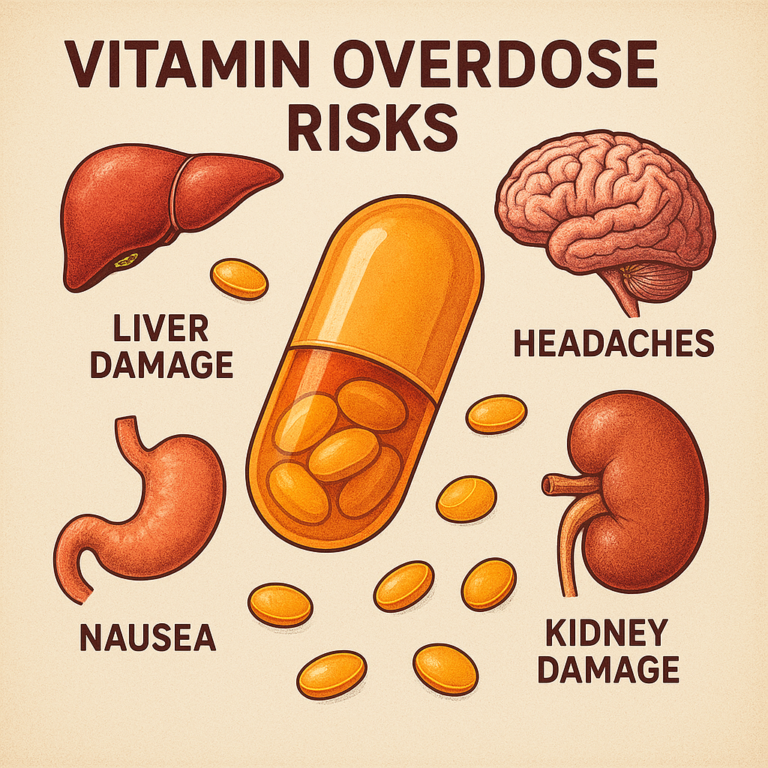
- Acute (Short-term): Nausea, vomiting, headache, dizziness, blurred vision. 🤢
- Chronic (Long-term): Dry skin, hair loss, bone pain, liver damage, increased intracranial pressure. 💀
The Numbers Game
According to the Linus Pauling Institute and NIH data:
- RDA (Recommended): 90 mcg RAE for men, 70 mcg RAE for women.
- UL (Upper Limit): 3,0 mcg RAE per day for adults.
- The Danger Zone: Consistently taking more than 10,0 IU (approx. 3,0 mcg) of preformed Vitamin A can lead toxicity.
Fun Fact: A single serving of beef liver can contain over 6,0 mcg of preformed Vitamin A. Eating liver every day is a fast track to the danger zone! 🐄🚫
🤰 Special Circumstances: Vitamin A Safety During Pregnancy
If you are pregnant or planning to be, stop scrolling and read this carefully. This is the most critical section of the article.
The Teratogenic Risk
Preformed Vitamin A is teratogenic, meaning it can cause birth defects. Specifically, it affects the development of the baby’s heart, brain, and spinal cord.
- The Threshold: Studies show that intakes above 10,0 IU (3,0 mcg) per day significantly increase the risk of malformations.
- The Safe Zone: Most experts recommend limiting preformed Vitamin A to less than 5,0 IU (1,50 mcg) per day from supplements during pregnancy.
What Should Pregnant Women Do?
- Avoid High-Dose Retinol: Check your prenatal vitamin. If it has more than 1,50 mcg of preformed Vitamin A, switch brands.
- Embrace Beta-Carotene: Getting Vitamin A from carrots, sweet potatoes, and spinach is completely safe. Your body won’t convert it toxic levels.
- Skip the Liver: Delicious as it is, avoid eating liver or liver pâté during pregnancy due to the massive Vitamin A content.
Pro Tip: Look for prenatal vitamins that use beta-carotene as the primary source of Vitamin A, or a very low dose of retinol. Brands like New Chapter and Garden of Life often formulate with this in mind.
👉 Shop Prenatal Vitamins with Safe Vitamin A on:
- Garden of Life: Amazon | Garden of Life Official
- New Chapter: Amazon | New Chapter Official
🥗 Food First: The Safest Sources of Vitamin A in Your Kitchen
Why risk supplements when nature has already packaged Vitamin A in a safety net? Let’s look at the best food sources.
The “Orange” Brigade (Carotenoids)
These are your safest bets.
- Sweet Potato: The king of beta-carotene. One baked sweet potato has nearly 2x the daily requirement.
- Carots: Classic, but remember, you need to eat them with some fat (like olive oil) to absorb the Vitamin A.
- Pumpkin & Squash: Great for soups and roasting.
The “Green” Brigade (Carotenoids)
Don’t forget the leafy greens!
- Spinach & Kale: Packed with beta-carotene, but the body absorbs it less efficiently than from orange veggies. Still, a great source!
- Collard Greens: A powerhouse for eye health.
The “Animal” Brigade (Preformed – Eat in Moderation)
- Egg Yolks: A safe, moderate source.
- Cod Liver Oil: Caution! This is extremely high in preformed Vitamin A. One teaspoon can exceed the daily limit. Only take if you have a deficiency and under supervision.
- Liver: The most concentrated source. Eat occasionally, not daily.
| Food Source | Vitamin A (mcg RAE) | Type | Safety Rating |
|---|---|---|---|
| Sweet Potato (1 medium) | 1,403 | Beta-Carotene | ✅ Excellent |
| Carots (1 cup, raw) | 85 | Beta-Carotene | ✅ Excellent |
| Spinach (1 cup, cooked) | 573 | Beta-Carotene | ✅ Excellent |
| Egg (1 large) | 75 | Retinol | ✅ Safe |
| Bef Liver (3 oz) | 6,582 | Retinol | ⚠️ Limit to 1x/week |
| Cod Liver Oil (1 tsp) | 1,350 | Retinol | ⚠️ Use with caution |
💊 Supplement Showdown: What to Look for on the Label
So, you’ve decided you need a supplement. Maybe your diet is lacking, or you have a specific health goal. How do you pick the right one?
Step 1: Check the “Vitamin A” Line
Look at the Supplement Facts panel. It will usually list “Vitamin A” and then specify the source in parentheses.
- Good: “Vitamin A (as Beta-Carotene)” or “Mixed Carotenoids”.
- Caution: “Vitamin A (as Retinyl Palmitate)” or “Retinyl Acetate”.
Step 2: Calculate the RAE
Don’t just look at the IU (International Units). Look for mcg RAE (Retinol Activity Equivalents).
- 1 mcg RAE = 1 mcg Retinol = 12 mcg Beta-Carotene from food = 2 mcg Beta-Carotene from supplements.
- If a supplement says “5,0 IU of Vitamin A,” that’s roughly 1,50 mcg RAE. If it’s all retinol, that’s half your upper limit in one pill!
Step 3: Look for “Food-Based” Formulas
Brands that use whole-food sources often have a better safety profile because the nutrients come with co-factors that aid absorption and regulation.
Top Recommended Brands for Safe Vitamin A:
- MegaFood: Uses food-based beta-carotene.
- Rainbow Light: Often combines retinol and beta-carotene in safe ratios.
- Solgar: Offers pure beta-carotene options.
👉 Shop Top Vitamin A Supplements on:
- MegaFood: Amazon | MegaFood Official
- Solgar: Amazon | Solgar Official
🧪 Who Needs to Worry? Risk Factors and Interactions
Not everyone is at the same risk level. Here’s who needs to be extra vigilant.
1. Smokers and Asbestos Workers
This is non-negotiable. The CARET and ATBC studies showed that smokers taking beta-carotene supplements had a higher risk of lung cancer.
- Action: If you smoke, avoid beta-carotene supplements entirely. Stick to food sources.
2. People with Liver Disease
Since Vitamin A is stored in the liver, if your liver is already compromised (e.g., cirhosis, hepatitis), you are at higher risk of toxicity even with moderate doses.
- Action: Consult a doctor before taking any Vitamin A supplement.
3. Alcoholics
Chronic alcohol consumption interferes with Vitamin A metabolism and increases the risk of liver damage.
- Action: Avoid high-dose supplements.
4. Drug Interactions
- Orlistat (Weight Loss Drug): Can reduce the absorption of fat-soluble vitamins, including Vitamin A.
- Retinoid Medications (Isotretinoin/Accutane): NEVER take Vitamin A supplements if you are on these acne medications. The risk of toxicity is massive.
- Anticoagulants (Warfarin): High doses of Vitamin A can increase the risk of bleeding.
🚀 Final Verdict: Which Form Wins the Safety Crown?
We’ve covered the history, the chemistry, the risks, and the food sources. So, what is the safest form of Vitamin A?
The Winner: Beta-Carotene (from food or supplements).
Why? Because your body is in control. It won’t force you to convert more than you need. It’s the only form that doesn’t carry a risk of Hypervitaminosis A or birth defects (unless you are a smoker taking high-dose supplements).
The Runner-Up: Mixed Carotenoids.
A blend of carotenoids mimics nature and provides broader antioxidant benefits.
The “Use with Caution” Award: Preformed Retinol.
It’s necessary for treating deficiencies and specific conditions, but it requires strict dosing. It is not a “more is better” vitamin.
The Bottom Line:
- For the general population: Get your Vitamin A from colorful fruits and vegetables. If you supplement, choose beta-carotene.
- For pregnant women: Avoid high-dose preformed Vitamin A. Stick to food sources or prenatal vitamins with low retinol.
- For smokers: Avoid beta-carotene supplements.
- For everyone: Read your labels. Know the difference between Retinol and Beta-Carotene.
Remember, the goal isn’t just to get Vitamin A; it’s to get it safely. And as we’ve seen, nature has already built the safety features into the plant kingdom.
🏁 Conclusion

We started this journey wondering if Vitamin A was a friend or a foe. The answer, as with most things in health, is it depends.
Vitamin A is essential for life. It keeps your eyes sharp, your skin glowing, and your immune system strong. But like a powerful engine, it needs the right fuel. Preformed Vitamin A is high-octane fuel that can burn the engine if you pour in too much. Beta-carotene is the smart fuel that only gets used when the engine needs it.
If you’re looking for the safest form of Vitamin A, the answer is clear: Beta-carotene. It offers the benefits without the terrifying risks of toxicity, provided you aren’t a smoker.
But here’s the final twist: Do you really need a supplement? For most people eating a balanced diet rich in colorful veggies, the answer is no. Your body is designed to get this nutrient from food. Supplements should be a backup plan, not a replacement for a healthy plate.
So, next time you’re at the grocery store, skip the aisle with the high-dose retinol pills and head straight for the produce section. Grab some sweet potatoes, carrots, and spinach. Your body will thank you, and your liver will breathe a sigh of relief.
Ready to upgrade your health safely? Check out our curated list of Essential Vitamins and Natural Vitamins to find the best options for your unique needs.
🔗 Recommended Links
Top Picks for Safe Vitamin A Supplements
- Thorne Research Beta-Carotene: Amazon | Thorne Official
- Pure Encapsulations Beta-Carotene: Amazon | Pure Encapsulations Official
- Garden of Life Vitamin Code Raw Prenatal: Amazon | Garden of Life Official
Books for Further Reading
- “The Vitamin A Solution” by Dr. Ray Peat (Available on Amazon)
- “Nutrition and Physical Degeneration” by Weston A. Price (Available on Amazon)
❓ FAQ: Your Burning Questions About Vitamin A Safety

What is the difference between retinol and beta-carotene, and which one is safer for long-term use?
Retinol is the preformed, active version of Vitamin A found in animal products. It is immediately usable by the body but can accumulate toxic levels. Beta-carotene is a provitamin found in plants; the body converts it to retinol only as needed. Beta-carotene is significantly safer for long-term use because the body regulates the conversion, preventing toxicity.
Can too much vitamin A be harmful to my health, and how can I avoid overdose?
Yes, too much preformed Vitamin A (retinol) can cause Hypervitaminosis A, leading to liver damage, bone pain, and birth defects. To avoid overdose:
- Limit preformed Vitamin A intake to under 3,0 mcg RAE per day.
- Avoid eating liver daily.
- Choose supplements with beta-carotene instead of retinol.
- Consult a doctor before taking high-dose supplements.
Are there any natural sources of vitamin A that are safer than synthetic forms?
Yes! Natural sources of beta-carotene (like carrots, sweet potatoes, and spinach) are safer than synthetic retinol supplements. The body regulates the conversion of beta-carotene, making toxicity virtually impossible from food sources. Synthetic forms of retinol carry a higher risk of accumulation and toxicity.
Read more about “🥕 Who Is the Best Source of Vitamin A? (2026)”
Is there A downside to taking vitamin A?
The main downside is the risk of toxicity with preformed Vitamin A. High doses can lead to liver damage, bone fractures, and birth defects. Additionally, smokers should avoid beta-carotene supplements due to an increased risk of lung cancer. Always stick to recommended doses.
Read more about “🧪 Is Spring Valley a Good Brand of Vitamins? The 2026 Truth”
What is the best type of vitamin A to take?
The best type depends on your needs. For general health and safety, beta-carotene is the best choice. If you have a diagnosed deficiency or a specific medical condition, a doctor may prescribe retinol or retinyl esters, but these should be taken under strict medical supervision.
Read more about “✅ Is NOW a Good Vitamin Brand? The 2026 Truth (15 Top Picks)”
What is the safest form of vitamin A for pregnancy?
Beta-carotene is the safest form for pregnancy. Preformed Vitamin A (retinol) in high doses can cause birth defects. Pregnant women should limit preformed Vitamin A to less than 1,50 mcg RAE per day and prioritize food sources like sweet potatoes and carrots.
Read more about “Is It OK to Take Vitamin A Everyday? What You Must Know (2026) 🥕”
Is beta-carotene safer than retinol?
Yes, beta-carotene is safer than retinol for the general population. Retinol can accumulate in the body and cause toxicity, while beta-carotene is converted only as needed. However, smokers should avoid beta-carotene supplements due to lung cancer risks.
Read more about “🏆 7 Best Vitamin A & Retinol Supplements for 2026”
How much vitamin A is too much per day?
For adults, the Tolerable Upper Intake Level (UL) for preformed Vitamin A is 3,0 mcg RAE (approximately 10,0 IU) per day. Exceeding this regularly can lead toxicity. Beta-carotene does not have a set UL because toxicity is rare.
Read more about “🏆 Top 10 Energy & Endurance Brands (2026)”
What are the side effects of taking too much vitamin A?
Side effects of Vitamin A toxicity include:
- Acute: Nausea, vomiting, headache, dizziness.
- Chronic: Dry skin, hair loss, bone pain, liver damage, increased intracranial pressure, and birth defects in pregnant women.
Read more about “Are Nature Made Vitamins 3rd Party Tested? The Truth (2026) ✅”
📚 Reference Links
- Linus Pauling Institute: Vitamin A – Comprehensive data on safety, dosages, and forms.
- NIH Office of Dietary Supplements: Vitamin A Fact Sheet for Health Professionals – Official guidelines on RDA and UL.
- PMC – NIH: Vitamins, Are They Safe? – Analysis of supplement safety and risks.
- American Pregnancy Association: Vitamin A and Pregnancy – Guidelines for expecting mothers.
- Thorne Research: Beta-Carotene Product Page – Brand specific product info.
- Garden of Life: Prenatal Vitamins – Safe prenatal options.