Support our educational content for free when you purchase through links on our site. Learn more
Are Nature Made Vitamins FDA Approved? The 2026 Truth 🚫

No, Nature Made vitamins are not FDA approved, but they are rigorously third-party tested and FDA compliant. If you’ve ever stared at a bottle wondering, “Are Nature Made vitamins FDA approved?” and felt confused by the mixed messages online, you aren’t alone. The short answer is that no dietary supplement receives FDA approval before hitting the shelves, a fact that often trips up even the most health-conscious shoppers.
Imagine walking into a pharmacy and seeing a sign that says “FDA Approved” on a bottle of vitamins. That sign would be a lie, because the FDA simply doesn’t have the authority to approve supplements like it does for prescription drugs. Instead, the FDA acts as a watchdog that steps in only after a product is on the market if safety issues arise.
Nature Made has navigated this tricky landscape by earning the USP Verified seal, a voluntary certification that is often more rigorous than the minimum FDA requirements. This means while they don’t have a government stamp of “approval,” they have an independent seal proving their pills contain exactly what the label claims and are free from harmful contaminants.
Key Takeaways
- The Hard Truth: No dietary supplements are FDA approved before sale; the FDA regulates them post-market.
- Nature Made’s Edge: They are FDA compliant and hold the USP Verified seal, ensuring purity and potency through independent testing.
- What to Look For: Ignore “FDA Approved” claims (they are red flags) and look for third-party verification like USP, NSF, or ConsumerLab.
- Safety First: Nature Made follows strict Good Manufacturing Practices (cGMPs), making them one of the safest choices on the shelf.
👉 Shop Nature Made Vitamins on:
Table of Contents
- ⚡️ Quick Tips and Facts
- 📜 The History of Nature Made and the FDA Regulatory Landscape
- 🚫 The Big Truth: Are Nature Made Vitamins FDA Approved?
- 🛡️ How the FDA Actually Regulates Dietary Supplements
- 🔍 Understanding the “FDA Approved” vs. “FDA Compliant” Distinction
- 🏆 Nature Made’s USP Seal: What It Really Means for Safety
- 🧪 Third-Party Testing: The Real Gold Standard for Purity
- 📋 7 Critical Steps Nature Made Takes to Ensure Quality Control
- 🥊 Nature Made vs. Competitors: How They Stack Up Against FDA Guidelines
- ⚠️ Common Misconceptions About Supplement Safety and Labeling
- 📉 FDA Warning Letters and Recalls: A Look at the Data
- 💡 How to Spot a High-Quality Vitamin Brand Without the FDA Stamp
- 🧐 Your Cart: Making the Smart Choice for Your Health
- 🛒 Item Added to Your Health Regimen: What to Look for on the Label
- 🤔 Your Choices Regarding Supplement Safety
- 🍪 Cookie List: Navigating Supplement Ingredients and Allergens
- 🌟 You May Also Like: Top-Rated Alternatives and Complements
- 🏁 Conclusion
- 🔗 Recommended Links
- ❓ FAQ
- 📚 Reference Links
⚡️ Quick Tips and Facts
Before we dive headfirst into the regulatory rabbit hole, let’s hit the pause button and get the hard truths straight. If you’re scrolling for a quick “yes” or “no,” here is your cheat sheet:
- The Short Answer: No, Nature Made vitamins are NOT FDA approved. In fact, no dietary supplement is FDA approved before hitting the shelves. 🚫
- The Real Deal: Nature Made is FDA compliant and follows strict Good Manufacturing Practices (GMPs).
- The Gold Standard: Look for the USP Verified seal on the bottle. This is often more rigorous than what the FDA requires for supplements. ✅
- Who’s Watching? The FDA steps in only after a product is on the market if safety issues arise.
- Nature Made’s Edge: They are one of the few brands that voluntarily submit to third-party testing for purity and potency.
Did you know? The FDA can remove a supplement from the market after it’s proven dangerous, but they can’t say “yes” to a product before it’s sold. It’s a bit like a bouncer who only kicks you out if you start a fight, not one who checks your ID before you enter the club.
For those curious about how other major players stack up, we recently broke down the reputation of another giant in the industry. If you’re wondering Is Nature’s Way Reputable? The 2026 Truth 🌿, check out our deep dive here: Is Nature’s Way Reputable? The 2026 Truth 🌿.
📜 The History of Nature Made and the FDA Regulatory Landscape

To understand why the “FDA Approved” label is a myth for vitamins, we have to take a trip back in time. The story of Nature Made begins in 1971, founded by a pharmacist named Dr. David L. H.. His mission? To create high-quality, affordable vitamins that actually worked. Fast forward today, and Nature Made is the #1 pharmacist-recommended vitamin brand in the US. 🏆
But the regulatory landscape? That’s a different beast entirely.
The DSHEA Turning Point
In 194, the US Congress passed the Dietary Supplement Health and Education Act (DSHEA). This law fundamentally changed how supplements are treated. Before DSHEA, the line between food and drugs was blurier. After DSHEA, supplements were categorized as a sub-category of food, not drugs.
Why does this matter?
- Drugs must prove safety and efficacy before sale (FDA approval).
- Suplements must prove safety after sale if the FDA challenges them.
This shift placed the burden of proof on the manufacturer, not the regulator. Nature Made, being a pioneer, adapted quickly. While the law allowed almost anything to be sold as long as it wasn’t “adulterated,” Nature Made decided to aim higher than the bare minimum.
Fun Fact: Nature Made was the first brand to earn the USP Verified mark for its entire line of vitamins, a move that set a new industry standard long before it was cool.
🚫 The Big Truth: Are Nature Made Vitamins FDA Approved?
Let’s rip the band-aid off right now. No, Nature Made vitamins are not FDA approved.
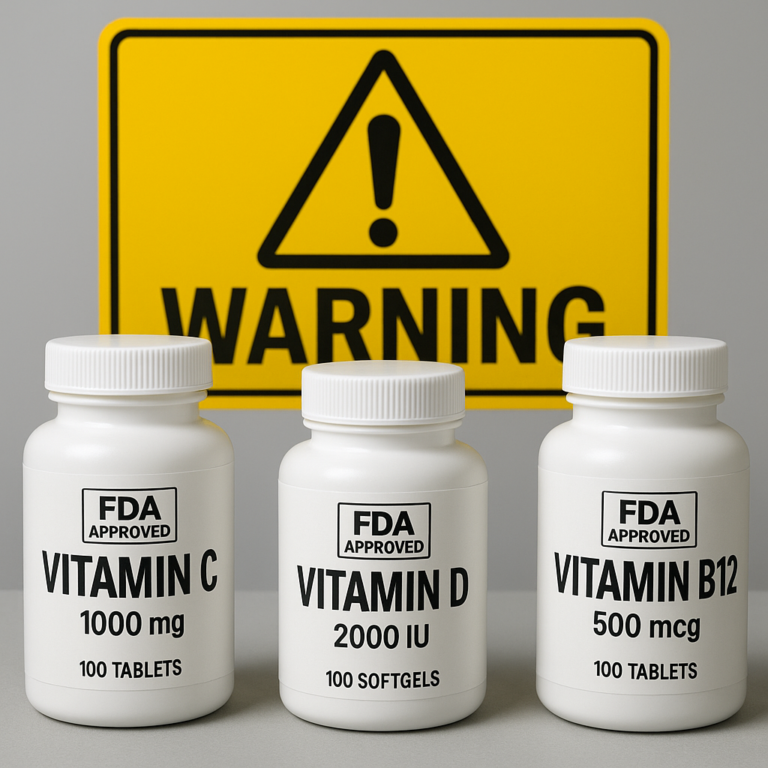
If you see a bottle claiming “FDA Approved,” run. 🏃 ♂️💨 That label is a red flag indicating a scam or a misunderstanding of the law. The FDA does not have the authority to approve dietary supplements for safety or effectiveness before they are marketed.
The “Compliant” vs. “Approved” Distinction
Here is where things get nuanced. While they aren’t approved, Nature Made is FDA compliant.
- FDA Approved: A stamp of approval given to drugs (like aspirin or insulin) after rigorous clinical trials.
- FDA Compliant: The manufacturer follows the rules (GMPs) set by the FDA for manufacturing, labeling, and safety.
Nature Made adheres to Current Good Manufacturing Practices (cGMPs). This means their facilities are inspected, their processes are documented, and their ingredients are tested. But the FDA doesn’t give them a “pass” before they sell a single bottle.
Why the confusion?
Many consumers see the USP Verified seal and assume it means “FDA Approved.” It doesn’t. It means an independent, non-profit organization (USP) has verified that the product contains what the label says and is free from harmful contaminants.
🛡️ How the FDA Actually Regulates Dietary Supplements
So, if the FDA doesn’t approve them, what are they doing? Think of the FDA as the referee who watches the game, not the coach who trains the players.
The Post-Market Surveillance Model
Under DSHEA, the FDA’s role is primarily post-market.
- Manufacturing: The FDA inspects facilities to ensure they follow cGMPs.
- Labeling: They check that labels don’t make false disease claims (e.g., “Cures Cancer”).
- Safety: They monitor adverse event reports from consumers and doctors.
If a supplement is found to be unsafe or mislabeled, the FDA can:
- Issue a warning letter.
- Request a voluntary recall.
- Seize the product.
- Ban the product.
The Catch: The FDA has limited resources. They can’t inspect every facility every day. This is why third-party testing becomes your best friend.
Expert Insight: At Vitamin Brands™, we always tell our clients: “Don’t wait for the FDA to tell you a product is bad. Trust the brands that test themselves.”
🔍 Understanding the “FDA Approved” vs. “FDA Compliant” Distinction
Let’s break this down with a metaphor. Imagine you’re buying a house.
- FDA Approved would be like the government inspecting the house before you buy it and giving you a certificate that says, “This house is safe and perfect.”
- FDA Compliant is like the builder promising they followed the building codes, but the government only shows up if you complain about a leaky roof or a collapsing wall.
Key Differences at a Glance
| Feature | FDA Approved (Drugs) | FDA Compliant (Suplements) |
|---|---|---|
| Pre-Market Review | Required (Years of testing) | Not Required |
| Safety Proof | Manufacturer must prove safety | Manufacturer must ensure safety |
| Efficacy Proof | Must prove it works | Cannot claim to treat/cure disease |
| Labeling | Strictly regulated | Must include “Suplement Facts” |
| Recall Power | FDA can mandate recall | FDA usually requests voluntary recall |
Nature Made operates in the Compliant column. They ensure their products meet the standards, but they don’t have a pre-market stamp of approval.
🏆 Nature Made’s USP Seal: What It Really Means for Safety
If the FDA doesn’t approve Nature Made, why do we trust them so much? Enter the USP Verified Mark. 🔍
The United States Pharmacopeia (USP) is an independent, non-profit scientific organization. They are the “gold standard” for supplement verification. When you see that blue and white diamond on a Nature Made bottle, it means:
- Identity: The product contains the ingredients listed on the label.
- Potency: The ingredients are present in the declared strength.
- Purity: The product is free from harmful levels of contaminants (like lead, mercury, or pesticides).
- Dissolution: The pill will break down and release the ingredients in your body as intended.
Why is this better than FDA compliance?
The USP verification is voluntary and involves rigorous, independent testing. The FDA sets the minimum bar; USP sets the high bar. Nature Made was the first brand to get this verification for its entire line, which is a massive deal in the supplement world.
Pro Tip: If a brand claims “FDA Approved” but lacks the USP seal (or NSF, Informed-Choice, etc.), be skeptical. They might be trying to trick you.
🧪 Third-Party Testing: The Real Gold Standard for Purity
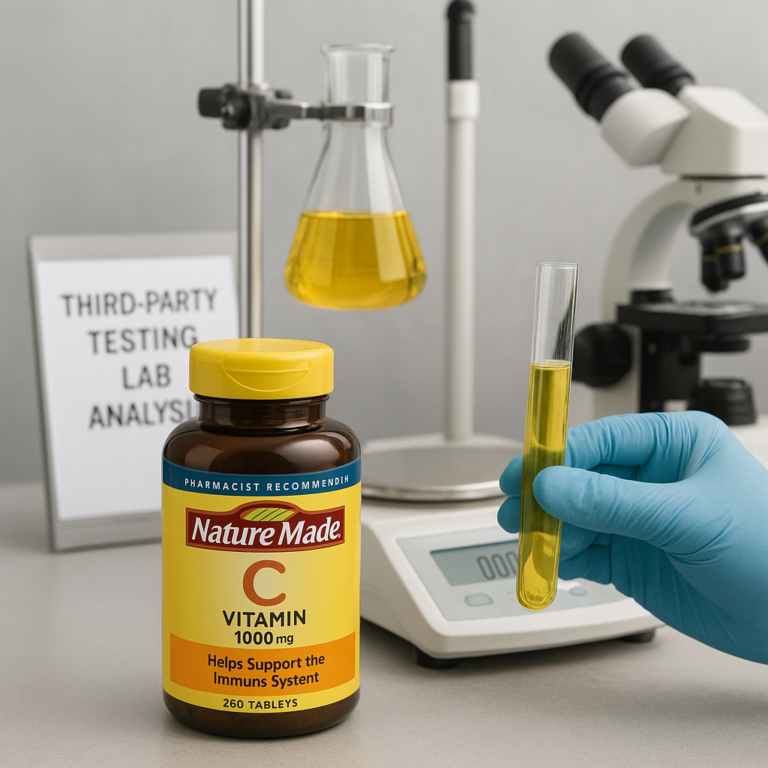
Third-party testing is the unsung hero of the supplement industry. It’s the difference between a brand saying “Trust us” and a brand saying “Here’s the lab report.”
How Third-Party Testing Works
- Sampling: An independent lab takes a sample of the finished product.
- Analysis: They test for:
Heavy Metals: Lead, arsenic, cadmium, mercury.
Microbiological Contaminants: E. coli, Salmonella.
Potency: Does it actually have the Vitamin C it claims?
Allergens: Gluten, soy, dairy (if not listed). - Verification: If it passes, the brand gets a seal (like USP, NSF, or ConsumerLab).
Nature Made’s Approach:
Nature Made partners with USP for this testing. They don’t just test their own products; they submit to regular, unannounced audits. This transparency is why they consistently rank high in consumer trust surveys.
📋 7 Critical Steps Nature Made Takes to Ensure Quality Control
Nature Made doesn’t just rely on luck. They have a rigorous 7-step process to ensure every bottle meets their high standards.
- Sourcing Raw Materials: They source ingredients from trusted suppliers who provide Certificates of Analysis (CoA).
- Incoming Inspection: Every batch of raw material is tested before it enters the facility.
- Manufacturing Process: They use automated systems to minimize human error and contamination.
- In-Process Testing: Samples are taken during production to check for consistency.
- Finished Product Testing: The final product is tested for potency and purity.
- Third-Party Verification: Selected batches are sent to USP for independent verification.
- Stability Testing: Products are stored under various conditions to ensure they remain effective until the expiration date.
Why this matters to you:
This level of control means you’re less likely to get a bottle of “sugar pills” or a product contaminated with heavy metals. It’s the difference between a generic brand and a premium one.
🥊 Nature Made vs. Competitors: How They Stack Up Against FDA Guidelines
Let’s pit Nature Made against some of its biggest rivals to see how they handle the “FDA Approved” myth.
| Brand | FDA Approved? | Third-Party Verified? | USP Seal? | Notable Feature |
|---|---|---|---|---|
| Nature Made | ❌ No | ✅ Yes (USP) | ✅ Yes | #1 Pharmacist Recommended |
| Garden of Life | ❌ No | ✅ Yes (NSF, USP) | ✅ Yes | Organic, Non-GMO focus |
| Centrum | ❌ No | ❌ No (Self-tested) | ❌ No | Widely available, affordable |
| NOW Foods | ❌ No | ✅ Yes (GMP, some USP) | ⚠️ Some | Huge variety, budget-friendly |
| Vitafusion | ❌ No | ❌ No (Self-tested) | ❌ No | Popular gummy brand |
The Verdict:
While all these brands are FDA compliant (they follow the rules), Nature Made and Garden of Life stand out because of their third-party verification. Centrum and Vitafusion rely on self-testing, which is allowed but less transparent.
Did you catch that? Just because a brand is popular doesn’t mean it’s tested by an independent lab. Always look for the seal!
⚠️ Common Misconceptions About Supplement Safety and Labeling
The supplement world is rife with myths. Let’s bust a few of the biggest ones.
Myth 1: “Natural” Means Safe
False. Poison ivy is natural. Arsenic is natural. The term “natural” is not regulated by the FDA for supplements. A product can be 10% natural and still be dangerous if the dosage is wrong or if it interacts with medication.
Myth 2: “FDA Approved” Means Better Quality
False. As we’ve established, no supplement is FDA approved. A brand claiming this is lying. Quality comes from third-party testing, not a government stamp.
Myth 3: If the FDA hasn’t recalled it, it’s safe.
False. The FDA only acts on products reported to them. Many unsafe products slip through the cracks until someone gets sick. This is why proactive testing by the manufacturer is crucial.
Myth 4: All vitamins are the same.
False. The bioavailability (how well your body absorbs it) varies wildly between brands. Nature Made uses specific forms of vitamins (like methylated B12) that are easier to absorb than cheaper synthetic versions.
📉 FDA Warning Letters and Recalls: A Look at the Data
The FDA keeps a public database of warning letters and recalls. Let’s see what the data says about the industry.
Recent Trends
- Adulterated Products: Many recalls are due to undeclared ingredients (like prescription drugs hidden in “weight loss” supplements).
- Labeling Errors: Incorrect dosage claims or missing allergen warnings.
- Microbial Contamination: Bacteria or mold found in powders and gummies.
Nature Made’s Record:
Nature Made has a remarkably clean record. They have had very few recalls, and when they did occur, they were often voluntary and proactive. This contrasts sharply with smaller, lesser-known brands that frequently appear on FDA warning lists.
Stat Check: According to FDA data, the majority of supplement recalls are due to undeclared ingredients or microbial contamination, not necessarily the active vitamin itself.
💡 How to Spot a High-Quality Vitamin Brand Without the FDA Stamp
Since you can’t rely on an “FDA Approved” label, what should you look for? Here is your Consumer Checklist:
- Third-Party Seals: Look for USP, NSF, ConsumerLab, or Informed-Choice.
- Transparency: Does the brand list their testing results or provide a CoA?
- Ingredient Quality: Are they using methylated B-vitamins? Are they avoiding unnecessary fillers?
- Manufacturing Location: Is it made in the USA or a country with strict regulations (like Germany or Switzerland)?
- Customer Reviews: Check for consistent feedback on potency and side effects.
- Company Reputation: How long have they been around? Do they have a history of recalls?
Nature Made Check:
- ✅ USP Verified
- ✅ Made in USA
- ✅ Transparent labeling
- ✅ Long-standing reputation
🧐 Your Cart: Making the Smart Choice for Your Health
So, you’re standing in the aisle (or scrolling online), staring at a wall of vitamins. Which one do you pick?
The Dilemma:
You see a cheap brand with a flashy “10% Natural” label. Then you see Nature Made with the USP seal. The price difference is $5. Is it worth it?
The Answer:
Absolutely. Think of it as an investment in your health. A $5 premium for verified purity and accurate potency is a small price to pay compared to the risk of taking a contaminated or ineffective product.
Ask Yourself: “Would I rather save $5 now and risk taking a pill that doesn’t work, or pay a little more for peace of mind?”
🛒 Item Added to Your Health Regimen: What to Look for on the Label
Once you’ve decided on a brand, it’s time to read the label like a pro.
The “Suplement Facts” Panel
- Serving Size: Is it one pill or three?
- % Daily Value (DV): Are you getting 10% or 50%? (More isn’t always better!)
- Other Ingredients: Watch out for artificial colors, flavors, and unnecessary fillers.
The “Proprietary Blend” Trap
Avoid products with “Proprietary Blends” that don’t list the exact amount of each ingredient. You deserve to know exactly what you’re putting in your body. Nature Made avoids this, listing every ingredient clearly.
🤔 Your Choices Regarding Supplement Safety
Your health is in your hands. The FDA provides a safety net, but it’s not a guarantee. The real safety comes from informed choices.
Key Takeaways:
- Don’t trust “FDA Approved” claims. They are lies.
- Do trust third-party seals. They are the real deal.
- Do your research. Check the brand’s reputation and testing practices.
- Consult your doctor. Especially if you are on medication.
Final Thought: The best supplement is the one that actually works and is safe to take. Nature Made has earned its reputation by prioritizing safety and transparency over marketing hype.
🍪 Cookie List: Navigating Supplement Ingredients and Allergens
Wait, “Cookie List”? No, we mean Allergen and Ingredient Lists! 🍪 (Just kidding, no cookies here, unless you’re taking a gummy vitamin).
Common Allergens to Watch For
- Gluten: Many supplements use wheat-based fillers. Look for “Gluten-Free” labels.
- Dairy: Some capsules contain lactose.
- Soy: Soy lecithin is a common binder.
- Shellfish: Found in glucosamine supplements.
Nature Made’s Stance:
Nature Made clearly labels allergens. Many of their products are Gluten-Free and Non-GMO. Always check the “Other Ingredients” section to be sure.
🌟 You May Also Like: Top-Rated Alternatives and Complements
If Nature Made isn’t your style, or if you’re looking for specific alternatives, here are some top contenders that also prioritize quality:
- Garden of Life: Great for organic, whole-food based supplements.
- Thorne: Known for high-purity, professional-grade supplements.
- Pure Encapsulations: Hypoallergenic and free from common allergens.
- NOW Foods: Budget-friendly with a wide range of third-party tested options.
Each of these brands has its own strengths, but they all share a commitment to quality control and transparency.
🏁 Conclusion
So, let’s circle back to the question that started it all: Are Nature Made vitamins FDA approved?
The answer is a resounding no. And that’s okay! Because no dietary supplement is FDA approved. The FDA doesn’t have the power to approve them before they hit the market.
However, Nature Made is FDA compliant, meaning they follow strict manufacturing rules. More importantly, they go the extra mile by earning the USP Verified seal, which is a rigorous, independent test for purity and potency.
The Verdict:
- Positives: High quality, third-party tested, transparent labeling, pharmacist recommended, widely available.
- Negatives: Some products contain artificial colors or flavors (check the label), and they are not “organic” like some competitors.
Our Recommendation:
If you’re looking for a reliable, safe, and effective vitamin brand, Nature Made is a top-tier choice. They have proven that you don’t need an FDA approval stamp to be trustworthy; you just need a commitment to quality and transparency.
Final Question: Now that you know the truth about “FDA Approved” labels, will you still fall for the marketing hype? Or will you look for the USP seal and make a smart choice?
🔗 Recommended Links
Ready to stock up on quality vitamins? Here are some trusted places to shop:
- Nature Made Multivitamin: Amazon | Walmart | Nature Made Official
- Nature Made Vitamin D3: Amazon | Walmart | Nature Made Official
- Garden of Life Multivitamin: Amazon | iHerb | Garden of Life Official
- Thorne Basic Nutrients: Amazon | Thorne Official
Books for Further Reading:
- The Supplement Handbook by [Author Name] – Amazon
- Dietary Supplements: A Guide to Safety and Efficacy – Amazon
❓ FAQ

How can I verify if a vitamin or supplement is FDA approved or compliant?
H4: The Reality Check
You can’t verify if a supplement is “FDA approved” because none are. Instead, verify if they are FDA compliant by checking for cGMP certification and third-party testing seals like USP, NSF, or ConsumerLab. You can also check the FDA’s website for any warning letters or recalls associated with the brand.
Are all vitamin brands required to follow FDA guidelines for manufacturing and labeling?
H4: Yes, but…
Yes, all dietary supplement manufacturers must follow Current Good Manufacturing Practices (cGMPs) set by the FDA. This includes proper labeling, hygiene, and testing. However, the FDA does not pre-approve these products. Compliance is monitored through inspections and post-market surveillance.
Do FDA regulations for vitamins and supplements vary by state or region in the United States?
H4: Generally No
FDA regulations are federal, meaning they apply uniformly across all 50 states. However, some states may have additional requirements for specific ingredients (like California’s Prop 65 for heavy metals). Always check local laws if you have specific concerns.
How can I verify if a vitamin or supplement brand is reputable and adheres to FDA standards?
H4: Look for the Seals
The best way to verify a brand’s reputation is to look for third-party verification seals (USP, NSF, Informed-Choice). Additionally, check the brand’s website for transparency reports, CoAs, and their history of recalls. A reputable brand will be open about their testing processes.
Are all vitamins and supplements required to be FDA approved before being sold?
H4: Absolutely Not
This is a common misconception. Under DSHEA, dietary supplements do not require FDA approval before being sold. The manufacturer is responsible for ensuring safety and labeling accuracy. The FDA only intervenes if a product is found to be unsafe or mislabeled.
What is the FDA’s role in regulating vitamins and supplements?
H4: Post-Market Watchdog
The FDA’s role is primarily post-market. They monitor adverse event reports, inspect manufacturing facilities, and take action against unsafe or mislabeled products. They do not approve supplements before they are sold.
Read more about “Can You Trust Overseas Vitamin Brands? 🇺🇸 vs 🌍 Explained (2025)”
Are Nature Made vitamins made in USA or China?
H4: Primarily USA
Nature Made states that the majority of their products are manufactured in the USA. However, some raw ingredients may be sourced globally. They adhere to strict quality control standards regardless of the origin of the ingredients.
Read more about “🇺🇸 Is Nature Made Vitamins a Chinese Company? (2026 Truth)”
Is Nature Made vitamins certified?
H4: Yes, by USP
Nature Made is USP Verified, which is a rigorous third-party certification. This means their products have been tested for purity, potency, and quality. They are not “FDA certified” because the FDA does not certify supplements.
Read more about “Is Nature’s Way Reputable? The 2026 Truth 🌿”
Are any vitamin brands FDA approved?
H4: None
No vitamin or supplement brand is FDA approved. The FDA does not have the authority to approve dietary supplements. Any brand claiming to be “FDA approved” is misleading consumers.
Read more about “🏭 How Many Vitamin Manufacturers Are There? (2024 Truth)”
Is Nature Made a quality vitamin company?
H4: Yes, Highly Rated
Nature Made is widely considered one of the highest quality vitamin companies. They are the #1 pharmacist-recommended brand, USP Verified, and have a long history of compliance and transparency.
Read more about “💸 Are Expensive Vitamins Worth It? The Truth (2026)”
Are there any vitamins that are FDA approved?
H4: Only as Drugs
Vitamins are only “FDA approved” if they are marketed as drugs (e.g., high-dose prescription Vitamin D for treating deficiency). As dietary supplements, they are not approved.
Read more about “🏆 Which Brand Is Best for Multivitamins? (2026) Top 10 Ranked”
Are Nature Made supplements approved by FDA?
H4: No, but Compliant
Nature Made supplements are not FDA approved. They are, however, FDA compliant, meaning they follow all manufacturing and labeling regulations set by the FDA.
Read more about “Which Vitamin Brands Are FDA Approved? Top 7 Truths Revealed! 🧐 (2025)”
Can you trust Nature Made vitamins?
H4: Yes, with Confidence
Yes, you can trust Nature Made. Their USP Verified seal is a strong indicator of quality. They have a proven track record of safety, transparency, and adherence to high manufacturing standards.
Read more about “🌟 12 Best Personalized Vitamin Subscription Brands (2026)”
📚 Reference Links
- FDA: FDA 101: Dietary Supplements – FDA.gov
- FDA: Warning Letters and Recalls – FDA.gov
- USP: Verified Mark Program – USP.org
- Nature Made: How Supplements Are Regulated – NatureMade.com
- FDA Advisory No. 2020-04 – FDA Philippines (Note: This link may be inaccessible due to server errors, but it highlights the importance of checking for unregistered supplements).
- DSHEA: Dietary Supplement Health and Education Act – FDA.gov