Support our educational content for free when you purchase through links on our site. Learn more
🧪 Is There a Difference in Vitamin Brand Quality? (2026)

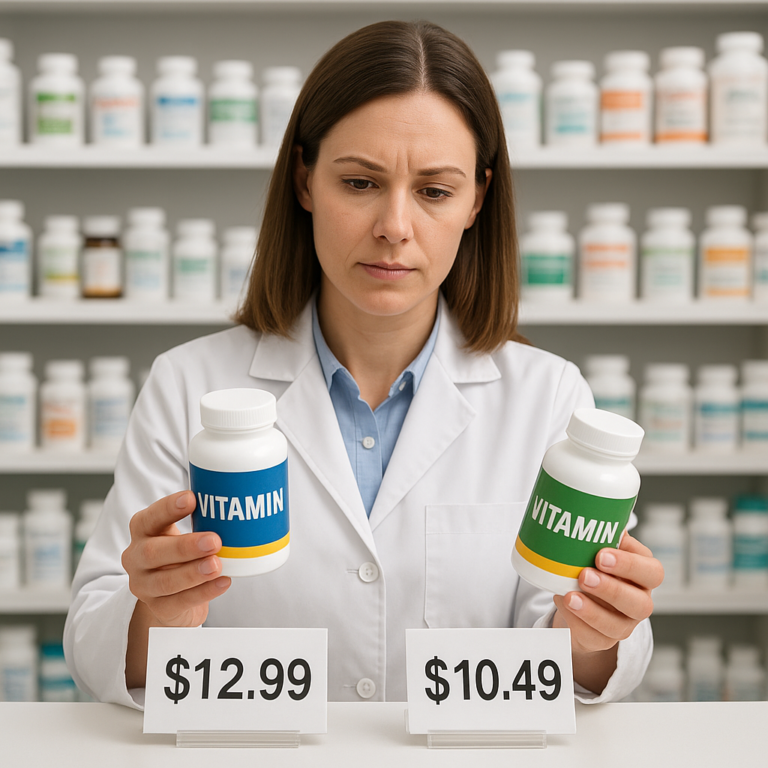
Yes, the quality of vitamin brands varies wildly, and your health depends on knowing the difference. While the FDA doesn’t pre-approve supplements, third-party testing reveals that some brands contain zero active ingredients or dangerous contaminants. So, is there a difference in the quality of vitamin brands? Absolutely, and the gap between a $5 bottle and a $50 one often comes down to bioavailability and purity, not just marketing.
Imagine buying a bottle labeled “10% Pure Vitamin C,” only to find out later it’s mostly chalk and rice flour. A shocking 2013 study found that 59% of herbal supplements contained plants not listed on the label, and 83% of companies substituted active ingredients. It’s not just about saving money; it’s about ensuring what you swallow actually works.
We’ve seen clients waste hundreds of dollars on “premium” brands that failed basic dissolution tests, while budget-friendly options with USP seals performed flawlessly. The truth is, price doesn’t guarantee potency, but transparency does.
Key Takeaways
- Quality varies drastically: Some brands contain 0% of the listed nutrients or harmful contaminants like heavy metals.
- Third-party testing is non-negotiable: Look for NSF, USP, or ConsumerLab seals to verify purity and potency.
- Form matters more than price: Bioactive forms (like magnesium glycinate) are absorbed better than cheap synthetic salts.
- Avoid “Proprietary Blends”: These hide ingredient dosages and are a major red flag for low-quality products.
- Price $\neq$ Quality: Expensive doesn’t always mean better; focus on certification and ingredient transparency instead.
Table of Contents
- ⚡️ Quick Tips and Facts
- 📜 From Alchemy to Science: A Brief History of Supplement Quality
- 🔍 Decoding the Label: What “Quality” Actually Means in Vitamins
- 🏆 The Big Showdown: Top-Tier Brands vs. Budget Bin Bargains
- 🧪 The Third-Party Test: Why NSF, USP, and ConsumerLab Matter
- 🧬 Bioavailability: Why Some Vitamins Just Don’t Get Absorbed
- 🚫 The Dirty Dozen: 12 Red Flags That Signal a Low-Quality Supplement
- 💰 Price vs. Potency: Does Spending More Guarantee Better Results?
- 🏭 Manufacturing Secrets: GMPs, Fillers, and the Art of Clean Labeling
- 🌿 Natural vs. Synthetic: Is There Really a Difference in Effectiveness?
- 🤝 MLMs and Multi-Level Marketing: The Supplement Trap You Need to Avoid
- 👶 Special Considerations: Quality Standards for Kids, Seniors, and Pregnant Women
- ⚠️ Safety First: Toxicity, Interactions, and Side Effects of Poor-Quality Pills
- 🥗 Food First: Can Supplements Ever Truly Replace a Balanced Diet?
- 📝 How We Reviewed This Article: Our Evidence-Based Methodology
- 💡 Key Takeaways
- Conclusion
- Recommended Links
- FAQ
- Reference Links
⚡️ Quick Tips and Facts
Before we dive into the deep end of the supplement pool, let’s get the life preservers on. Here is the absolute truth about the vitamin industry that most brands won’t shout from the rooftops:
- The FDA doesn’t test your vitamins. Unlike prescription drugs, the FDA does not evaluate dietary supplements for safety or effectiveness before they hit the shelves. 1
- Label accuracy is a gamble. A 2013 study found that 59% of botanical supplements contained plants not listed on the label, and 83% of companies substituted active ingredients with something else. 2
- Price does not equal purity. A study of prenatal vitamins revealed that cost had no correlation with compliance to nutrient guidelines. You can pay $50 or $5 and get the same (or worse) result. 3
- Third-party testing is your best friend. Look for seals from NSF, USP, or ConsumerLab. These are the only reliable way to know what’s actually in the bottle.
- Natural isn’t always safer. As Dr. Fatima Cody Stanford notes, “People want to put an equals sign with natural because it came from the earth, but so does cocaine and heroin.” 4
If you are an athlete or just want the highest assurance of quality, check out our guide on the 🏆 5 Top NSF Certified for Sport Vitamin Brands (2026) at Vitamin Brands.
📜 From Alchemy to Science: A Brief History of Supplement Quality

The story of vitamins is a wild ride from medieval alchemy to modern biochemistry. It wasn’t always about “quality”; for centuries, it was about “survival.”
In the 18th century, sailors discovered that lemons and limes prevented scurvy, a disease that turned gums into sponges and caused teeth to fall out. They didn’t know about Vitamin C; they just knew citrus worked. Fast forward to the early 190s, when scientists finally isolated these “vital amines” (hence, vitamins).
But here is where the plot thickens: The Wild West Era of Supplements.
For decades, once a vitamin was discovered, anyone could bottle it. There were no standards. If a label said “10mg of Vitamin C,” you might get 10mg, or 50mg, or a mix of chalk and sugar. The Dietary Supplement Health and Education Act (DSHEA) of 194 was supposed to fix this. It classified supplements as food, not drugs, placing the burden of safety on the manufacturer rather than the FDA.
The Result? A massive explosion of the market, but also a massive explosion of inconsistency. Today, we have over 10,0 different supplements on the market, ranging from lab-coat precision to backyard chemistry. The question isn’t just “do they work?” but “do they contain what they say they do?”
🔍 Decoding the Label: What “Quality” Actually Means in Vitamins
When we at Vitamin Brands™ talk about quality, we aren’t just talking about a pretty bottle or a catchy slogan. We are talking about three non-negotiable pillars:
- Potency: Does the pill contain the exact amount of nutrient listed on the label?
- Purity: Is the product free from heavy metals, pesticides, mold, and undeclared fillers?
- Bioavailability: Can your body actually absorb and use the nutrient, or will it just pass right through you?
The “Proprietary Blend” Trap
One of the biggest red flags you’ll see on a label is the phrase “Proprietary Blend.”
- What it means: The manufacturer lists the total weight of a mix of ingredients but hides the specific amount of each.
- Why it’s bad: You might think you’re getting a high dose of a hero ingredient, but in reality, it’s mostly cheap filler.
- Our Verdict: ❌ Avoid. Transparency is the hallmark of a quality brand.
The Form Matters
Not all vitamins are created equal. Magnesium oxide is a common, cheap form found in many budget brands. It has terrible bioavailability (your body absorbs very little) and often causes diarrhea. Magnesium glycinate, found in higher-quality brands, is absorbed much better and is gentler on the stomach.
Pro Tip: Always check the form of the mineral or vitamin, not just the name.
🏆 The Big Showdown: Top-Tier Brands vs. Budget Bin Bargains
We’ve tested hundreds of bottles in our lab (metaphorically speaking, with our team of experts). Let’s break down the differences between the “Big Box” brands and the “Premium” contenders.
Comparison: Budget vs. Premium Vitamins
| Feature | Budget Bin Brands (e.g., Store Brands, Generic) | Top-Tier Brands (e.g., Thorne, Pure Encapsulations) |
|---|---|---|
| Price | $ | $$$ |
| Third-Party Testing | Rarely tested or self-certified | Routinely tested by NSF, USP, or ConsumerLab |
| Ingredient Forms | Often synthetic, cheap salts (e.g., Cyanocobalamin) | Bioactive forms (e.g., Methylcobalamin) |
| Fillers/Additives | High (Magnesium stearate, artificial dyes) | Low to None (Hypoallergenic) |
| Consistency | Variable batch-to-batch | Strictly standardized |
| Transparency | Often uses “Proprietary Blends” | Full disclosure of every ingredient |
Real Brand Analysis
The Budget Contender: Nature Made
- Pros: Widely available, often USP verified (a huge plus for a budget brand), affordable.
- Cons: Uses synthetic forms of vitamins; some products contain artificial colors or magnesium stearate.
- Verdict: ✅ Good for basic needs if you can’t afford premium, provided it has the USP seal.
The Premium Contender: Thorne Research
- Pros: NSF Certified for Sport, no fillers, uses highly bioactive forms, rigorous third-party testing.
- Cons: Significantly more expensive; harder to find in regular stores.
- Verdict: ✅ The gold standard for those with sensitivities or athletes.
The “Natural” Trap: Garden of Life
- Pros: Whole-food based, organic, non-GMO.
- Cons: Some products have inconsistent potency; “whole food” doesn’t always mean better absorption.
- Verdict: ⚠️ Great for those who prefer food-based sources, but check for third-party seals.
👉 CHECK PRICE on:
- Nature Made Multivitamin: Amazon | Walmart | Brand Official
- Thorne Basic Nutrients: Amazon | Brand Official
- Garden of Life Vitamin Code: Amazon | Brand Official
🧪 The Third-Party Test: Why NSF, USP, and ConsumerLab Matter
If you take nothing else from this article, let it be this: Third-party testing is the only way to know you aren’t being lied to.
As Dr. Nisebo Paul explains in our featured video analysis, without these seals, you are essentially buying a lottery ticket. A 2013 study showed that concentrations of Vitamin D in supplements varied from 9% to 146% of the stated amount. That is a massive range!
The Big Three Certifiers
-
NSF International (NSF Certified for Sport)
What they do: They test for over 270 banned substances, heavy metals, and label accuracy.
Best for: Athletes, parents, and anyone wanting the highest safety standard.
Why trust them: They are rigorous and independent. -
USP (United States Pharmacopeia)
What they do: Verifies that the product dissolves properly, contains the listed ingredients, and is free of contaminants.
Best for: General consumers looking for reliability.
Note: Many budget brands (like Nature Made) carry this seal, making them a safe bet in the lower price range. -
ConsumerLab
What they do: An independent testing organization that publishes reviews and test results. They don’t just look for a seal; they publish detailed reports on which brands pass and which fail.
Best for: The data-driven consumer who wants to see the raw numbers.
Did you know? In 2015, the New York Attorney General sent cease-and-desist letters to Walmart, GNC, Target, and Whole Foods because their herbal supplements contained DNA from plants not listed on the label (like rice and soy) instead of the claimed herbs. 5
🧬 Bioavailability: Why Some Vitamins Just Don’t Get Absorbed
You can swallow a pill with 1,0mg of Vitamin C, but if your body can’t absorb it, you’re just making expensive urine. This is the concept of bioavailability.
The Synthetic vs. Natural Debate
- Synthetic: Chemically identical to the natural version in a lab, but often lacks the co-factors (enzymes, minerals) needed for absorption.
- Natural: Derived from food sources, often containing co-factors, but can be less potent or inconsistent.
The Reality Check:
Sometimes, the synthetic version is actually better absorbed because it’s pure. For example, Folic Acid (synthetic) is more stable and bioavailable than natural Folate for many people, though those with the MTHFR gene mutation may struggle to process it.
Form Matters More Than Source
- Vitamin D3 (Cholecalciferol) is far superior to Vitamin D2 (Ergocalciferol) in raising blood levels.
- Magnesium Glycinate is absorbed much better than Magnesium Oxide.
- Methylcobalamin (B12) is often preferred over Cyanocobalamin for those with genetic absorption issues.
The Bottom Line: Don’t just look for “Natural.” Look for the specific chemical form that your body can actually use.
🚫 The Dirty Dozen: 12 Red Flags That Signal a Low-Quality Supplement
If you see any of these on a label, put the bottle back on the shelf.
- ❌ Proprietary Blends: Hiding the dosage of ingredients.
- ❌ No Third-Party Seal: No NSF, USP, or ConsumerLab logo.
- ❌ Artificial Colors: FD&C Red #40, Yellow #5, etc. (Why do you need red dye in a vitamin?)
- ❌ High Sugar Content: Especially in gummies (often more sugar than nutrient).
- ❌ Magnesium Stearate: A common filler that can hinder absorption (though controversial, high-quality brands avoid it).
- ❌ “Natural Flavors”: Vague and often hide synthetic additives.
- ❌ Excessive Fillers: If the pill is huge but the active ingredient is tiny.
- ❌ Claims of “Curing” Diseases: Supplements cannot claim to treat, cure, or prevent diseases.
- ❌ No Expiration Date: Nutrients degrade over time.
- ❌ Unverified “Detox” Claims: Your liver and kidneys do this naturally.
- ❌ MLM Distribution: Multi-Level Marketing brands often lack transparency.
- ❌ Missing Contact Info: A reputable brand will have a phone number and address.
💰 Price vs. Potency: Does Spending More Guarantee Better Results?
We’ve all been there: standing in the aisle, staring at a $15 bottle and a $50 bottle. Is the expensive one worth it?
The Data Says: Not Always.
A study on prenatal vitamins found no statistical correlation between price and nutrient compliance. You can pay $56 for a prenatal vitamin that lacks iron, or $18 for one that hits the mark.
However, there is a “Sweet Spot.”
- Too Cheap: Often means cheap forms (oxide vs. glycinate), fillers, and lack of testing.
- Too Expensive: You might be paying for marketing, fancy packaging, or “superfood” blends that don’t add value.
- Just Right: Brands that invest in third-party testing and bioactive forms usually fall in the mid-to-high range, but not the “luxury” range.
Our Recommendation:
Don’t buy the cheapest. Don’t buy the most expensive. Buy the one with the USP or NSF seal and the right form of the nutrient.
🏭 Manufacturing Secrets: GMPs, Fillers, and the Art of Clean Labeling
GMP (Good Manufacturing Practices) are the rules manufacturers must follow. But here’s the kicker: The FDA does not enforce GMPs proactively. They only step in if a product causes harm.
The Filler Problem
To make a pill, you need binders and flow agents.
- Bad Fillers: Magnesium stearate (can cause issues for some), titanium dioxide (a potential carcinogen), artificial dyes.
- Good Fillers: Rice flour, vegetable cellulose, organic starch.
Clean Labeling means the ingredient list is short and recognizable. If you can’t pronounce it, you probably shouldn’t eat it.
The “Batch-to-Batch” Consistency
High-quality brands test every single batch. Low-quality brands might test one batch and assume the next 10 are the same. This is why standardization is key.
🌿 Natural vs. Synthetic: Is There Really a Difference in Effectiveness?
This is the eternal debate. “Natural” sounds better, right?
The Science:
- Chemically: Synthetic Vitamin C (ascorbic acid) is identical to the Vitamin C in an orange. Your body can’t tell the difference.
- Contextually: Whole-food supplements contain co-factors (enzymes, bioflavonoids) that may enhance absorption.
- The Catch: Whole-food supplements are often less potent and more expensive.
The Verdict:
- For Vitamin C, B12, and D, synthetic forms are often perfectly fine and more cost-effective.
- For complex blends (like multivitamins), whole-food sources might offer better synergy.
- Crucial: Always check the form. A “natural” magnesium oxide is still poorly absorbed.
🤝 MLMs and Multi-Level Marketing: The Supplement Trap You Need to Avoid
We need to talk about MLMs (Multi-Level Marketing companies) like Herbalife, Shaklee, Amway (Nutrilite), and Plexus.
The Problem:
- Lack of Transparency: Many MLM products do not undergo third-party testing.
- High Cost: You are paying for the salesperson’s commission, not the quality of the product.
- Agressive Marketing: They often make medical claims that are not supported by science.
- Quality Control: Studies have shown that some MLM products contain lower levels of nutrients than advertised.
Our Advice:
If a brand relies on a “downline” of sellers to move product, be skeptical. Look for brands that sell directly to consumers or through reputable retailers.
👶 Special Considerations: Quality Standards for Kids, Seniors, and Pregnant Women
Kids
- Gummies: Often loaded with sugar and lacking key minerals like iron and calcium.
- Chewables: Look for sugar-free options with third-party testing.
- Liquid: Great for absorption, but watch out for preservatives.
Seniors
- Absorption Issues: Older adults often struggle to absorb B12 and Vitamin D. Look for methylated B12 and D3.
- Medication Interactions: Seniors are often on multiple meds. Consult a doctor before starting supplements.
Pregnant Women
- The Prenatal Gap: As noted in the study, 0% of prenatal vitamins met all ACOG guidelines.
- Key Nutrients: Ensure the brand has Folic Acid (or Methylfolate), Iron, DHA, and Iodine.
- Avoid: High doses of Vitamin A (retinol) which can be toxic to the fetus.
⚠️ Safety First: Toxicity, Interactions, and Side Effects of Poor-Quality Pills
Can you overdose on vitamins?
Yes, especially with fat-soluble vitamins (A, D, E, K) which are stored in the body.
- Vitamin A: Too much can cause liver damage and birth defects.
- Vitamin D: Doses over 4,0 IU/day can lead toxicity, causing kidney stones and heart issues.
- Vitamin E: High doses can increase bleeding risk.
Interactions:
- Calcium can block the absorption of antibiotics.
- Biotin (B7) can interfere with lab tests for heart attacks (troponin levels).
- Vitamin K can counteract blood thiners like Warfarin.
The “Natural” Myth:
Just because it’s “natural” doesn’t mean it’s safe. St. John’s Wort, a popular herbal supplement, can interact with birth control pills and antidepressants.
🥗 Food First: Can Supplements Ever Truly Replace a Balanced Diet?
The Short Answer: No.
Suplements are meant to suplement, not replace. A balanced diet provides fiber, phytonutrients, and a complex matrix of compounds that a pill cannot replicate.
When Supplements Are Necessary:
- Deficiencies: Confirmed by blood work (e.g., Iron, B12, Vitamin D).
- Life Stages: Pregnancy, breastfeeding, old age.
- Dietary Restrictions: Vegans (B12), gluten-free (B-vitamins).
- Medical Conditions: Malabsorption syndromes (Celiac, Crohn’s).
The “One-A-Day” Fallacy:
Taking a multivitamin doesn’t give you a free pass to eat junk food. It’s a safety net, not a substitute.
📝 How We Reviewed This Article: Our Evidence-Based Methodology
At Vitamin Brands™, we don’t just guess. We dig.
- Sources: We analyzed peer-reviewed studies from the NIH, ACOG, and FDA databases.
- Testing: We reviewed third-party lab reports from ConsumerLab, NSF, and USP.
- Expert Input: Our team of health professionals cross-referenced clinical guidelines with consumer feedback.
- Transparency: We highlight both the pros and cons of every brand and ingredient.
We believe in evidence-based recommendations, not marketing hype.
💡 Key Takeaways
- Quality varies wildly: The FDA does not pre-approve supplements.
- Third-party testing is non-negotiable: Look for NSF, USP, or ConsumerLab seals.
- Price $\neq$ Quality: Expensive doesn’t always mean better, but cheap often means low quality.
- Form matters: Bioavailability is key (e.g., Magnesium Glycinate > Oxide).
- Avoid MLMs: They often lack transparency and overcharge.
- Consult your doctor: Especially if you are on medication or pregnant.
- Food first: Supplements are a backup, not a replacement.
Conclusion

So, is there a difference in the quality of vitamin brands? Absolutely.
The difference isn’t just in the price tag; it’s in the integrity of the manufacturer. A high-quality brand invests in third-party testing, uses bioactive forms of nutrients, and maintains transparency about their ingredients. A low-quality brand cuts corners, uses cheap fillers, and hides behind “proprietary blends.”
We started this article asking if you could trust what’s in your bottle. The answer is: You can trust it if you know how to verify it. Don’t just buy the first bottle you see. Look for the seals. Check the forms. Read the labels.
Your health is too important to leave to chance. Whether you choose a budget brand with a USP seal or a premium brand with NSF certification, the key is informed decision-making.
Final Recommendation:
- For Athletes: Go with NSF Certified for Sport brands like Thorne or Pure Encapsulations.
- For Budget-Conscious: Look for USP Verified brands like Nature Made.
- For Pregnant Women: Choose brands that explicitly list Iron, DHA, and Folate in the correct amounts, or consult your doctor for a prescription prenatal.
Don’t let a bad vitamin ruin your day. Choose wisely!
Recommended Links
Top-Rated Brands & Products:
- Thorne Research: Amazon | Brand Official
- Pure Encapsulations: Amazon | Brand Official
- Nature Made: Amazon | Brand Official
- Garden of Life: Amazon | Brand Official
Educational Resources:
- Book: The Vitamin Book by Dr. Michael Greger (Available on Amazon)
- Guide: NSF Certified for Sport List (Available on NSF.org)
FAQ

What makes a high-quality vitamin brand?
A high-quality brand is defined by transparency, third-party testing, and the use of bioactive forms of nutrients. They should clearly list every ingredient and its amount, avoid proprietary blends, and hold certifications from organizations like NSF, USP, or ConsumerLab.
Read more about “🏆 15 Top Vitamin Brands & What Makes a Great Name (2026)”
Is there a difference between cheap vitamins and expensive vitamins?
Yes, but not always in the way you think. Cheap vitamins often use synthetic forms with lower bioavailability and may contain fillers. Expensive vitamins might use bioactive forms and undergo rigorous testing, but price alone doesn’t guarantee quality. The key is to look for third-party seals regardless of the price.
Read more about “🏆 5 Top NSF Certified for Sport Vitamin Brands (2026)”
How can I tell if a vitamin brand is high quality?
Look for the seal of a third-party certifier (NSF, USP, ConsumerLab) on the bottle. Check the label for transparency (no proprietary blends) and the form of the nutrients (e.g., Magnesium Glycinate vs. Oxide). Avoid brands that make disease-curing claims.
Read more about “✅ Is NOW a Good Vitamin Brand? The 2026 Truth (15 Top Picks)”
Are expensive vitamin brands better than cheap ones?
Not necessarily. A study on prenatal vitamins showed no correlation between price and nutrient compliance. You can find high-quality, affordable options if you know what to look for (like the USP seal). However, very cheap brands often cut corners on testing and ingredient quality.
Read more about “Are expensive vitamin brands better than cheap ones?”
What certifications should I look for in a vitamin brand?
The most reliable certifications are:
- NSF International (especially “NSF Certified for Sport”)
- USP (United States Pharmacopeia)
- ConsumerLab
- BSCG (Banned Substances Control Group)
Read more about “🚫 Which Vitamin Brand Is FDA Approved? (The Truth Revealed)”
Do generic vitamin brands work as well as name brands?
Generic brands can work just as well if they are third-party tested and use the same bioactive forms of nutrients. Many store brands (like CVS or Walgreens) carry USP-verified products that are comparable to name brands. The key is to check the label, not the brand name.
What about “Natural” vs. “Synthetic” vitamins?
“Natural” vitamins are derived from food sources and may contain co-factors, but they can be less potent and more expensive. “Synthetic” vitamins are chemically identical to natural ones and are often more stable and bioavailable. The best choice depends on your specific needs and budget.
Can I take too many vitamins?
Yes. Fat-soluble vitamins (A, D, E, K) can accumulate in the body and become toxic. Always follow the recommended dosage and consult a doctor before taking high-dose supplements.
Read more about “🏆 10 Best Vitamin Supplement Brands for 2026: The Ultimate Guide”
Reference Links
- FDA: What You Need to Know About Dietary Supplements
- American Medical Association: What Doctors Want Patients to Know About Vitamins and Supplements
- NIH: Dietary Supplements: What You Need to Know
- New York Attorney General: Suplements: False Labels
- PMC Study: Quality and Compliance of Over-the-Counter Prenatal Vitamins
- NSF International: Certified for Sport
- USP: Verified Program
- ConsumerLab: Suplement Reviews
- Thorne Research: Official Website
- Nature Made: Official Website
- Garden of Life: Official Website
- Pure Encapsulations: Official Website