Support our educational content for free when you purchase through links on our site. Learn more
How Do You Know If a Vitamin Is Pharmaceutical Grade? 🔍 (2026)

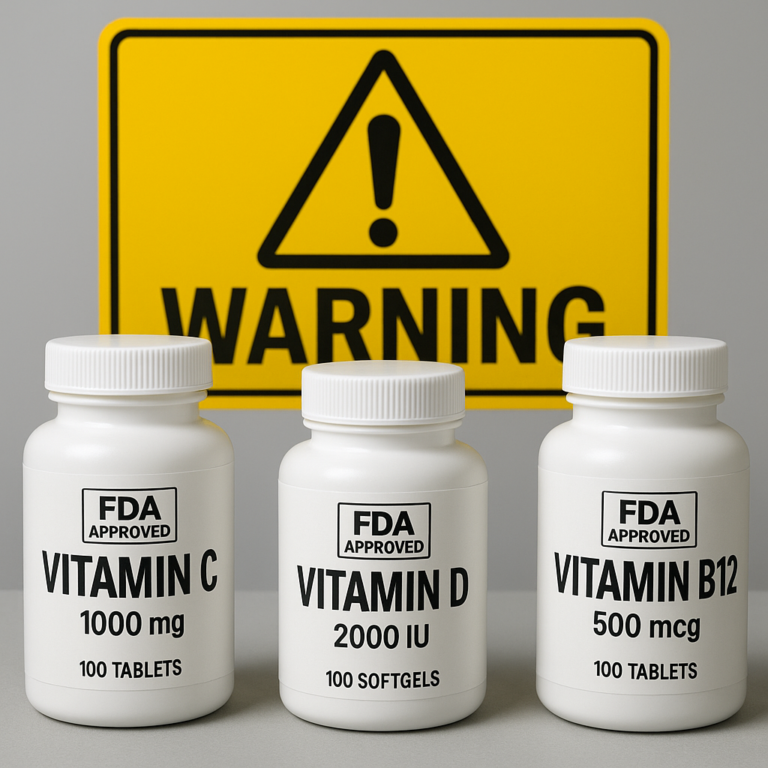
Ever stood in the vitamin aisle, overwhelmed by labels boasting “pharmaceutical grade” and wondered, “Is this just marketing fluff or the real deal?” You’re not alone. The term sounds impressive, but without official FDA definitions, how can you truly know if your supplement meets the highest purity and potency standards?
In this comprehensive guide, we’ll unravel the mystery behind pharmaceutical-grade vitamins. From decoding third-party certifications like USP and NSF to spotting hidden fillers on labels, we’ll equip you with the savvy to separate premium supplements from the pretenders. Plus, we’ll share insider tips from our Vitamin Brands™ health pros and reveal trusted brands that consistently deliver on quality. Ready to become a supplement detective? Let’s dive in!
Key Takeaways
- “Pharmaceutical grade” is not an FDA-regulated term but implies supplements made to the highest purity and potency standards.
- Look for third-party certifications like USP Verified and NSF Certified as reliable indicators of quality.
- True pharmaceutical-grade vitamins have >99% purity, no fillers or binders, and use bioavailable nutrient forms.
- Beware of marketing buzzwords like “medical grade” or “professional grade” without verification.
- Consult your healthcare provider and check for Certificates of Analysis (CoAs) to ensure transparency.
- Brands like Thorne Research, Pure Encapsulations, and Nature Made are trusted names known for pharmaceutical-grade quality.
Table of Contents
- ⚡️ Quick Tips and Facts
- 📜 The Purity Pursuit: A Brief History of Supplement Standards
- Understanding “Pharmaceutical Grade”: The Gold Standard Explained
- Decoding the Labels: Your Detective Guide to Spotting Pharmaceutical Grade Vitamins
- 1. Seek Out Third-Party Certifications: The Seals of Approval You Can Trust ✅
- 2. Scrutinize the Supplement Facts Panel: Potency, Purity, and Unwanted Guests 🧪
- 3. Investigate the Manufacturer’s Transparency and Reputation 🏢
- 4. Demystifying “Grade” Jargon: Beyond Just “Pharmaceutical” 🧐
- 5. Don’t Forget Your Healthcare Professional: Your Personal Quality Control Expert 👩 ⚕️
- Common Pitfalls and Misconceptions: Don’t Fall for the Supplement Hype! 🚫
- Our Team’s Top Picks: Brands We Trust for Uncompromising Quality and Purity ✨
- 🎯 Conclusion: Empowering Your Smart Supplement Choices
- 🔗 Recommended Links for Further Reading
- ❓ FAQ: Your Burning Questions About Supplement Quality Answered
- 📚 Reference Links: Our Sources for Informed Advice
Alright, let’s pull back the curtain on the supplement world! Here at Vitamin Brands™, we get this question all the time: “How do I really know if my vitamins are any good?” You’re standing in the aisle, faced with a wall of shiny bottles, all promising better health. But what separates the rockstars from the wannabes?
You’ve heard the term “pharmaceutical grade” whispered in health forums and doctor’s offices. It sounds impressive, right? But is it just slick marketing, or is it the key to unlocking real results? Let’s dive in and become supplement detectives. 🕵️ ♀️
⚡️ Quick Tips and Facts
In a hurry? Here’s the lowdown on spotting top-tier vitamins:
- “Pharmaceutical Grade” Isn’t an Official FDA Term: Surprise! The FDA doesn’t officially define or regulate the term “pharmaceutical grade” for dietary supplements. It’s a term manufacturers use to imply the highest quality.
- Look for Third-Party Seals: Your best bet for quality assurance are seals from independent organizations like USP (United States Pharmacopeia), NSF International, or ConsumerLab.com. These seals mean the product was tested to confirm it contains what the label says and isn’t hiding harmful contaminants.
- Purity is Paramount: True pharmaceutical-grade supplements aim for over 99% purity. This means they are free from binders, fillers, dyes, or other inactive ingredients that don’t contribute to your health.
- Check for “cGMP”: The bottle should state it was made in a cGMP-compliant facility. This stands for Current Good Manufacturing Practices, which are FDA regulations to ensure product safety, quality, and purity.
- Bioavailability Matters: High-quality vitamins are formulated for excellent bioavailability, meaning your body can actually absorb and use the nutrients effectively.
- Price Can Be a Clue (But Not a Guarantee): Super cheap supplements often use less effective forms of nutrients (like cyanocobalamin instead of methylcobalamin for B12) and contain more fillers. While a high price doesn’t automatically mean high quality, it can be an indicator.
📜 The Purity Pursuit: A Brief History of Supplement Standards

Believe it or not, the vitamin world used to be a bit like the Wild West. For a long time, there was very little oversight. This all started to change with the Dietary Supplement Health and Education Act of 1994 (DSHEA). This landmark law defined dietary supplements as a category of food and laid the groundwork for their regulation.
However, DSHEA didn’t require supplements to be approved by the U.S. Food and Drug Administration (FDA) before they hit the market. The responsibility for safety and accurate labeling fell squarely on the manufacturers.
It wasn’t until 2007 that the FDA published the final rule on Current Good Manufacturing Practices (cGMPs) for dietary supplements. These regulations were a game-changer! They mandated that manufacturers must have processes in place to ensure the identity, purity, strength, and composition of their products. Think of it as a rulebook for making sure you’re not getting a capsule full of sawdust instead of Vitamin C.
This history is crucial because it highlights a key point: quality isn’t a given. It’s the result of rigorous standards, and it’s up to us, the consumers, to know what to look for.
Understanding “Pharmaceutical Grade”: The Gold Standard Explained
So, what’s the deal with this “pharmaceutical grade” buzzword? Is it the VIP section of the supplement club? Let’s break it down.
What Exactly is “Pharmaceutical Grade”? 🤔 Defining the Unofficial Gold Standard
As we mentioned, the FDA doesn’t have an official definition for “pharmaceutical grade” when it comes to Health Supplements. Instead, the term is used by the industry to signify that a supplement is manufactured to the same exacting standards as prescription drugs.
Here’s what that implies:
- Extreme Purity: The supplement must exceed 99% purity and contain no binders, fillers, dyes, excipients, or other unknown substances.
- Precise Potency: What’s on the label is exactly what’s in the bottle. The dosage is verified and consistent from batch to batch.
- High Bioavailability: The ingredients are in a form that your body can readily absorb and utilize, ensuring you get the maximum benefit.
In contrast, “food grade” supplements simply have to be safe for human consumption. They don’t have the same strict requirements for purity or potency, which can lead to inconsistencies.
Why Does “Pharmaceutical Grade” Matter for Your Health? 🌟 The Purity and Potency Promise
Imagine you’re baking a cake. You could use flour that’s mostly flour but also has some dust and random particles in it (“food grade”), or you could use pure, finely milled flour (“pharmaceutical grade”). Which cake do you think will turn out better?
It’s the same with your body! When you take a high-purity supplement, you’re giving your body clean fuel.
- ✅ Better Absorption: Without unnecessary fillers and binders, your body can absorb the active ingredients more efficiently.
- ✅ Fewer Side Effects: Contaminants and undeclared ingredients in lower-quality supplements can cause unwanted reactions.
- ✅ Reliable Results: Consistent, verified dosages mean you can trust that you’re getting the amount of the nutrient you need to achieve your health goals.
The Regulatory Maze: Who Oversees Supplement Quality? 🕵️ ♀️ FDA, USP, and Beyond
Navigating the world of supplement regulation can feel like you need a map and a compass. Here are the key players:
| Organization | Role in Supplement Quality | What It Means for You |
|---|---|---|
| FDA (Food & Drug Administration) | Enforces cGMPs (Current Good Manufacturing Practices). They don’t approve supplements before sale but can take action against unsafe or mislabeled products after they’re on the market. | The cGMP seal indicates a baseline of manufacturing quality and safety. It’s a must-have, but not the whole story. |
| USP (United States Pharmacopeia) | A non-profit that sets federally recognized standards. Their “USP Verified” mark is voluntary but means the product has been rigorously tested for identity, potency, purity, and performance. | The USP seal is one of the strongest indicators of a high-quality supplement. It’s a sign the manufacturer has gone the extra mile. |
| NSF International | An independent organization that certifies products and creates standards. Their “NSF Certified” seal confirms label accuracy, tests for contaminants, and verifies the product was made in a GMP-compliant facility. | Similar to USP, the NSF seal is a trusted mark of quality and safety, especially important for athletes looking for the NSF Certified for Sport® mark. |
| ConsumerLab.com | An independent company that tests supplements and provides reviews. While they require a subscription, their unbiased testing is a valuable resource for consumers. | A great tool for comparing brands and verifying if a product has passed independent quality testing. |
Decoding the Labels: Your Detective Guide to Spotting Pharmaceutical Grade Vitamins
Ready to put on your detective hat? The clues to a vitamin’s quality are hiding in plain sight on its label and the company’s website. Here’s your five-step guide to cracking the code.
1. Seek Out Third-Party Certifications: The Seals of Approval You Can Trust ✅
This is your number one shortcut to identifying a quality product. Manufacturers can say anything they want about their supplements, but a seal from an independent third party is objective proof. It shows they’ve opened their doors to scrutiny and passed the test.
USP Verified: The Gold Standard of Independent Testing
The USP Verified mark is a big deal. It tells you the product:
- Contains the ingredients listed on the label, in the declared potency and amount.
- Does not contain harmful levels of specified contaminants.
- Will break down and release into the body within a specified amount of time.
- Has been made according to FDA cGMPs.
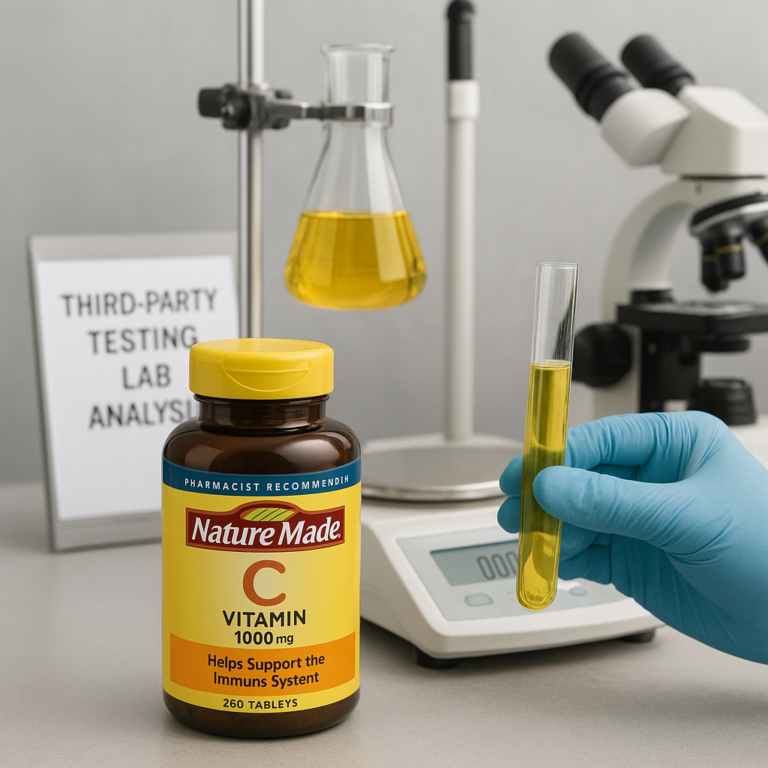
A brand we often see with this seal is Nature Made, which was the first national vitamin brand to earn USP verification on many of its products.
NSF Certified: Ensuring Public Health and Safety from Raw Material to Shelf
NSF International is another highly respected certifier. Their certification process includes:
- Label Claim Review: Certifying that what’s on the label is in the bottle.
- Toxicology Review: Certifying the product formulation for safety.
- Contaminant Review: Ensuring there are no undeclared ingredients or harmful levels of contaminants.
For athletes, the NSF Certified for Sport® program is crucial, as it screens for over 280 substances banned by major athletic organizations. Brands like Thorne and Klean Athlete are well-known for this certification.
ConsumerLab.com: Unbiased Reviews for Informed Supplement Choices
While not a seal you’ll find on a bottle, ConsumerLab.com is an essential resource. They purchase products from stores just like a regular consumer and test them for identity, strength, purity, and disintegration. Their findings are published online, providing a transparent look at which brands meet their standards.
TGA (Therapeutic Goods Administration) Approval: Australia’s Rigorous Quality Benchmark
If you see a product that’s also sold in Australia, look for TGA approval. Australia’s Therapeutic Goods Administration (TGA) regulates complementary medicines (including vitamins) with the same standards as pharmaceutical drugs. This means TGA-approved products are manufactured in GMP-licensed facilities and are assessed for quality and safety. Brands like Thorne Research are TGA certified.
2. Scrutinize the Supplement Facts Panel: Potency, Purity, and Unwanted Guests 🧪
The “Supplement Facts” panel is where the secrets are kept. As the first YouTube video on this topic points out, you have to “read the other ingredients part of the supplement bottle.”
Active Ingredients: Are You Getting What You Paid For?
Look at the form of the vitamin or mineral. Not all forms are created equal!
- Vitamin B12: Look for Methylcobalamin, which is the active, readily usable form, over Cyanocobalamin, a synthetic form the body must convert.
- Folate: Look for Methylfolate (5-MTHF) over Folic Acid.
- Magnesium: Look for highly absorbable forms like Magnesium Glycinate or Citrate, not the less effective Magnesium Oxide.
Inactive Ingredients (Excipients): The Hidden Fillers and Binders
This is the “Other Ingredients” list. A shorter list is generally better. Watch out for:
- ❌ Artificial Colors: (e.g., FD&C Red #40, Yellow #5). These are unnecessary.
- ❌ Artificial Sweeteners: (e.g., Sucralose, Aspartame).
- ❌ Hydrogenated Oils: A source of unhealthy trans fats.
- ❌ Titanium Dioxide: A colorant that many health-conscious consumers choose to avoid.
- ❌ Magnesium Stearate & Stearic Acid: Common flowing agents that some argue can inhibit nutrient absorption.
Allergen-Free and Minimal Fillers: The Cleaner, the Better
Top-tier brands pride themselves on being hypoallergenic. Look for labels that say “Free from gluten, dairy, soy, corn, and yeast.” Brands like Pure Encapsulations are famous for their commitment to creating hypoallergenic supplements.
3. Investigate the Manufacturer’s Transparency and Reputation 🏢
A company that stands behind its product quality will be proud to show it. A shady company will hide it.
Batch Testing and Certificates of Analysis (CoAs): The Proof is in the Paperwork
The best companies test every single batch of their raw materials and finished products. They should be willing to provide a Certificate of Analysis (CoA) upon request. A CoA is a document that confirms a product meets its predetermined specifications for purity, strength, and composition. It’s legally binding proof of quality. If a company won’t provide one, that’s a major red flag. 🚩
Good Manufacturing Practices (GMP): The Foundation of Consistent Quality
As we’ve covered, cGMP certification is the baseline. It ensures the manufacturer has the proper facilities, equipment, and processes to produce a safe and consistent product. Don’t even consider a brand that isn’t cGMP compliant.
Brand History and Consumer Feedback: What’s Their Track Record?
How long has the company been around? What are healthcare professionals and consumers saying about them? A long history of positive reviews and trust within the medical community is a powerful indicator of quality. Brands that are often recommended by pharmacists and doctors, like those mentioned in our guide on whether a pharmacist can recommend supplements, are usually a safe bet.
4. Demystifying “Grade” Jargon: Beyond Just “Pharmaceutical” 🧐
You’ll see a lot of terms thrown around. Let’s clarify them.
Food Grade vs. USP Grade vs. Pharmaceutical Grade: A Spectrum of Quality Explained
Think of it as a ladder of quality:
- Feed Grade: The lowest rung, suitable for animals.
- Food Grade: Meets the minimum standards for human consumption but allows for fillers and binders.
- USP Grade: Meets the stringent standards set by the U.S. Pharmacopeia for purity and quality.
- Pharmaceutical Grade: The highest standard, implying over 99% purity with no binders or fillers.
“Medical Grade” and “Professional Grade”: Marketing Buzz or Meaningful Distinction?
These terms, much like “pharmaceutical grade,” are not officially regulated by the FDA. They are used to imply that the products are of such high quality that they are primarily sold through licensed healthcare practitioners. Brands like Metagenics, Xymogen, and Ortho Molecular Products fall into this category. While it’s often a good sign of quality, you should still do your due diligence and apply the other steps in this guide.
5. Don’t Forget Your Healthcare Professional: Your Personal Quality Control Expert 👩 ⚕️
Your doctor, pharmacist, or registered dietitian is your best ally. They often have experience with professional-grade brands and can recommend products that are not only high-quality but also appropriate for your specific health needs. They can help you navigate the complex world of Essential Vitamins and find the Best Vitamins for Men or women.
Common Pitfalls and Misconceptions: Don’t Fall for the Supplement Hype! 🚫
The path to smart supplement shopping is littered with traps. Here are a few to watch out for.
The “Natural” Trap: Why “Natural” Doesn’t Always Mean “Better Quality”
The term “natural” is notoriously vague and largely unregulated. As the National Institutes of Health wisely states, “The term natural doesn’t always mean safe.” A “natural” supplement can still be contaminated with heavy metals or pesticides. Focus on the objective measures of quality we’ve discussed—purity, third-party testing, and GMP compliance—rather than just the “natural” label. Brands like Garden of Life do a great job of combining natural, whole-food ingredients with rigorous certifications like USDA Organic and Non-GMO Project Verified.
Price vs. Purity: When a Higher Price Tag Isn’t a Guarantee of Quality
While it’s true that dollar-store vitamins are cheap for a reason (often using low-quality ingredients and fillers), a high price isn’t an automatic stamp of approval. Some companies spend more on marketing than on quality ingredients. Your best bet is to find a brand that invests in quality sourcing and third-party verification, offering their products at a reasonable, though not rock-bottom, price.
Beware of Proprietary Blends: The Mystery Mix You Might Not Need
You’ll often see “Proprietary Blend” on a label, followed by a list of ingredients and a total amount for the blend. The problem? The manufacturer doesn’t have to tell you how much of each ingredient is in the blend. They could be filling it with the cheapest ingredient and only including a fairy dusting of the expensive, effective ones. Transparency is key! Look for brands that list the exact amount of each active ingredient.
Our Team’s Top Picks: Brands We Trust for Uncompromising Quality and Purity ✨
After years in the health and wellness field, we’ve developed a short list of brands that consistently meet the highest standards for quality, purity, and transparency. These are the brands we recommend to our own families.
- Thorne Research: A favorite among healthcare professionals, Thorne is known for its incredibly pure ingredients and rigorous testing. Many of their products are NSF Certified for Sport®. They are also TGA certified.
- 👉 Shop Thorne on: Amazon | Thorne Official Website
- Pure Encapsulations: As their name suggests, their focus is on purity. They excel at producing hypoallergenic Multivitamin Supplements free from common allergens and unnecessary additives.
- 👉 Shop Pure Encapsulations on: Amazon | Pure Encapsulations Official Website
- Douglas Laboratories: A trusted name in the professional supplement space for over 60 years, Douglas Labs is known for its science-backed formulations and commitment to quality.
- 👉 Shop Douglas Labs on: Amazon | Douglas Labs Official Website
- Metagenics: A leader in functional medicine, Metagenics invests heavily in scientific research and holds numerous patents for their unique formulations. They are a practitioner-channel staple.
- 👉 Shop Metagenics on: Amazon | Metagenics Official Website
- Nature Made: For an accessible and affordable option that doesn’t compromise on quality, Nature Made is an excellent choice. They have the most USP Verified products of any national vitamin brand, making them a trustworthy pick at your local pharmacy.
- 👉 Shop Nature Made on: Amazon | Walmart | Nature Made Official Website
🎯 Conclusion: Empowering Your Smart Supplement Choices

So, after our deep dive into the world of pharmaceutical-grade vitamins, what’s the final verdict? Is it worth hunting down those elusive, ultra-pure supplements? Absolutely — but with your eyes wide open.
Pharmaceutical grade is not just a fancy marketing phrase; it represents a commitment to purity, potency, and bioavailability that few supplements achieve. While the FDA doesn’t officially regulate this term, third-party certifications like USP Verified and NSF Certified are your best friends in verifying quality. The absence of fillers, binders, and artificial additives is a hallmark of these products, ensuring that what you ingest is clean and effective.
Brands like Thorne Research, Pure Encapsulations, and Douglas Laboratories have earned our trust through transparency, rigorous testing, and consistent quality. They often provide batch-specific Certificates of Analysis (CoAs) and manufacture in cGMP-compliant facilities, giving you peace of mind.
But beware of the hype! Terms like “medical grade” or “professional grade” can sometimes be marketing fluff without standardized definitions. Always look for third-party seals, check the Supplement Facts panel for active ingredient forms, and consult your healthcare provider — they’re your best quality control expert.
Remember, the goal is not just to take a vitamin but to take a vitamin that works for you — pure, potent, and safe. Now that you’re armed with the knowledge, you can confidently navigate the supplement aisle and make choices that truly support your health journey. 💪
🔗 Recommended Links for Further Reading & Shopping
👉 Shop Trusted Pharmaceutical Grade Brands:
- Thorne Research: Amazon | Thorne Official Website
- Pure Encapsulations: Amazon | Pure Encapsulations Official Website
- Douglas Laboratories: Amazon | Douglas Labs Official Website
- Metagenics: Amazon | Metagenics Official Website
- Nature Made: Amazon | Walmart | Nature Made Official Website
Recommended Books on Supplement Quality and Nutrition:
- The Supplement Handbook: A Trusted Expert’s Guide to What Works & What’s Worthless for More Than 100 Conditions by Mark Moyad, MD, MPH — Amazon Link
- Nutritional Supplements in Sports and Exercise by Mike Greenwood, Douglas Kalman, Jose Antonio — Amazon Link
- Herbal Medicine: Biomolecular and Clinical Aspects (2nd Edition) by Iris F. F. Benzie and Sissi Wachtel-Galor — Amazon Link
❓ FAQ: Your Burning Questions About Supplement Quality Answered

What is the difference between medical grade and pharmaceutical grade?
Medical grade and pharmaceutical grade are often used interchangeably in marketing, but neither term is officially defined or regulated by the FDA for dietary supplements. Pharmaceutical grade implies the highest purity and potency standards, often matching those required for prescription drugs, with over 99% purity and no fillers. Medical grade usually refers to supplements sold through healthcare practitioners and may or may not meet pharmaceutical-grade standards. Always verify with third-party certifications rather than relying on these terms alone.
Is Nature Made pharmaceutical grade?
Nature Made is a reputable brand with many products that are USP Verified, which means they meet strict standards for purity and potency. While Nature Made uses the term “pharmaceutical grade” sparingly, their USP verification is a strong indicator of high quality. However, not all their products carry this verification, so check individual labels. For more info, visit Nature Made Official Website.
Read more about “Can a Pharmacist Recommend Supplements? … 💊”
Are pharmaceutical grade vitamins better?
✅ Yes, in terms of purity, potency, and bioavailability, pharmaceutical-grade vitamins generally outperform lower-grade supplements. They contain minimal to no fillers, have verified dosages, and are manufactured under strict quality controls. This means your body can absorb and use the nutrients more effectively, potentially leading to better health outcomes.
Read more about “Top 12️⃣ Rated Vitamin A Brands to Boost Your Health in 2025 ✨”
Is there such a thing as pharmaceutical grade supplements?
Yes and no. While “pharmaceutical grade” is not an FDA-regulated term for supplements, it is widely used to describe supplements manufactured to meet pharmaceutical standards of purity and potency. The best way to confirm this is through third-party testing and certifications like USP or NSF, which provide objective evidence of quality.
Read more about “💊 The 18 Best Vitamins for Immune Support & Disease Prevention (2025)”
What makes a supplement pharmaceutical grade?
A supplement is considered pharmaceutical grade if it:
- Has >99% purity of active ingredients.
- Contains no binders, fillers, dyes, or artificial additives.
- Is manufactured in a cGMP-compliant facility.
- Has undergone third-party testing confirming identity, potency, and purity.
- Uses bioavailable forms of vitamins and minerals.
What certifications indicate a vitamin is pharmaceutical grade?
Look for these trusted third-party certifications:
- USP Verified: Confirms ingredient identity, potency, and purity.
- NSF Certified: Ensures label accuracy and contaminant-free products.
- ConsumerLab.com Approved: Independent testing for quality and safety.
- TGA Approval: Australian standard equivalent to pharmaceutical-grade manufacturing.
How does pharmaceutical grade vitamin quality differ from regular supplements?
Pharmaceutical grade vitamins have stricter manufacturing controls, higher purity (over 99%), and no unnecessary fillers or binders. Regular supplements may contain lower purity ingredients, proprietary blends without disclosed amounts, and additives that can reduce absorption or cause side effects. Pharmaceutical grade products also typically undergo rigorous third-party testing.
Read more about “Top 10 Vitamin Supplement Brands You Need to Know in 2025! 🌟”
Are pharmaceutical grade vitamins safer and more effective?
✅ Generally, yes. Their high purity reduces the risk of contaminants and allergens, and verified potency ensures you get the intended dose. Their superior bioavailability means your body can better absorb and utilize the nutrients, potentially making them more effective. However, always consult your healthcare provider to ensure safety and appropriateness for your individual health needs.
What should I look for on the label to identify pharmaceutical grade vitamins?
Check for:
- Third-party certification seals (USP, NSF).
- Clear listing of active ingredient forms (e.g., methylcobalamin, magnesium glycinate).
- Minimal or no inactive ingredients like fillers, dyes, or artificial additives.
- Statement of cGMP compliance.
- Transparency about batch testing or availability of Certificates of Analysis (CoAs).
Read more about “How Many Vitamin Brands Are There? 🌟 Discover 5,000+ in 2025!”
📚 Reference Links: Our Sources for Informed Advice
- Dietary Supplements: What You Need to Know – Consumer | NIH Office of Dietary Supplements
- FDA Dietary Supplements Overview
- USP Dietary Supplement Verification Program
- NSF International Dietary Supplement Certification
- ConsumerLab.com Independent Supplement Testing
- Thorne Research Official Website
- Pure Encapsulations Official Website
- Douglas Laboratories Official Website
- Metagenics Official Website
- Nature Made Official Website
We hope this guide has empowered you to make smarter, safer, and more effective supplement choices. Remember, your health is your most valuable asset — invest wisely! 🌟