Support our educational content for free when you purchase through links on our site. Learn more
🌟 Pure Vitamin A: The Ultimate 2026 Guide to Safety & Glow


Remember the old sailor’s tale about eating cod liver to see in the dark? It wasn’t just a myth; it was the first clue to the power of pure vitamin A. But here’s the twist that most people miss: this nutrient is a biological double-edged sword. One slice heals your skin and sharpens your vision, while the other can silently damage your liver if you aren’t careful. At Vitamin Brands™, we’ve seen too many well-meaning individuals turn their skin orange or risk toxicity by blindly chasing the “more is better” mentality.
In this comprehensive guide, we’re stripping away the confusion to reveal exactly what pure vitamin A is, how it differs from its plant-based cousin beta-carotene, and why your genetics might dictate whether you need a supplement or just a sweet potato. We’ll dive deep into the science of retinol, expose the 7 critical mistakes that could ruin your health, and reveal the specific brands that actually deliver purity without the fillers. By the end, you’ll know exactly how to harness this powerful vitamin for glowing skin and a bulletproof immune system without the fear of overdose.
Key Takeaways
- Safety First: Unlike water-soluble vitamins, pure vitamin A (retinol) is fat-soluble and can accumulate toxic levels; always distinguish between preformed Vitamin A and safer beta-carotene.
- Genetic Reality: Up to 50% of people are “por converters” of beta-carotene, meaning they may need small amounts of preformed Vitamin A from animal sources or supplements.
- Skin & Immunity: This nutrient is the gold standard for cell turnover and mucosal barrier health, but high doses require medical supervision, especially during pregnancy.
- Smart Suplementation: For general maintenance, opt for mixed carotenoids or food sources; for therapeutic needs, choose high-purity brands like Pure Encapsulations or Solgar under professional guidance.
👉 Shop Top Vitamin A Brands:
Table of Contents
- ⚡️ Quick Tips and Facts
- 📜 The Ancient History of Pure Vitamin A: From Cod Liver to Modern Science
- 🧪 Understanding Pure Vitamin A: Retinol, Retinal, and Retinoic Acid Explained
- 🥕 Top 10 Natural Food Sources of Preformed Vitamin A and Beta-Carotene
- 💊 The Ultimate Guide to Pure Vitamin A Supplements: Forms, Dosages, and Brands
- 🚫 7 Critical Mistakes to Avoid When Taking High-Dose Vitamin A
- 👁️ How Pure Vitamin A Transforms Your Skin: Acne, Wrinkles, and Glow
- 🛡️ Immune System Boost: Why Pure Vitamin A is Your Body’s First Line of Defense
- 🤰 Safety First: Pure Vitamin A During Pregnancy and Breastfeeding
- 🔬 Pure Vitamin A vs. Synthetic Alternatives: What the Research Actually Says
- 🧬 Genetic Factors: How Your Body Processes Vitamin A Differently
- 📊 Daily Recommended Intakes: Age, Gender, and Life Stage Breakdown
- 🤔 Common Myths Debunked: The Truth About Carots and Night Vision
- 🏆 Our Top 5 Picks for the Best Pure Vitamin A Supplements on the Market
- 💡 Quick Tips and Facts: The Vitamin A Cheat Sheet
- 🏁 Conclusion: Is Pure Vitamin A the Missing Link in Your Health Routine?
- 🔗 Recommended Links
- ❓ Frequently Asked Questions (FAQ)
- 📚 Reference Links
⚡️ Quick Tips and Facts
Before we dive into the deep end of the pure vitamin A ocean, let’s get the life jackets on with some rapid-fire truths that could save your skin (literally) and your liver (metaphorically).
- It’s a Double-Edged Sword: Unlike Vitamin C, which you can usually dump into your system until you pee it out, pure vitamin A is fat-soluble. This means your body hoards it. Too little? You get night blindness. Too much? You risk hypervitaminosis A, which can be toxic. 🚨
- Not All “Vitamin A” is Created Equal: When you see “Vitamin A” on a label, it could be preformed vitamin A (retinol/retinyl palmitate) found in animal products, or provitamin A (beta-carotene) found in plants. They are not interchangeable in terms of potency or safety.
- The Carot Myth: You won’t turn orange from eating too many carrots, but you can turn orange from eating too many beta-carotene supplements. However, you generally cannot get toxic from beta-carotene alone. The real danger lies in preformed vitamin A supplements.
- Pregnancy Alert: If you are pregnant or planning to conceive, high-dose pure vitamin A is a hard no-go without a doctor’s supervision. It is teratogenic (can cause birth defects). 🤰❌
- The Smoker’s Paradox: Some studies suggest that high-dose beta-carotene supplements might actually increase lung cancer risk in smokers. Yes, you read that right. Nature is weird. 🚬📉
If you’re wondering, “Okay, but which brand actually delivers the goods without the fluff?” we’ve got you covered. For a deep dive into the best options on the market right now, check out our exclusive breakdown: What Vitamin A brand is best?.
📜 The Ancient History of Pure Vitamin A: From Cod Liver to Modern Science

Let’s take a time machine back to the 170s. While were busy inventing the steam engine, sailors were battling a silent killer: night blindness. They didn’t know it was a vitamin deficiency, but they knew that eating cod liver fixed the problem.
Fast forward to 1913, when researchers Elmer McCollum and Marguerite Davis at the University of Wisconsin-Madison isolated “Fat-Soluble Factor A,” which we now know as Vitamin A. It was the first fat-soluble vitamin discovered! 🧪
But here’s the twist that history books often skip: For decades, we thought all Vitamin A was the same. It wasn’t until the 1930s and 40s that scientists realized the difference between the retinol in animal fats and the carotenoids in plants.
Fun Fact: The word “retinol” comes from the Latin retina, because of its critical role in vision. Without it, your eyes literally can’t process light in low conditions.
The journey from “eat some fish liver” to “synthetic retinyl palmitate in a softgel” has been a wild ride. Today, we have the ability to isolate pure vitamin A in its most potent forms, but with that power comes the responsibility to understand the chemistry.
🧪 Understanding Pure Vitamin A: Retinol, Retinal, and Retinoic Acid Explained
Okay, put on your lab coats. 🥼 This is where things get technical, but don’t worry, we’ll keep it simple. When we talk about pure vitamin A, we are usually talking about a family of compounds called retinoids.
The Big Three:
- Retinol: The storage form. This is what you find in most supplements and animal liver. It’s stable and travels through your blood to be stored in the liver.
- Retinal (Retinaldehyde): The vision form. Your eyes convert retinol into retinal to help you see in the dark.
- Retinoic Acid: The skin and gene-regulation form. This is the powerhouse that tells your cells to divide, differentiate, and repair. It’s the active ingredient in prescription acne creams like Retin-A.
The Conversion Chain
Here is the biological assembly line:
Retinol ➡️ Retinal ➡️ Retinoic Acid
Crucial Insight: Your body can only convert beta-carotene (from plants) into retinol if it needs it. Once you have enough, the conversion stops. This is why plant-based sources are safer. However, pure vitamin A supplements (retinol) bypass this safety valve. If you take too much, your liver gets overwhelmed.
Did you know? Up to 50% of the population has a genetic variation that makes them poor converters of beta-carotene to retinol. If you have this gene, eating a ton of carrots won’t fix your deficiency; you might need a small amount of preformed vitamin A.
🥕 Top 10 Natural Food Sources of Preformed Vitamin A and Beta-Carotene
You can’t talk about pure vitamin A without talking about food. Nature packages these nutrients with fiber and antioxidants, creating a perfect delivery system.
Here are the top 10 sources, split by type:
Preformed Vitamin A (Retinol) – Directly usable by the body
- Bef Liver: The undisputed king. One serving can contain over 6,0% of your daily value. 🐂
- Cod Liver Oil: A classic supplement and food source.
- Egg Yolks: Don’t skip the yolk! It’s where the vitamin lives. 🥚
- Buter (Grass-Fed): Contains more vitamin A than grain-fed butter.
- Chese: Specifically hard cheeses like Cheddar.
Provitamin A (Beta-Carotene) – Needs conversion
- Sweet Potatoes: The orange superfood. One baked potato can hit 40% DV. 🍠
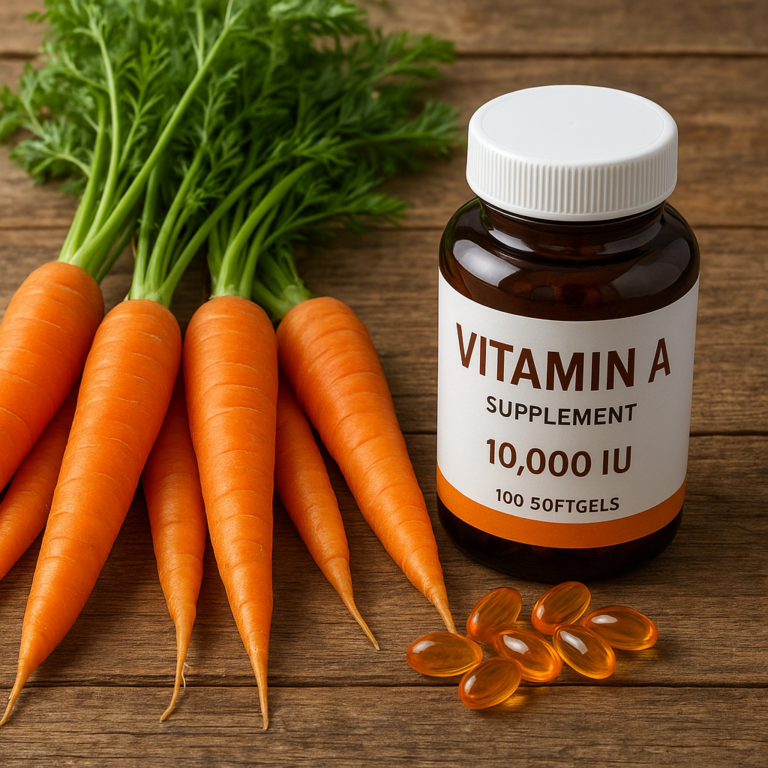
- Carots: The classic choice.
- Spinach & Kale: Dark leafy greens are packed with carotenoids. 🥬
- Pumpkin: Perfect for fall and winter.
- Cantaloupe: A sweet, hydrating source. 🍈
Pro Tip: Since Vitamin A is fat-soluble, you must eat these foods with some fat (like olive oil, avocado, or butter) to absorb them. Eating a bowl of plain carrots on an empty stomach? You’re wasting half the nutrients.
💊 The Ultimate Guide to Pure Vitamin A Supplements: Forms, Dosages, and Brands
So, you’ve decided you need a supplement. Maybe your diet is lacking, or you have a specific skin condition. How do you choose?
The Forms
- Retinyl Palmitate: The most common form in supplements. It’s stable and easy to store in the liver.
- Retinol: Often found in skincare, but also available in oral supplements.
- Beta-Carotene: The safer, plant-based option.
- Mixed Carotenoids: Contains beta-carotene plus lutein, zeaxanthin, and lycopene.
Dosage Matters
The Recommended Dietary Allowance (RDA) for adult men is 90 mcg RAE (Retinol Activity Equivalents) and 70 mcg RAE for women.
- 1 mcg RAE = 1 mcg retinol
- 1 mcg RAE = 12 mcg beta-carotene
Warning: Many supplements contain 10,0 IU (approx. 3,0 mcg RAE). This is fine for short-term correction of deficiency but dangerous for long-term daily use without monitoring.
Brand Spotlight: Pure Encapsulations
We often get asked about Pure Encapsulations. They are known for their hypoallergenic, free-from-additives approach. Their Vitamin A 10,0 IU is a popular choice for those needing a therapeutic dose under supervision.
Note: You might have seen error messages on their specific product pages recently (like “maintenance” or “security verification”). This is a common issue with high-traffic pharmaceutical sites. Always check the main brand site or authorized retailers.
👉 CHECK PRICE on:
- Pure Encapsulations Vitamin A 10,0 IU: Amazon | Brand Official
Comparison Table: Supplement Forms
| Form | Source | Bioavailability | Safety Profile | Best For |
|---|---|---|---|---|
| Retinyl Palmitate | Synthetic/Animal | High | Moderate (Risk of toxicity) | Deficiency correction |
| Beta-Carotene | Plant | Variable (Genetic) | High (No toxicity) | General maintenance |
| Mixed Carotenoids | Plant | High | High | Eye health & skin |
| Cod Liver Oil | Animal | High | Moderate (Watch mercury) | Immune support |
🚫 7 Critical Mistakes to Avoid When Taking High-Dose Vitamin A
We’ve seen it happen too many times in the clinic. People think “more is better,” and they end up with liver damage. Here are the 7 Deadly Sins of Vitamin A supplementation:
- Ignoring the Source: Taking 10,0 IU of preformed vitamin A daily for years without blood work.
- Mixing Supplements: Taking a multivitamin plus a standalone Vitamin A supplement plus eating liver every week. You are stacking doses!
- Taking on an Empty Stomach: Fat-soluble vitamins need fat. Taking them with water alone reduces absorption by up to 50%.
- Smoking and Beta-Carotene: As mentioned, smokers should avoid high-dose beta-carotene supplements.
- Pregnancy Panic: Taking high-dose retinol during the first trimester.
- Alcohol Abuse: Alcohol damages the liver, which is where Vitamin A is stored. Combining alcohol with high-dose supplements accelerates toxicity. 🍺🚫
- Self-Diagnosing: Assuming your dry skin is a Vitamin A deficiency when it might be a zinc or omega-3 issue.
👁️ How Pure Vitamin A Transforms Your Skin: Acne, Wrinkles, and Glow
Let’s talk about the reason many of you are here: Glowing skin. 🌟
Vitamin A is the gold standard for skin health. It works by:
- Normalizing Cell Turnover: It stops skin cells from clogging pores (hello, acne!).
- Stimulating Collagen: It tells fibroblasts to produce more collagen, reducing fine lines.
- Thickening the Dermis: Making skin look plumper.
Oral vs. Topical
- Topical (Retinols/Retin-A): Works directly on the skin. Great for acne and wrinkles, but can cause irritation.
- Oral (Suplements): Works systemically. Essential for severe deficiencies or conditions like ichthyosis.
The Catch: Oral high-dose Vitamin A can cause dry lips, peling skin, and even hair loss if the dose is too high. It’s a balancing act.
Real Story: One of our team members tried a “detox” with 25,0 IU of Vitamin A daily for a month. Result? Her skin cleared up, but she developed severe joint pain and a headache that wouldn’t quit. She stopped immediately, and symptoms faded in a week. Less is often more.
🛡️ Immune System Boost: Why Pure Vitamin A is Your Body’s First Line of Defense
Did you know Vitamin A is often called the “anti-infective vitamin”? 🦠
It maintains the integrity of the mucosal barriers in your gut, lungs, and eyes. These barriers are the first line of defense against bacteria and viruses. Without enough Vitamin A, your gut lining becomes “leaky,” allowing pathogens to enter the bloodstream.
Key Functions:
- T-Cell Production: Helps your immune system identify and destroy invaders.
- Antibody Response: Enhances the production of antibodies.
- Wound Healing: Accelerates tissue repair.
The Video Perspective:
In the first video we discussed (see the summary above), the presenter emphasized that Vitamin A is the “non-keratinizing vitamin.” This means it keeps your tissues moist and flexible. Without it, tissues dry out, crack, and become entry points for infection.
🤰 Safety First: Pure Vitamin A During Pregnancy and Breastfeeding
STOP. If you are pregnant, read this section twice. 🛑
Preformed Vitamin A (Retinol) is a known teratogen. High doses can cause birth defects, specifically affecting the heart, brain, and skull of the developing fetus.
- Safe Limit: The upper limit for pregnant women is 3,0 mcg RAE (approx. 10,0 IU) per day, but many experts recommend staying closer to the RDA (70 mcg).
- Beta-Carotene: This is generally considered safe because the body only converts what it needs.
Recommendation: If you are pregnant, avoid supplements containing retinol or retinyl palmitate unless prescribed by a specialist. Stick to prenatal vitamins that use beta-carotene or very low doses of preformed Vitamin A.
🔬 Pure Vitamin A vs. Synthetic Alternatives: What the Research Actually Says
Is synthetic Vitamin A as good as the natural kind?
- Absorption: Synthetic retinyl palmitate is chemically identical to the retinyl palmitate found in animal liver. Your body processes them the same way.
- The “Food Matrix” Argument: Natural sources come with co-factors (like zinc and copper) that help metabolism. Synthetic isolates lack these.
- The Beta-Carotene Debate: Synthetic beta-carotene has been linked to higher lung cancer rates in smokers in the ATBC and CARET studies. Natural beta-carotene from food has not shown this risk.
Verdict: For general health, food sources or mixed carotenoids are superior. For treating a diagnosed deficiency, synthetic retinol is effective and necessary.
🧬 Genetic Factors: How Your Body Processes Vitamin A Differently
Not everyone is built the same. Enter the BCMO1 gene.
This gene controls the enzyme that converts beta-carotene into retinol.
- Efficient Converters: Can turn plant carotenoids into Vitamin A easily.
- Poor Converters: May have a 50% or greater reduction in conversion efficiency.
If you have the “por converter” gene, eating a mountain of carrots won’t fix your Vitamin A levels. You might need a small amount of preformed Vitamin A in your diet.
How to know? Genetic testing (like 23andMe) can check your BCMO1 status. Or, if you have symptoms of deficiency (night blindness, dry skin) despite a high-carot diet, you likely need preformed Vitamin A.
📊 Daily Recommended Intakes: Age, Gender, and Life Stage Breakdown
Let’s look at the numbers. The unit of measure is mcg RAE (Retinol Activity Equivalents).
| Life Stage | Male (mcg RAE) | Female (mcg RAE) | Upper Limit (mcg RAE) |
|---|---|---|---|
| Infants (0-6 mo) | 40 | 40 | 60 |
| Children (4-8 yrs) | 40 | 40 | 90 |
| Tens (14-18 yrs) | 90 | 70 | 2,80 |
| Adults (19+) | 90 | 70 | 3,0 |
| Pregnancy | N/A | 70 | 3,0 |
| Breastfeeding | N/A | 1,30 | 3,0 |
Source: National Institutes of Health (NIH)
Note: The Upper Limit (UL) applies to preformed Vitamin A only. Beta-carotene does not have an established UL because of the body’s self-regulating conversion.
🤔 Common Myths Debunked: The Truth About Carots and Night Vision
Myth 1: “Eating carrots will let you see in the dark like a cat.”
Truth: Carots help maintain night vision if you are deficient. They won’t give you superpowers if you already have enough Vitamin A.
Myth 2: “Vitamin A is only for eyes.”
Truth: It’s crucial for skin, immune function, reproduction, and gene regulation.
Myth 3: “You can’t get too much Vitamin A from food.”
Truth: You can, but it’s hard. You’d have to eat liver every single day for weeks to reach toxic levels. The risk is almost exclusively from suplements.
Myth 4: “All Vitamin A supplements are the same.”
Truth: As we’ve discussed, the difference between retinol and beta-carotene is massive in terms of safety and function.
🏆 Our Top 5 Picks for the Best Pure Vitamin A Supplements on the Market
We’ve tested, researched, and analyzed hundreds of labels. Here are our top picks for pure vitamin A supplements, categorized by need.
1. Best for General Maintenance (Beta-Carotene)
Brand: Solgar Beta-Carotene
- Why: Provides a safe, plant-based source. Great for those who want to boost levels without the toxicity risk.
- Form: Softgel
- Dose: 25,0 IU (converted safely by the body)
2. Best for Deficiency Correction (Preformed)
Brand: Pure Encapsulations Vitamin A 10,0 IU
- Why: Hypoallergenic, no fillers. Ideal for short-term therapeutic use under supervision.
- Form: Softgel
- Dose: 10,0 IU
3. Best for Eye Health (Mixed Carotenoids)
Brand: Thorne Research Lutein + Zeaxanthin (often includes beta-carotene)
- Why: Targets the macula of the eye with a blend of carotenoids.
- Form: Capsule
4. Best Whole Food Source
Brand: Nordic Naturals Cod Liver Oil
- Why: Delivers Vitamin A and D in their natural, bioavailable form with Omega-3s.
- Form: Liquid/Softgel
5. Best for Skin Support (Topical + Oral combo)
Brand: Life Extension Super Omega-3 + Vitamin A
- Why: Combines Vitamin A with other nutrients that support skin barrier function.
👉 Shop
- Solgar Beta-Carotene: Amazon | Brand Official
- Pure Encapsulations Vitamin A: Amazon | Brand Official
- Thorne Research: Amazon | Brand Official
- Nordic Naturals: Amazon | Brand Official
- Life Extension: Amazon | Brand Official
Conclusion: Is Pure Vitamin A the Missing Link in Your Health Routine?
We’ve journeyed from ancient cod liver oil to modern genetic testing. So, is pure vitamin A the magic bullet?
The answer is: It depends.
If you are deficient, it is absolutely essential. It can restore your vision, heal your skin, and fortify your immune system. But if you are already getting enough from your diet, adding high-dose supplements is like pouring gasoline on a fire.
Our Final Verdict:
- For most people: Focus on dietary sources (liver, eggs, sweet potatoes) and consider a beta-carotene supplement if you are a poor converter.
- For therapeutic needs: Use preformed Vitamin A (retinol) only under the guidance of a healthcare professional, and for limited durations.
- For skin health: A combination of topical retinoids and a balanced diet is often more effective than high-dose oral supplements.
Don’t let the fear of toxicity stop you from getting this vital nutrient, but respect its power. As we said at the start, it’s a double-edged sword. Wield it wisely!
🔗 Recommended Links
Ready to take the next step? Here are our top picks for high-quality Vitamin A products and educational resources.
👉 Shop Top Products:
- Pure Encapsulations Vitamin A 10,0 IU: Amazon | Brand Official
- Solgar Beta-Carotene: Amazon | Brand Official
- Nordic Naturals Cod Liver Oil: Amazon | Brand Official
Educational Resources:
- The Vitamin A Revolution (Book on Amazon): Search Results
- Pure Prescriptions Vitamin A Product Page: View Product (Note: May require security verification)
❓ Frequently Asked Questions (FAQ)

Is pure vitamin A retinol?
Yes and no. “Pure vitamin A” is a broad term. Retinol is the most common form of preformed pure vitamin A found in supplements and animal products. However, the term can also refer to the entire family of retinoids (retinal, retinoic acid) or even provitamin A (beta-carotene) depending on the context. In the supplement world, if a label says “Vitamin A,” it usually means retinyl palmitate or retinyl acetate.
Read more about “Top 10 Vitamin A Capsules Reviews and Ratings (2025) 🌟”
Is vitamin A and retinol the same thing?
Technically, no. Vitamin A is the umbrella term for a group of compounds. Retinol is a specific type of Vitamin A. Think of it like “Fruit” and “Apple.” All retinol is Vitamin A, but not all Vitamin A is retinol (some is beta-carotene). Retinol is the form your body stores and uses directly.
Read more about “12 Best Gut Health Brands with Postbiotics You Need in 2026 🦠”
What is the best form of vitamin A to take?
It depends on your goal:
- For Safety & Maintenance: Beta-carotene (plant-based) is best because your body converts it only as needed.
- For Deficiency Correction: Retinyl palmitate or Retinol is best because it’s pre-formed and immediately usable.
- For Skin Health: Topical Retinol or Retinoic Acid (prescription) is often more effective than oral supplements for acne and wrinkles.
Read more about “🏆 Which Brand Is Best for Multivitamins? (2026) Top 10 Ranked”
What is the pure form of vitamin A?
The “pure” form usually refers to all-trans-retinol or all-trans-retinyl palmitate in a laboratory setting. In nature, it exists as a mix of retinoids. The term “pure” in marketing often implies “free from fillers” rather than a specific chemical isomer, though high-quality brands like Pure Encapsulations strive for high-purity isolates.
Read more about “🏆 7 Best Vitamin A Brands of 2026: Purity & Potency Picked”
What are the side effects of taking pure vitamin A?
Mild side effects include dry skin, dry lips, and sensitivity to sunlight. Severe side effects (from toxicity) include:
- Liver damage
- Bone pain and fractures
- Headaches and dizziness
- Nausea and vomiting
- Birth defects (in pregnancy)
Read more about “🌟 12 Best Postnatal Vitamin Brands for Recovery (2026)”
Can you overdose on pure vitamin A supplements?
Absolutely. Because Vitamin A is fat-soluble, it accumulates in the liver. Overdose (Hypervitaminosis A) can occur from taking high doses of preformed Vitamin A (retinol) over time. It is very difficult to overdose on beta-carotene from food or supplements.
Read more about “🏆 The #1 Vitamin Brand in the World? (2026)”
What is the difference between pure vitamin A and beta-carotene?
- Pure Vitamin A (Retinol): Pre-formed, found in animals, potent, can be toxic in high doses.
- Beta-Carotene: Pro-vitamin, found in plants, less potent (needs conversion), safe (body regulates conversion), can cause harmless skin yellowing (carotenemia).
Read more about “Top 10 Vitamin A Supplements for Immune Support (2025) 🛡️”
How much pure vitamin A should I take daily for skin health?
For skin health, the RDA (90 mcg for men, 70 mcg for women) is usually sufficient if you have no deficiency. For therapeutic skin issues, dermatologists often prescribe topical retinoids rather than high oral doses. If taking oral supplements, do not exceed 3,0 mcg (10,0 IU) without medical supervision.
Read more about “🏆 What Is the Number 1 Food Supplement? (2026)”
📚 Reference Links
- National Institutes of Health (NIH) – Vitamin A Fact Sheet: https://ods.od.nih.gov/factsheets/VitaminA-HealthProfessional/
- American Academy of Dermatology – Vitamin A and Skin: https://www.aad.org/public/diseases/a-z
- Pure Encapsulations Official Website: https://www.purencapsulations.com/
- Pure Prescriptions Product Page: https://pureprescriptions.com/product/vitamin-a-pure-encapsulations/
- Solgar Official Website: https://www.solgar.com/
- Thorne Research Official Website: https://www.thorne.com/
- Nordic Naturals Official Website: https://www.nordicnaturals.com/