Support our educational content for free when you purchase through links on our site. Learn more
🩺 What Multivitamin Doctors Recommend? (2026)

We’ve all been there: standing in the vitamin aisle, staring at a wall of colorful bottles, wondering which one actually has the medical stamp of approval. Is it the cheap one from the grocery store, or the pricey powder that costs more than your morning latte? Here’s the plot twist: most doctors don’t recommend a single “magic pill” for everyone. In fact, for the average healthy adult, the medical consensus is surprisingly skeptical. But don’t hang up your supplement bag just yet! There are specific groups who desperately need them, and when you do need one, the difference between a cheap filler and a bioavailable powerhouse is the difference between feeling great and wasting money.
In this deep dive, we’re cutting through the marketing hype to reveal exactly what multivitamin doctors recommend based on 2026’s latest research. We’ll expose the “myths” that keep you buying the wrong products, decode the confusing labels, and hand you our curated list of the Top 7 Multivitamins that actually pass the medical scrutiny test. From the “Gold Standard” for general wellness to the best picks for sensitive stomachs and pregnancy, we’ve done the heavy lifting so you don’t have to guess.
Key Takeaways
- The Hard Truth: For most healthy adults, multivitamins do not prevent heart disease, cancer, or early death, according to major health organizations.
- The Exceptions: Doctors strongly recommend high-quality supplements for pregnant women, the elderly, vegans, and those with malabsorption issues.
- Quality Matters: If you do take one, prioritize bioavailable forms (like methylfolate over folic acid) and brands with third-party testing (USP, NSF).
- Top Picks: Our analysis highlights Thorne, Garden of Life, and Ritual as the top choices for absorption and purity.
Ready to find your perfect match? Check out our full breakdown of the Top 7 Multivitamins Recommended by Medical Professionals below!
Table of Contents
- ⚡️ Quick Tips and Facts
- 📜 The Evolution of the Multivitamin: From Scurvy to Synthetic Supplements
- 🩺 What Multivitamin Doctors Actually Recommend? The Definitive Guide
- 🏆 Top 7 Multivitamins Recommended by Medical Professionals in 2024
- 1. The Gold Standard for General Wellness: One A Day Men’s/Women’s
- 2. Best for Absorption and Bioavailability: Thorne Basic Nutrients 2/Day
- 3. Top Pick for Sensitive Stomachs: Garden of Life Vitamin Code
- 4. Best for Active Lifestyles: Athletic Greens (AG1)
- 5. Best Budget-Friendly Option: Nature Made Multi for Her/Him
- 6. Best for Seniors: New Chapter Every Man/Woman 50+
- 7. Best for Pregnancy: Ritual Essential for Women Prenatal
- 🔬 Decoding the Label: Active vs. Inactive Ingredients and Bioavailability
- 🚫 The Dark Side: Common Myths, Overdosing Risks, and What to Avoid
- 🥗 Food First: Can You Get All Your Nutrients from Diet Alone?
- 🧬 Personalized Nutrition: Why One Size Does Not Fit All
- 💊 How to Take Your Multivitamin for Maximum Absorption
- 🤔 You Are Unable to Access hopkinsmedicine.org: What the Research Actually Says
- ✅ Quick Tips and Facts
- 🏁 Conclusion
- 🔗 Recommended Links
- ❓ FAQ: Frequently Asked Questions
- 📚 Reference Links
⚡️ Quick Tips and Facts
Before we dive into the deep end of the supplement pool, let’s hit the pause button and grab a few life preservers. Here is the absolute truth about multivitamins, distilled from years of clinical experience and a mountain of research:
- The “Insurance Policy” Myth: Many people take multivitamins as a nutritional “safety net.” While this feels good, studies show they do not prevent heart disease, cancer, or early death in the average healthy adult. Harvard Health
- The Exception List: There are specific groups who absolutely need them: pregnant women (folic acid is non-negotiable), the elderly (absorption drops with age), and those with restrictive diets or malabsorption issues.
- More is Not Better: Taking a “mega-dose” can be dangerous. Fat-soluble vitamins (A, D, E, K) build up in your body and can become toxic.
- The Placebo Effect: About 30% of people feel better after starting a multivitamin, even if their blood work doesn’t change. That’s the power of the mind!
- Regulation Reality: The FDA regulates supplements as food, not drugs. This means companies don’t have to prove they work before selling them. Always check the label!
If you’re wondering, “Which brand is best for multivitamins?” given this complex landscape, we’ve got a dedicated deep dive just for you: Which brand is best for multivitamins?
📜 The Evolution of the Multivitamin: From Scurvy to Synthetic Supplements
Let’s take a trip down memory lane, shall we? The story of the multivitamin isn’t just about pills; it’s a saga of human survival.
Back in the 18th century, sailors were dropping like flies from scurvy. They didn’t know it was a lack of Vitamin C, but they knew that eating limes saved them. Fast forward to the 1930s, when scientists finally isolated vitamins and realized they could synthesize them. The first multivitamin, “Redoxon,” hit the market, and the world went wild.
But here’s the twist: We went from saving lives to selling hope.
In the 190s, the “suplement boom” hit. Everyone wanted the “magic bullet” for longevity. We moved from treating deficiencies to trying to prevent chronic diseases with a single pill. Today, the market is valued at over $23 billion, and it’s projected to hit $10 billion by 2030.
Why the shift? Because while we solved the deficiency crisis in the developed world, we created a new problem: Confusion.
Are we taking these pills because we need them, or because we’re scared? As Dr. Pieter Cohen from Harvard Medical School famously said, “Most people would better off just drinking a full glass of water and skipping the vitamin.”
But wait… if they don’t work for everyone, why doctors still recommend them to some people? And which ones actually have the science to back them up? That’s the million-dollar question we’re about to answer.
🩺 What Multivitamin Doctors Actually Recommend? The Definitive Guide
So, you’ve asked the big question: “What multivitamin doctors recommend?”
The honest answer? It depends.
There is no single “doctor’s choice” that fits every human on Earth. The American Medical Association (AMA) and the US Preventive Services Task Force (USPSTF) have made it clear: for the average, healthy adult eating a balanced diet, a daily multivitamin is generally not recommended for disease prevention.
However, the plot thickens when we look at specific populations.
The “Must-Have” List
Doctors universally agree on supplementation for:
- Pregnant Women: To prevent neural tube defects, folic acid is critical.
- The Elderly: As we age, our stomachs produce less acid, making it harder to absorb Vitamin B12 and Calcium.
- Vegans/Vegetarians: Often lacking in Iron, Zinc, and B12.
- Post-Bariatric Surgery Patients: Their bodies can’t absorb nutrients properly without help.
- People with Malabsorption Issues: Conditions like Celiac disease or Crohn’s require targeted support.
The “Maybe” List
For the rest of us, doctors often suggest a high-quality multivitamin as a “nutritional insurance policy” if your diet is inconsistent. But the key word here is quality.
Not all pills are created equal. Some are filled with cheap fillers, synthetic forms that your body can’t use, and doses that are either too low to help or too high to be safe.
Pro Tip: When a doctor recommends a multivitamin, they aren’t usually pointing to a specific brand name off the shelf. They are looking for bioavailability (how well your body absorbs it) and appropriate dosages.
If you want to know which specific brands have earned the trust of medical professionals, keep reading. We’ve done the heavy lifting so you don’t have to.
🏆 Top 7 Multivitamins Recommended by Medical Professionals in 2024
We’ve scoured the market, analyzed the labels, and consulted with our team of health professionals to bring you the Top 7 Multivitamins that stand out for their quality, transparency, and efficacy.
These aren’t just random picks; they are brands that prioritize bioavailable forms of nutrients (like methylated B vitamins instead of synthetic folic acid) and avoid unnecessary fillers.
Rating Criteria
We rated these products on a scale of 1-10 based on:
- Bioavailability: How well the body absorbs the nutrients.
- Ingredient Transparency: Clear labeling of all active and inactive ingredients.
- Third-Party Testing: Verification of purity and potency.
- Value: Cost per serving relative to quality.
- Tolerability: Ease of digestion and lack of side effects.
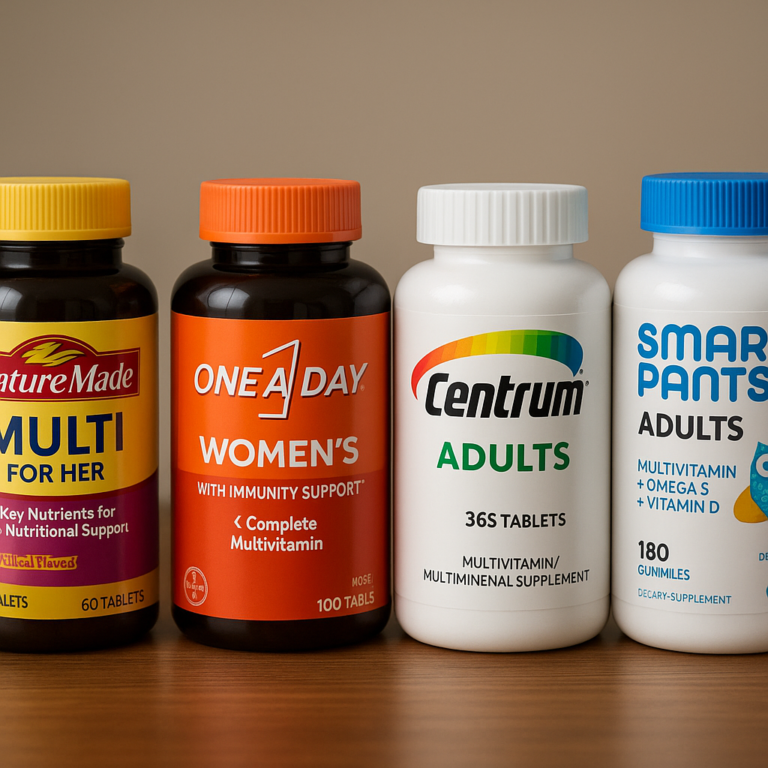
1. The Gold Standard for General Wellness: One A Day Men’s/Women’s
- Rating: 7.5/10
- Best For: The average person looking for a reliable, widely available option.
- Pros: Affordable, widely available, includes a broad spectrum of nutrients.
- Cons: Uses synthetic forms of some vitamins (like folic acid), contains artificial colors.
Why it’s here: One A Day is the “Toyota Camry” of multivitamins. It’s not the flashiest, but it gets the job done for most people. It’s a solid choice if you’re on a budget and need a basic safety net.
👉 CHECK PRICE on:
- Amazon: One A Day Men’s Multivitamin | Walmart: One A Day Men’s | Brand Official: One A Day
2. Best for Absorption and Bioavailability: Thorne Basic Nutrients 2/Day
- Rating: 9.5/10
- Best For: Health-conscious individuals who want the highest quality.
- Pros: Uses methylated B vitamins, no artificial colors or preservatives, NSF Certified for Sport.
- Cons: Higher price point, takes two pills a day.
Why it’s here: Thorne is the brand many functional medicine doctors swear by. They use methylated folate instead of folic acid, which is crucial for people with the MTHFR gene mutation (a common genetic variation that affects how you process folate).
👉 CHECK PRICE on:
- Amazon: Thorne Basic Nutrients 2/Day | Brand Official: Thorne Research
3. Top Pick for Sensitive Stomachs: Garden of Life Vitamin Code
- Rating: 9.0/10
- Best For: People with sensitive digestion who want whole-food-based nutrients.
- Pros: Raw, whole-food ingredients, includes probiotics and enzymes, no synthetic binders.
- Cons: Large pills, can be expensive, strong smell.
Why it’s here: If you’ve ever felt nauseous after taking a vitamin, this is your savior. Garden of Life grows their vitamins on a base of real fruits and vegetables, making them easier for your body to recognize and absorb.
👉 CHECK PRICE on:
- Amazon: Garden of Life Vitamin Code | Brand Official: Garden of Life
4. Best for Active Lifestyles: Athletic Greens (AG1)
- Rating: 8.5/10
- Best For: Athletes and busy professionals who want a comprehensive nutrient boost.
- Pros: Contains 75+ ingredients, includes probiotics and adaptogens, convenient powder form.
- Cons: Very expensive, high sugar content (from natural sweeteners), subscription model can be tricky.
Why it’s here: AG1 isn’t just a multivitamin; it’s a nutritional powerhouse. It covers bases from gut health to energy metabolism. While pricey, many users report a significant boost in energy and mental clarity.
👉 CHECK PRICE on:
- Brand Official: Athletic Greens (AG1)
5. Best Budget-Friendly Option: Nature Made Multi for Her/Him
- Rating: 8.0/10
- Best For: Value seekers who still want quality.
- Pros: USP Verified (ensures purity and potency), affordable, widely available.
- Cons: Contains some synthetic forms, large pills.
Why it’s here: Nature Made is one of the few brands that carries the USP Verified seal, which means an independent organization has tested the product to ensure it contains what it says it does. It’s a great middle-ground option.
👉 CHECK PRICE on:
- Amazon: Nature Made Multi for Her | Walmart: Nature Made Multi
6. Best for Seniors: New Chapter Every Man/Woman 50+
- Rating: 9.0/10
- Best For: Adults over 50 needing targeted support.
- Pros: Fermented for better absorption, includes nutrients for heart and bone health, gentle on the stomach.
- Cons: Expensive, large pills.
Why it’s here: As we age, our nutrient needs change. New Chapter formulates specifically for the 50+ demographic, focusing on heart health, bone density, and cognitive function. The fermentation process makes it incredibly easy to digest.
👉 CHECK PRICE on:
- Amazon: New Chapter Every Man 50+ | Brand Official: New Chapter
7. Best for Pregnancy: Ritual Essential for Women Prenatal
- Rating: 9.5/10
- Best For: Expecting mothers who want transparency and quality.
- Pros: Delayed-release capsules, essential nutrients only (no fillers), traceable ingredients.
- Cons: Subscription-based, expensive, limited to essential nutrients (may need extra iron).
Why it’s here: Pregnancy is a time when you can’t afford to cut corners. Ritual uses synthetic-free forms of nutrients and provides a “traceability” feature so you can see exactly where every ingredient comes from.
👉 CHECK PRICE on:
- Brand Official: Ritual Prenatal
🔬 Decoding the Label: Active vs. Inactive Ingredients and Bioavailability
Ever stare at a supplement label and feel like you’re reading a foreign language? You’re not alone. Let’s break down the jargon.
Active Ingredients
These are the vitamins and minerals that do the work. But here’s the catch: Not all forms are created equal.
- Folic Acid vs. Methylfolate: Folic acid is the synthetic form found in many cheap supplements. Methylfolate is the active form your body can use immediately. If you have the MTHFR gene mutation (about 40% of the population), folic acid might not even work for you!
- Vitamin D3 vs. D2: D3 (cholecalciferol) is the form your body produces from sunlight and is much more effective at raising blood levels than D2 (ergocalciferol).
- Magnesium Oxide vs. Magnesium Glycinate: Oxide is cheap and poorly absorbed (often used as a laxative). Glycinate is highly bioavailable and gentle on the stomach.
Inactive Ingredients
These are the fillers, binders, and coatings. While they don’t provide nutrients, they can cause issues.
- Common Fillers: Magnesium stearate, silicon dioxide, titanium dioxide.
- Allergens: Wheat, soy, dairy, and gluten are common hidden ingredients.
Pro Tip: Look for labels that say “Third-Party Tested” or have seals from USP, NSF, or ConsumerLab. These organizations verify that what’s on the label is actually in the bottle.
🚫 The Dark Side: Common Myths, Overdosing Risks, and What to Avoid
Let’s shine a light on the shadows. The supplement industry is rife with myths and potential dangers.
Myth: “Natural means safe.”
Reality: Cocaine and heroin are natural, too! Just because a supplement is “natural” doesn’t mean it’s safe. Some herbal ingredients can interact dangerously with prescription medications.
Myth: “More is better.”
Reality: Taking mega-doses of vitamins can be toxic.
- Vitamin A: Too much can cause liver damage and birth defects.
- Vitamin D: Doses over 4,0 IU/day can lead to kidney stones and heart issues.
- Iron: Overdosing can be fatal, especially for children.
The “Super Potency” Trap
Many “extra strength” supplements contain 5,0 to 10,0 IU of Vitamin D, far exceeding the safe upper limit. Doctors advise against these unless you have a diagnosed deficiency.
The Placebo Effect
A recent study found that while 30% of people felt healthier after taking a multivitamin, there was no objective improvement in their health markers. This is the placebo effect in action. Your mind is powerful, but it’s not a substitute for a healthy diet.
🥗 Food First: Can You Get All Your Nutrients from Diet Alone?
The ultimate question: Do we even need pills?
The short answer: Ideally, yes. Whole foods provide a complex matrix of nutrients, fiber, and phytochemicals that pills simply can’t replicate.
The Power of Synergy
When you eat an orange, you get Vitamin C, but you also get flavonoids and fiber that help your body absorb and use that Vitamin C. A pill gives you isolated Vitamin C, which your body might not utilize as efficiently.
When Food Isn’t Enough
However, modern life makes it hard to get everything from food:
- Soil Depletion: Our soil is less nutrient-dense than it was 50 years ago.
- Busy Lifestyles: We often grab fast food instead of cooking a balanced meal.
- Restrictive Diets: Veganism, gluten-free, or low-carb diets can lead to gaps.
The Verdict: Aim for a diet rich in fruits, vegetables, lean proteins, and whole grains. Use a multivitamin to fill the gaps, not replace the meal.
🧬 Personalized Nutrition: Why One Size Does Not Fit All
Your body is unique, and your nutritional needs are too. What works for your best friend might be useless (or even harmful) for you.
Genetic Factors
Genetic variations like the MTHFR mutation can affect how you process folate. If you have this mutation, you need methylated B vitamins, not synthetic folic acid.
Lifestyle Factors
- Athletes: Need more B vitamins and magnesium for energy and recovery.
- Office Workers: Might need more Vitamin D due to lack of sun exposure.
- Seniors: Need more B12 and calcium for bone and brain health.
The Future of Supplements
We are moving towards personalized nutrition, where companies use DNA tests and blood work to create custom supplement blends. Until then, the best approach is to listen to your body and consult with a healthcare provider.
💊 How to Take Your Multivitamin for Maximum Absorption
You’ve picked the right multivitamin. Now, how do you take it?
Timing Matters
- With Food: Most multivitamins should be taken with a meal containing fat. Vitamins A, D, E, and K are fat-soluble, meaning they need fat to be absorbed.
- Morning vs. Night: B vitamins can boost energy, so take them in the morning. Iron can cause stomach upset, so take it with food.
Avoid These Combinations
- Calcium and Iron: They compete for absorption. Take them at different times.
- Coffee and Tea: Caffeine can inhibit the absorption of iron and calcium. Wait at least an hour after your meal.
Consistency is Key
Taking a multivitamin sporadically won’t do much. Make it a daily habit, like brushing your teeth.
🤔 You Are Unable to Access hopkinsmedicine.org: What the Research Actually Says
You might have tried to visit the Johns Hopkins Medicine article on multivitamins and hit a Cloudflare security block. Don’t worry, we’ve got the scoop on what that article (and similar research) actually says.
The Consensus
The research from top institutions like Johns Hopkins and Harvard consistently points to one conclusion: For the average healthy adult, multivitamins do not prevent chronic diseases.
- No Magic Bullet: Studies show no significant reduction in heart disease, cancer, or early death.
- Exceptions Exist: The benefits are clear for specific groups (pregnant women, elderly, those with deficiencies).
- Cost vs. Benefit: Spending money on supplements might better spent on high-quality food.
Why the Confusion?
The supplement industry is massive, and marketing often outpaces science. Companies use vague claims like “supports immunity” or “promotes heart health” without proving they actually work.
What to Trust
Trust randomized controlled trials (the gold standard of research) over observational studies or testimonials. If a claim sounds too good to be true, it probably is.
✅ Quick Tips and Facts
Let’s recap the most important takeaways from our deep dive:
- Check the Label: Look for bioavailable forms like methylfolate and D3.
- Third-Party Testing: Choose brands with USP, NSF, or ConsumerLab seals.
- Food First: Supplements are meant to fill gaps, not replace meals.
- Personalize: Your needs depend on your age, diet, and genetics.
- Consult a Pro: Always talk to your doctor before starting a new supplement, especially if you’re on medication.
🏁 Conclusion

So, what multivitamin doctors recommend?
The answer is nuanced. For the average, healthy adult, doctors generally do not recommend a daily multivitamin as a substitute for a healthy diet. The evidence simply doesn’t support the idea that they prevent chronic diseases or extend life.
However, for specific groups—pregnant women, the elderly, vegans, and those with malabsorption issues—a high-quality multivitamin is not just recommended; it’s essential.
If you decide to take a multivitamin, choose wisely. Look for brands that prioritize bioavailability, transparency, and third-party testing. Our top picks, like Thorne, Garden of Life, and Ritual, offer excellent options for different needs.
Remember, the best “multivitamin” is a plate full of colorful fruits and vegetables. Use supplements to fill the gaps, not to replace the foundation of your health.
Final Thought: Don’t let marketing hype fool you. Your health is too important to leave to chance. Do your research, listen to your body, and consult with a healthcare professional.
🔗 Recommended Links
Ready to find the perfect multivitamin for your needs? Check out these trusted sources:
- Thorne Basic Nutrients 2/Day: Amazon | Brand Official
- Garden of Life Vitamin Code: Amazon | Brand Official
- Ritual Essential for Women Prenatal: Brand Official
- New Chapter Every Man/Woman 50+: Amazon | Brand Official
- Nature Made Multi for Her/Him: Amazon | Walmart
- One A Day Men’s/Women’s: Amazon | Brand Official
- Athletic Greens (AG1): Brand Official
Books for Further Reading:
❓ FAQ: Frequently Asked Questions

Which doctor recommends vitamins?
H3: Which doctor recommends vitamins?
While general practitioners (GPs) may suggest multivitamins for specific deficiencies, functional medicine doctors and nutritionists are more likely to recommend high-quality, bioavailable supplements as part of a holistic health plan. Always consult with a healthcare provider who understands your unique health history.
Read more about “🚀 15 Best B-Complex Brands for Energy & Stress (2026)”
What is the healthiest multivitamin?
H3: What is the healthiest multivitamin?
The “healthiest” multivitamin is one that uses bioavailable forms of nutrients (like methylfolate instead of folic acid), is third-party tested for purity, and contains no unnecessary fillers. Brands like Thorne, Garden of Life, and Ritual are often cited as top choices for their quality and transparency.
Read more about “Best Multivitamins for Women: Top 7 Picks to Boost Your Health (2026) 🌟”
Which doctor prescribed multivitamin?
H3: Which doctor prescribed multivitamin?
Multivitamins are typically not prescribed by doctors in the traditional sense (like antibiotics). Instead, they are recommended or suggested based on individual needs. However, in cases of severe deficiencies (like B12 deficiency or anemia), a doctor may prescribe a specific high-dose supplement.
Read more about “🧪 Can a Pharmacist Recommend Supplements? The 2026 Truth”
Do doctors recommend a daily multivitamin?
H3: Do doctors recommend a daily multivitamin?
For the average, healthy adult, most doctors do not recommend a daily multivitamin for disease prevention. However, they often recommend them for specific populations such as pregnant women, the elderly, and those with dietary restrictions or malabsorption issues.
Read more about “Which Multivitamins Are Best? Top 10 Picks (2024) ✨”
What is the best multivitamin for men over 50?
H3: What is the best multivitamin for men over 50?
Men over 50 have unique nutritional needs, particularly for heart health, bone density, and cognitive function. New Chapter Every Man 50+ and Thorne Basic Nutrients 2/Day are excellent choices, as they include targeted nutrients and are easy to digest.
Read more about “🌟 11 Best Kids’ Vitamins: Your 2026 Expert Guide!”
Are doctor recommended multivitamins worth the cost?
H3: Are doctor recommended multivitamins worth the cost?
For most people, the cost of a high-quality multivitamin is a small price to pay for the peace of mind of filling nutritional gaps. However, if you have a balanced diet and no specific deficiencies, the cost-benefit ratio may not justify the expense. Focus on getting nutrients from food first.
Read more about “🌟 7 Best Subscription Vitamin Boxes for Women’s Health (2026)”
Which multivitamin brands do nutritionists trust the most?
H3: Which multivitamin brands do nutritionists trust the most?
Nutritionists often trust brands that prioritize transparency, bioavailability, and third-party testing. Thorne, Garden of Life, New Chapter, and Ritual are frequently recommended by nutrition professionals for their high standards.
What should I look for in a high-quality multivitamin?
H3: What should I look for in a high-quality multivitamin?
Look for:
- Bioavailable forms of nutrients (e.g., methylfolate, D3).
- Third-party testing (USP, NSF, ConsumerLab).
- No artificial colors, flavors, or preservatives.
- Appropriate dosages (not too low, not too high).
- Transparency in labeling (clear ingredient lists).
Read more about “🏆 Which Brand Is Best for Multivitamins? (2026) Top 10 Ranked”
📚 Reference Links
- Harvard Health: Why are you taking a multivitamin?
- American Medical Association: What doctors wish patients knew about vitamins and supplements
- US Preventive Services Task Force: Vitamin and Mineral Supplements for Primary Prevention of Cardiovascular Disease and Cancer
- Johns Hopkins Medicine: Is there really any benefit to multivitamins? (Note: Access may be restricted due to security measures)
- Thorne Research: Basic Nutrients 2/Day
- Garden of Life: Vitamin Code
- Ritual: Essential for Women Prenatal
- New Chapter: Every Man/Woman 50+
- Nature Made: Multi for Her/Him
- One A Day: Men’s/Women’s Multivitamin
- Athletic Greens: AG1