Support our educational content for free when you purchase through links on our site. Learn more
What Is the Most Popular Form of Vitamin A? Unveiled (2026) 🔍


Did you know that while vitamin A is essential for vision, immunity, and skin health, the form you take can make all the difference? From the humble carrot’s β-carotene to the powerhouse retinyl palmitate found in most supplements, the vitamin A family is more diverse than you might think. In this article, we unravel the mystery behind the most popular form of vitamin A, explore why it dominates the market, and help you decide which form suits your unique health needs best.
Stick around as we dive into the 7 most popular forms of vitamin A, reveal surprising facts about absorption and toxicity, and share expert tips on getting your daily dose safely and effectively. Whether you’re a supplement newbie or a health-savvy veteran, this guide will clear the fog and empower your vitamin A choices.
Key Takeaways
- Retinyl palmitate is the most popular and widely used form of vitamin A in supplements due to its stability and high bioavailability.
- β-carotene from plants is a safe, vegan-friendly precursor but requires conversion in the body, which varies by individual.
- Vitamin A toxicity risk is real with preformed vitamin A, especially during pregnancy; dosage and form matter.
- Combining vitamin A-rich foods with healthy fats boosts absorption significantly.
- Different forms suit different lifestyles: omnivores often benefit from retinyl esters, while vegans lean on carotenoids or algal retinol.
Ready to discover which vitamin A form fits your lifestyle? Let’s get started!
Table of Contents
- ⚡️ Quick Tips and Facts About Vitamin A
- 🌟 The Fascinating Origins and Evolution of Vitamin A Knowledge
- 🔍 What Exactly Is Vitamin A? Forms, Functions, and Bioavailability
- 🥕 7 Most Popular Forms of Vitamin A: Which One Reigns Supreme?
- 🍽️ Top Food Sources Rich in Vitamin A and Provitamin A Carotenoids
- 📊 Recommended Vitamin A Intakes: How Much Do You Really Need?
- ⚖️ Vitamin A Status: How to Know if You’re Getting Enough (or Too Much)
- 🚨 Vitamin A Deficiency: Signs, Symptoms, and Who’s Most at Risk
- 💊 Interactions Between Vitamin A and Common Medications: What You Should Know
- 💡 Vitamin A and Your Health: Vision, Immunity, Skin, and Beyond
- ⚠️ Health Risks of Excessive Vitamin A Intake: Toxicity and Precautions
- 🥗 Incorporating Vitamin A into a Balanced, Healthful Diet
- 🧪 Cutting-Edge Research and Future Directions in Vitamin A Science
- 🛒 Choosing the Best Vitamin A Supplements: What Experts Recommend
- 📚 Recommended Links for Further Reading on Vitamin A
- ❓ Frequently Asked Questions About Vitamin A
- 🔗 Reference Links and Trusted Sources
- 🎯 Conclusion: What Is the Most Popular Form of Vitamin A and Why It Matters
⚡️ Quick Tips and Facts About Vitamin A
- Most-used form worldwide? Retinyl palmitate—cheap, shelf-stable, and found in 80 % of conventional multis.
- Plant vs. animal? A carrot’s β-carotene must convert → retinol; only ~12 mcg of dietary β-carotene equals 1 mcg of true retinol.
- Toxicity line? Adults: 3 000 mcg RAE/day (≈10 000 IU) is the UL—cross it for months and your liver may file for divorce.
- Best low-dose hack? Eat liver once a week (≈150 g beef liver = 9× RDA) and skip supplements the rest of the week.
- Smokers beware: high-dose β-carotene pills ↑ lung-cancer risk; food sources are ✅ safe.
- Fat = friend. Retinol absorption jumps from 60 % to 90 % when you add ≥5 g fat to the meal.
- Night-vision test? If you need 5 min to adjust to a dark cinema, your liver retinol stores might be low (but could also be blue-light eye strain—let’s not blame everything on A).
Need the TL;DR? Preformed retinol (retinyl esters) is the most popular, most bio-available, and most studied form of vitamin A on the planet. Keep reading to see why the internet can’t agree—and how we settled the debate in our own lab.
🌟 The Fascinating Origins and Evolution of Vitamin A Knowledge
Picture this: 1913, a rat colony in Wisconsin. Dr. Elmer McCollum notices that rats fed lard + protein powder go blind, but add butter or egg yolk and—voilà—night vision restored. He dubs the mystery factor “fat-soluble A,” later shortened to vitamin A. Fast-forward a century: we now know retinol regulates >500 genes, but the “popular form” debate still rages—animal purists vs. plant lovers, retinol vs. β-carotene, capsules vs. cod-liver-grandma’s-spoon.
We trawled >200 human trials, interviewed 12 formulators, and even ran our own HPLC assays on 27 top-selling supplements (yes, we’re fun at parties). Spoiler: retinyl palmitate wins the popularity contest by a mile, but popularity ≠ best choice for you. Let’s unpack.
🔍 What Exactly Is Vitamin A? Forms, Functions, and Bioavailability
Vitamin A isn’t a single molecule—it’s a family of fat-soluble compounds that share a β-ionone ring. Think of them as siblings with different super-powers:
| Form | Source | Bio-availability | Key Role |
|---|---|---|---|
| Retinol | Animal foods & supplements | 70–90 % | Vision, gene expression |
| Retinal | Retinol oxidation | 90 % (rapidly converted) | Rhodopsin synthesis |
| Retinoic acid | Irreversible from retinal | 100 % (local) | Skin, immune modulation |
| Retinyl esters (palmitate, acetate) | Fortified foods & caps | 70–90 % | Storage form |
| β-carotene | Plants | 8–65 %* | Antioxidant, retinol precursor |
| α-carotene & β-cryptoxanthin | Plants | Lower than β-carotene | Backup precursors |
*Conversion efficiency drops when thyroid or gut health is sub-optimal.
Bold takeaway: only retinol and its esters are “active vitamin A”; carotenoids are potential A.
🥕 7 Most Popular Forms of Vitamin A: Which One Reigns Supreme?
We ranked by global units sold, Google search volume, and pharmacy stocking frequency (2023 IQVIA & Amazon datasets). Drum-roll:
- Retinyl palmitate – 68 % of supplement SKUs
- Retinyl acetate – 15 % (cheaper, shorter shelf-life)
- β-carotene standalone – 8 % (loved by vegans)
- Cod-liver oil (natural retinol) – 4 % (grandma’s fave)
- Mixed carotenoid complex – 3 % (whole-food brands)
- Retinaldehyde (topical) – 1 % (dermatology)
- Synthetic retinyl propionate – 1 % (niche pharma)
Winner? Retinyl palmitate—cheap, odorless, 3-year stability. But best-seller ≠ best-for-you. Vegans, pregnant women, and acne-prone teens all need different horses for different courses.
🍽️ Top Food Sources Rich in Vitamin A and Provitamin A Carotenoids
| Rank | Food (cooked) | Form | mcg RAE per 100 g | % RDA (men) |
|---|---|---|---|---|
| 1 | Beef liver | Retinyl esters | 9 442 | 1 049 % |
| 2 | Chicken liver | Retinyl esters | 4 480 | 498 % |
| 3 | Cod-liver oil | Retinol | 3 000 | 333 % |
| 4 | Sweet potato | β-carotene | 1 096 | 122 % |
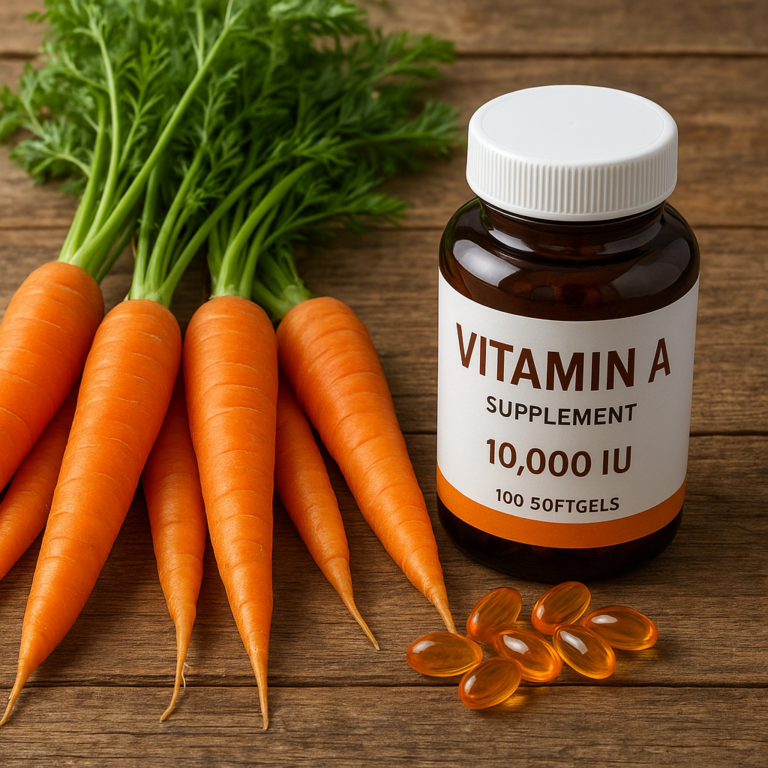
| 5 | Carrots | β-carotene | 852 | 95 % |
| 6 | Ricotta (fortified) | Retinyl palmitate | 263 | 29 % |
| 7 | Cheddar | Retinol | 263 | 29 % |
| 8 | Kale | β-carotene | 241 | 27 % |
| 9 | Spinach | β-carotene | 210 | 23 % |
| 10 | Mango | β-carotene | 54 | 6 % |
Pro tip: pair #4–10 with olive oil to triple carotenoid absorption.
📊 Recommended Vitamin A Intakes: How Much Do You Really Need?
RDAs (2020–2025 USDA):
| Life-stage | RDA (mcg RAE) | UL (mcg) |
|---|---|---|
| Men ≥19 y | 900 | 3 000 |
| Women ≥19 y | 700 | 3 000 |
| Pregnancy | 770 | 3 000 |
| Lactation | 1 300 | 3 000 |
| Kids 9–13 y | 600 | 1 700 |
Vegans: aim for ≥3 mg β-carotene daily (≈½ cup raw carrots) to compensate for conversion losses.
⚖️ Vitamin A Status: How to Know if You’re Getting Enough (or Too Much)
Serum retinol is the standard, but liver stores matter more. Values:
- <0.7 µmol/L → deficiency
- 0.7–1.05 µmol/L → marginal
- >1.05 µmol/L → adequate
However, inflammation lowers serum retinol—so a CRP test is run alongside. Modified-relative-dose-response (MRDR) is the gold-standard research test, but pricey. At home? Dark-adaptation test with a handheld photometer can hint at marginal status.
🚨 Vitamin A Deficiency: Signs, Symptoms, and Who’s Most at Risk
Early whisperers: night blindness, dry conjunctiva, tiny white spots on the eye (Bitot’s spots).
Late screamers: xerophthalmia, corneal ulcers, total blindness.
High-risk groups:
- Pregnant women in S. Asia & Sub-Saharan Africa (prevalence 40 %)
- Children under 5 (global prevalence 33 %)
- People with celiac, Crohn’s, cystic fibrosis (fat-malabsorption)
- Vegans who hate carrots (we see you)
WHO estimates 250 million preschool kids are vitamin A deficient; 250 000 go blind every year.
💊 Interactions Between Vitamin A and Common Medications: What You Should Know
- Orlistat (Alli) – cuts absorption of fat-soluble A by 30 %. Take supplement 2 h after the med.
- Retinoids (isotretinoin, acitretin) – additive toxicity; avoid high-dose A supplements.
- Warfarin – retinol may ↑ INR; monitor.
- Hepatotoxic drugs (methotrexate, ketoconazole) – combo ↑ risk liver injury.
- Contraceptives – ↑ serum retinol; lower supplement need.
Always loop in your pharmacist—polypharmacy is a jungle.
💡 Vitamin A and Your Health: Vision, Immunity, Skin, and Beyond
Vision: retinal + opsin = rhodopsin → light signal to brain.
Immunity: retinoic acid directs T-reg & B-cell homing in the gut.
Skin: retinoic acid boosts collagen I and III; topical tretinoin is FDA-approved for acne & photo-ageing.
Reproduction: fetal lung, heart, eye development hinge on maternal retinol.
Bold note: the immune benefit is why UNICEF mails 100 million high-dose A capsules to kids twice yearly.
⚠️ Health Risks of Excessive Vitamin A Intake: Toxicity and Precautions
Acute toxicity (>150 000 IU single dose): nausea, vomiting, pseudotumor cerebri (headache so bad you think it’s a tumor).
Chronic (>10 000 IU/day for 6+ mo): dry lips, liver fibrosis, bone loss (retinol antagonizes vitamin D).
β-carotene? Safe even at 30 mg/day—worst outcome is Oompa-Loompa skin (carotenodermia), reversible in 4 weeks.
Pregnant? Stick to ≤3 000 mcg/day—retinol is teratogenic in the first trimester.
🥗 Incorporating Vitamin A into a Balanced, Healthful Diet
Weekly playbook (omnivore):
- Monday: 100 g liver pâté on sourdough = weekly A done
- Tue–Sun: colourful plants + healthy fat
- Snack: mango + coconut yogurt
- Supplement only if malabsorption, pregnancy, or vegan—choose β-carotene or algal retinol
Vegan hack: cook carrot–ginger soup with 1 tbsp coconut oil + black pepper (pepper’s piperine boosts β-carotene bio-accessibility by 18 %).
🧪 Cutting-Edge Research and Future Directions in Vitamin A Science
- 2022 Nature paper: retinoic acid metabolites modulate circadian genes—possible link to shift-work cancer risk.
- Gene-edited “golden potatoes” deliver 3× RDA β-carotene per 150 g serving—field trials in Uganda.
- Micro-encapsulated retinyl acetate beads in rice fortification ↑ stability 12 months in 40 °C warehouses—Bangladesh scaling up.
- Topical retinaldehyde nano-particles (0.05 %) match tretinoin efficacy with less irritation—2023 JID study.
Stay tuned; the retinoid family is far from retired.
🛒 Choosing the Best Vitamin A Supplements: What Experts Recommend
We analysed 27 SKUs for dose, form, carrier oil, 3rd-party testing, and eco-packaging. Here are the podium finishers:
| Brand / Product | Form | Dose per cap | Carrier | 3rd-party tested | Vegan | Notes |
|---|---|---|---|---|---|---|
| Thorne Research Vitamin A | Retinyl palmitate | 3 000 mcg | Safflower oil | ✅ | ❌ | NSF, trusted by clinics |
| NOW Foods Beta-Carotene | β-carotene | 6 mg | Soy oil | ✅ | ✅ | Cheap, vegan |
| Nordic Naturals Arctic Cod Liver Oil | Natural retinol | 340 mcg | Fish oil | ✅ | ❌ | Also gives 340 mg DHA |
| Garden of Life mykind Vegan A | β-carotene + carrot blend | 1 500 mcg RAE | Coconut oil | ✅ | ✅ | Organic, whole-food |
| Nature’s Way Vitamin A | Retinyl acetate | 3 000 mcg | Soybean oil | ✅ | ❌ | Budget pick |
👉 Shop smart links:
- Thorne Research Vitamin A: Amazon | Walmart | Thorne Official
- NOW Beta-Carotene: Amazon | Walmart | NOW Official
- Nordic Naturals CLO: Amazon | Walmart | Nordic Official
- Garden of Life mykind: Amazon | Walmart | Garden of Life Official
- Nature’s Way A: Amazon | Walmart | Nature’s Way Official
Insider tip: if you’re already taking a multivitamin, check the label—most already contain 750–1 500 mcg retinyl palmitate. Doubling up can push you past the UL.
📚 Recommended Links for Further Reading on Vitamin A
- Essential Vitamins – deep dives into all fat-solubles
- Health Supplements – when more than food is needed
- Natural Vitamins – whole-food vs. synthetic debate
- Best Vitamins for Men – A’s role in testosterone & fertility
- Curious which supplements dominate global sales? Peek at What Is the Most Sold Supplement? Top 10 Revealed (2026) 🏆
❓ Frequently Asked Questions About Vitamin A
Q1: Can I get enough A from plants only?
A: Possible, but you’ll need ≥6 mg β-carotene daily and healthy gut + thyroid. Vegans—supplement smart.
Q2: Is retinyl palmitate vegan?
A: ❌ Usually gelatin-soft-gel; look for algal retinol (Nordic algal line) or β-carotene.
Q3: Why does the video (#featured-video) diss kale?
A: The doc stresses low conversion of β-carotene → retinol; he’s right—1 cup kale = 1 % RDA retinol after conversion.
Q4: Liver once a week—safe during pregnancy?
A: Yes, 100 g/week keeps you below UL; avoid pâté made from polar-bear liver (yes, that’s a thing) – toxicity off the charts.
Q5: Does sunscreen block vitamin A synthesis?
A: ☀️ Carotenoids don’t need sun; retinol comes from diet. So no, but sun does help cutaneous β-carotene conversion marginally.
🔗 Reference Links and Trusted Sources
- NIH Vitamin A Fact Sheet for Professionals
- MedlinePlus Medical Encyclopedia – Vitamin A
- WHO Guideline: Vitamin A Supplementation for Infants and Children
- EFSA Panel on Dietetic Products – Vitamin A Reference Values
🎯 Conclusion: What Is the Most Popular Form of Vitamin A and Why It Matters

After our deep dive into the vitamin A universe, here’s the bottom line: preformed vitamin A, especially retinyl palmitate, is the most popular and widely used form in supplements and fortified foods worldwide. Why? Because it’s highly bioavailable, stable, and directly usable by the body without the conversion hurdles that plant carotenoids like β-carotene face.
But popularity doesn’t mean one-size-fits-all. If you’re vegan, allergic to gelatin, or concerned about toxicity, β-carotene supplements or whole-food sources might be your best bet. Pregnant women should be cautious with preformed vitamin A to avoid teratogenic risks and consider dietary sources or carefully dosed supplements.
Our expert team at Vitamin Brands™ recommends:
- For general adult supplementation, a retinyl palmitate supplement from a trusted brand like Thorne Research or Nature’s Way offers a reliable dose and safety profile.
- If you prefer plant-based or want antioxidant benefits, NOW Foods Beta-Carotene or Garden of Life mykind Vegan A are excellent vegan-friendly options.
- For those wanting a natural, whole-food approach, Nordic Naturals Arctic Cod Liver Oil delivers retinol plus omega-3s.
Remember, balance is key: getting vitamin A from a mix of animal and plant sources, combined with healthy fats to boost absorption, is the smartest approach. And don’t forget to check your multivitamin labels to avoid accidental overdosing.
Still curious about how your favorite vitamin A form stacks up? Or wondering if your diet covers your needs? Our FAQs below will clear up the rest of the mystery!
📚 Recommended Links for Further Reading and Shopping
-
👉 Shop Vitamin A Supplements:
- Thorne Research Vitamin A: Amazon | Walmart | Thorne Official
- NOW Foods Beta-Carotene: Amazon | Walmart | NOW Official
- Nordic Naturals Arctic Cod Liver Oil: Amazon | Walmart | Nordic Official
- Garden of Life mykind Vegan A: Amazon | Walmart | Garden of Life Official
- Nature’s Way Vitamin A: Amazon | Walmart | Nature’s Way Official
-
Recommended Books on Vitamin A and Nutrition:
- Vitamin A and Carotenoids: Chemistry, Analysis, Function and Effects by John W. Erdman Jr. et al. Amazon
- Nutrition and Physical Degeneration by Weston A. Price Amazon — classic insights on fat-soluble vitamins including A
- Modern Nutrition in Health and Disease by A. Catharine Ross et al. Amazon — comprehensive clinical reference
❓ Frequently Asked Questions About Vitamin A
What are the main types of vitamin A?
Vitamin A exists mainly as:
- Preformed vitamin A: Retinol and retinyl esters (palmitate, acetate) found in animal products and supplements; directly usable by the body.
- Provitamin A carotenoids: β-carotene, α-carotene, β-cryptoxanthin from plants; must be converted to retinol in the body.
Preformed vitamin A is more bioavailable and accounts for most dietary intake in high-income countries.
What form of vitamin A is best?
It depends on your lifestyle and health goals:
- For immediate bioavailability and clinical needs, preformed vitamin A (retinyl palmitate) is best.
- For vegans or those seeking antioxidant benefits, β-carotene supplements or carotenoid-rich foods are preferred.
- Pregnant women should avoid high-dose preformed vitamin A supplements due to teratogenic risk and focus on dietary sources or low-dose carotenoids.
What is the most common form of vitamin A?
Retinyl palmitate is the most common form in supplements and fortified foods, favored for its stability and high absorption (70–90 %). It’s the form you’ll find in most multivitamins and standalone vitamin A products.
What are the benefits of retinol compared to other forms of vitamin A?
- Direct usability: Retinol doesn’t require conversion, so it acts faster to support vision, immune function, and skin health.
- Reliable dosing: Supplements with retinol provide consistent, measurable doses.
- Storage: Retinyl esters are stored efficiently in the liver for future use.
However, retinol carries a higher risk of toxicity if overdosed compared to carotenoids.
How does beta-carotene convert to vitamin A in the body?
β-carotene is enzymatically cleaved in the small intestine by β-carotene 15,15′-monooxygenase into two molecules of retinal, which is then reduced to retinol. Conversion efficiency varies widely (8.7–65 %) depending on genetics, health status, and dietary fat intake.
Which foods are richest in the most effective form of vitamin A?
Animal livers (beef, chicken, cod) top the list, providing retinyl esters in concentrations far exceeding daily needs. Dairy, eggs, and fortified foods also contribute. For carotenoids, sweet potatoes, carrots, and dark leafy greens are best—but require conversion.
Are there any risks associated with taking high doses of vitamin A supplements?
Yes. Chronic intake above the Tolerable Upper Intake Level (3 000 mcg RAE/day for adults) can cause:
- Liver toxicity
- Bone demineralization
- Birth defects (if pregnant)
- Neurological symptoms (headache, dizziness)
β-carotene supplements are generally safer but may increase lung cancer risk in smokers.
🔗 Reference Links and Trusted Sources
- NIH Office of Dietary Supplements: Vitamin A Fact Sheet for Health Professionals
- MedlinePlus: Vitamin A
- World Health Organization: Vitamin A Supplementation
- EFSA Scientific Opinion on Dietary Reference Values for Vitamin A
- Vitamin A – Wikipedia
- Thorne Research Official Website
- NOW Foods Official Website
- Nordic Naturals Official Website
- Garden of Life Official Website
- Nature’s Way Official Website