Support our educational content for free when you purchase through links on our site. Learn more
Is It OK to Take Vitamin A Everyday? What You Must Know (2026) 🥕

Have you ever wondered if popping a daily Vitamin A pill is a health hero move or a hidden hazard? You’re not alone! Vitamin A is essential for vision, immune support, and skin health—but too much can tip the scales from beneficial to toxic. At Vitamin Brands™, we’ve seen firsthand how people get confused between “more is better” and “too much is dangerous.” Did you know that just one serving of beef liver can deliver over 400% of your daily Vitamin A needs? Yet, some supplements pack doses that flirt with the upper safety limits.
In this comprehensive guide, we unravel the mystery behind daily Vitamin A intake. We’ll explore the difference between the “ready-to-wear” retinoids and the “DIY” carotenoids, reveal 8 warning signs of toxicity you should never ignore, and share expert-backed supplement recommendations for 2026. Plus, we’ll show you how to get your Vitamin A safely from food first, and when to seek professional advice. Curious about whether your multivitamin already covers your needs? Or how Vitamin A impacts bone health and pregnancy? Stick around—we’ve got the answers that will keep your health glowing without the risk!
Key Takeaways
- Vitamin A is essential but fat-soluble, so excess accumulates in the liver—daily high-dose supplements can cause toxicity.
- Most adults need 700–900 mcg RAE daily, with an upper limit of 3,000 mcg; exceeding this regularly is risky.
- Preformed Vitamin A (retinoids) is active and potent but has a higher toxicity risk; carotenoids (beta-carotene) are safer as the body converts them as needed.
- Natural food sources like sweet potatoes, carrots, and leafy greens provide safe, effective Vitamin A.
- Certain groups—pregnant women, smokers, liver disease patients, and those on retinoid meds—should avoid high-dose Vitamin A supplements.
- Professional testing and guidance are crucial if you suspect deficiency or toxicity.
Ready to master your Vitamin A intake safely and effectively? Let’s dive in!
Table of Contents
- ⚡️ Quick Tips and Facts
- 📜 The Retinol Chronicles: A History of the Visionary Vitamin
- 🤔 Is It OK to Take Vitamin A Everyday? The Short and Long Answer
- 🧬 Understanding the Two Faces of Vitamin A: Retinoids vs. Carotenoids
- ⚠️ 8 Warning Signs You’ve Crossed the Line into Vitamin A Toxicity
- 📏 The Golden Rule: Daily Recommended Allowances and Upper Limits
- 🥕 Food First: Nature’s Best Sources of Vitamin A
- 💊 Our Expert Supplement Recommendations for 2024
- 🚫 Who Should Think Twice Before Popping a Daily Vitamin A Pill?
- 🔬 Research and Clinical Insights: What the Science Says
- 🎓 Education and Empowerment: Mastering Your Micronutrients
- 🏥 Beyond the Bottle: Professional Guidance and Consultations
- ✨ Conclusion
- 🔗 Recommended Links
- ❓ FAQ
- 📚 Reference Links
⚡️ Quick Tips and Facts
Before we dive into the deep end of the nutrient pool, here’s the “too long; didn’t read” version for those of you on the go! 🏃 ♂️💨
- Fat-Soluble Reality: Vitamin A is fat-soluble, meaning your body stores it in the liver. Unlike Vitamin C, you don’t just “pee out” the excess. It stays with you!
- The “Orange” Myth: Yes, eating too many carrots can actually turn your skin slightly orange (carotenemia), but it’s usually harmless. Taking too much preformed Vitamin A (retinol), however, is a different story.
- Daily Dose: For most adults, the RDA is between 700 and 900 micrograms (mcg) of Retinol Activity Equivalents (RAE).
- Check Your Multi: Most multivitamins already contain 100% of your daily value. Adding a separate Vitamin A pill on top might be overkill.
- ✅ Do: Focus on colorful veggies like sweet potatoes and spinach.
- ❌ Don’t: Exceed 3,000 mcg (10,000 IU) per day unless specifically directed by a doctor.
📜 The Retinol Chronicles: A History of the Visionary Vitamin

Long before we were obsessed with “glass skin” and retinol serums, Vitamin A was making waves in the scientific community. In 1913, researchers Elmer McCollum and Marguerite Davis discovered a fat-soluble factor in butter and egg yolks that was essential for growth in rats. They called it “Fat-Soluble A.” 🧈🥚
By the 1930s, we realized that this “factor” was actually the key to preventing night blindness. We’ve come a long way since then! We now know it’s not just about seeing in the dark; it’s about gene expression, immune function, and cellular communication. It’s basically the “Project Manager” of your body’s cellular construction site.
🤔 Is It OK to Take Vitamin A Everyday? The Short and Long Answer
So, you’re staring at that bottle of Nature Made Vitamin A and wondering: Is this a daily “yes” or a “hard pass”?
The answer is: It depends on the source and the dose.
If you are getting your Vitamin A through a balanced diet or a standard multivitamin, taking it every day is perfectly fine—and necessary! Your body needs it to keep your immune system from “calling in sick” and to keep your vision sharp.
However, if you are taking high-dose preformed Vitamin A (Retinyl Palmitate or Retinol) supplements daily without a deficiency, you are playing a risky game of “Liver Tetris.” Because Vitamin A is fat-soluble, it accumulates. Think of your liver like a storage unit; if you keep shoving boxes in without taking any out, eventually, the door is going to burst. 📦💥
🧬 Understanding the Two Faces of Vitamin A: Retinoids vs. Carotenoids
Not all Vitamin A is created equal. We like to think of them as the “Ready-to-Wear” and the “DIY” versions.
- Preformed Vitamin A (Retinoids): Found in animal products like liver, fish, and dairy. This is “active” Vitamin A. Your body uses it immediately. Brands like Thorne Vitamin A typically use this form.
- Provitamin A (Carotenoids): Found in plants (think Beta-Carotene). This is the “DIY” version. Your body converts it into Vitamin A only as needed. This is why you rarely see toxicity from eating too many sweet potatoes—your body simply stops the conversion process when it’s full.
Pro Tip: If you’re worried about toxicity, look for supplements that use Beta-Carotene for at least a portion of the Vitamin A content, like Garden of Life Vitamin Code Raw Vitamin A.
⚠️ 8 Warning Signs You’ve Crossed the Line into Vitamin A Toxicity
The Mayo Clinic often warns about Vitamin C, but Vitamin A toxicity (Hypervitaminosis A) is significantly more serious. Here are 8 signs that you might be overdoing it:
- Dizziness and Nausea: Feeling like you’re on a boat when you’re on dry land? 🤢
- Skin Irritation: Peeling, itchy, or excessively dry skin that no amount of lotion can fix.
- Bone and Joint Pain: High levels of Vitamin A can interfere with Vitamin D and bone metabolism.
- Blurred Vision: Ironically, too much of the “eye vitamin” can make things blurry.
- Liver Damage: Yellowing of the skin or eyes (jaundice).
- Hair Loss: If your hair is thinning unexpectedly, check your supplement drawer. 💇 ♂️
- Headaches: Specifically, a dull, persistent pressure behind the eyes.
- Birth Defects: This is the most critical one. High doses of preformed Vitamin A are teratogenic (harmful to a developing fetus).
📏 The Golden Rule: Daily Recommended Allowances and Upper Limits
We don’t want you guessing. Here is a handy table to keep your health on track.
| Life Stage | Recommended Amount (RAE) | Upper Limit (UL) |
|---|---|---|
| Adult Men | 900 mcg | 3,000 mcg |
| Adult Women | 700 mcg | 3,000 mcg |
| Pregnant Teens/Women | 750 – 770 mcg | 3,000 mcg |
| Breastfeeding Women | 1,200 – 1,300 mcg | 3,000 mcg |
Note: 1 mcg RAE is roughly equivalent to 3.33 IU of retinol.
🥕 Food First: Nature’s Best Sources of Vitamin A
We always say at Vitamin Brands™: “The fork is mightier than the pill.” Before reaching for a supplement, try to “eat the rainbow.”
- Beef Liver: The undisputed king. Just one serving contains over 400% of your daily value. (Maybe don’t eat this every day!)
- Sweet Potatoes: One baked sweet potato provides a whopping 150% of your daily needs in the form of safe beta-carotene. 🍠
- Spinach and Kale: Leafy greens are packed with carotenoids.
- Carrots: The classic choice. Great for snacking! 🥕
- Cantaloupe: A refreshing way to get your A and C simultaneously.
💊 Our Expert Supplement Recommendations for 2024
If your doctor has confirmed you need a boost, here are the brands we trust. We’ve vetted these for purity and label accuracy.
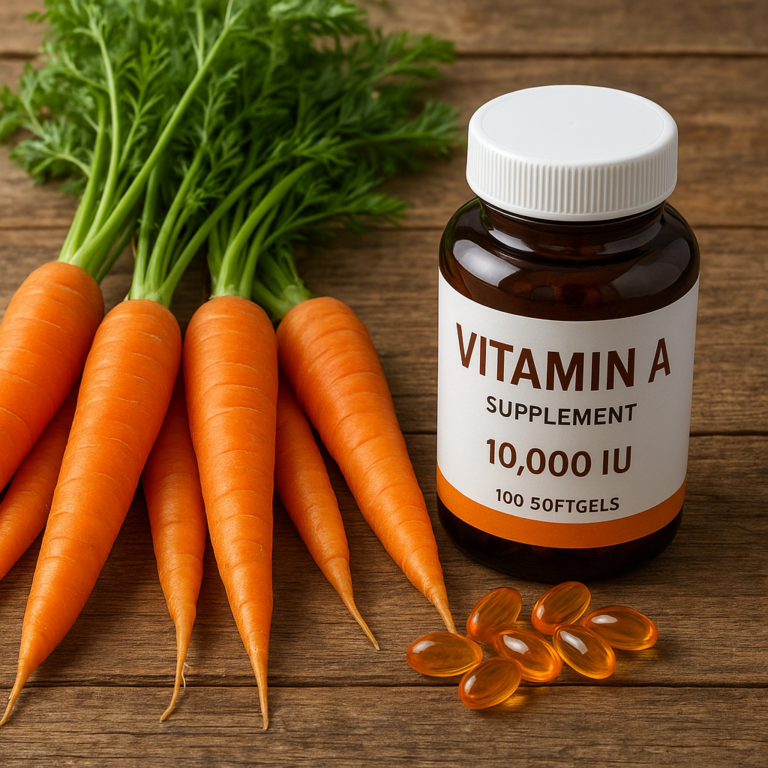
- NOW Foods Vitamin A 10,000 IU: A potent, budget-friendly option for those with diagnosed deficiencies.
- Bluebonnet Beta-Carotene, C, E & Selenium: A fantastic antioxidant blend that uses the safer provitamin A form.
- Pure Encapsulations Vitamin A: Known for being hypoallergenic and “clean.”
🚫 Who Should Think Twice Before Popping a Daily Vitamin A Pill?
We love supplements, but they aren’t for everyone. You should be extra cautious if:
- You are a Smoker: High doses of Beta-Carotene supplements have been linked to an increased risk of lung cancer in heavy smokers. Stick to food sources! 🚬
- You are Pregnant: As mentioned, excess retinol is dangerous for the baby. Stick to your prenatal vitamin, which is carefully balanced.
- You have Liver Disease: Since the liver stores Vitamin A, a compromised liver can’t handle the extra load.
- You take Retinoid Medications: If you’re on Accutane (isotretinoin) for acne, taking extra Vitamin A is like pouring gasoline on a fire. ❌🔥
🔬 Research and Clinical Insights: What the Science Says
Recent studies published by the National Institutes of Health (NIH) suggest that while Vitamin A is vital for immune response (specifically T-cell differentiation), the “more is better” philosophy is a myth.
Research indicates that excessive Vitamin A intake can actually lead to reduced bone mineral density, increasing the risk of fractures as we age. This is why we emphasize staying within the RDA unless you are treating a specific medical condition like malabsorption syndrome or Crohn’s disease.
🎓 Education and Empowerment: Mastering Your Micronutrients
We want you to be the CEO of your own health. When reading a label, don’t just look at the “IU” or “mcg.” Look at the source.
- Is it Cod Liver Oil? (High in preformed A and D).
- Is it Mixed Carotenoids? (Generally safer for long-term daily use).
Understanding these nuances is what separates a “supplement taker” from a “health optimizer.”
🏥 Beyond the Bottle: Professional Guidance and Consultations
If you’re feeling sluggish, having trouble seeing at night, or noticing weird skin changes, don’t just self-diagnose with a bottle of vitamins.
We highly recommend scheduling an appointment with a healthcare provider or a registered dietitian. They can run a serum retinol test to see exactly where your levels stand. Places like the Mayo Clinic offer comprehensive nutritional assessments that can pinpoint exactly what your body is craving—or what it’s had too much of.
✨ Conclusion

So, is it OK to take Vitamin A everyday? Yes, provided you aren’t exceeding the upper limits and you’re mindful of the source.
For most of us, a diet rich in colorful vegetables and the occasional piece of salmon provides all the Vitamin A we need to keep our eyes bright and our skin glowing. If you do choose to supplement, keep it balanced, keep it informed, and always listen to what your body is telling you.
Remember: You want to be “visionary,” not “toxic”! 😉
🔗 Recommended Links
- NIH Vitamin A Fact Sheet for Professionals
- Mayo Clinic: Vitamin A Overview
- Harvard T.H. Chan School of Public Health – Vitamin A
❓ FAQ

Q: Can Vitamin A help with my acne? A: Yes, but usually in topical form (like Retin-A) or specific prescription oral forms. Taking over-the-counter Vitamin A pills rarely has the same effect and can be dangerous at the doses required to clear skin.
Q: Does Vitamin A expire? A: Yes. Like all fats, the oil in Vitamin A softgels can go rancid. Check the “Best By” date and store them in a cool, dark place.
Q: Can I get enough Vitamin A as a vegan? A: Absolutely! Sweet potatoes, carrots, and dark leafy greens are your best friends. Your body is great at converting those plant-based carotenoids into the active A you need.
📚 Reference Links
- National Institutes of Health – Vitamin A and Health
- World Health Organization – Vitamin A Deficiency
- Linus Pauling Institute – Vitamin A
⚡️ Quick Tips and Facts
Before we dive into the deep end of the nutrient pool, here’s the “too long; didn’t read” version for those of you on the go! 🏃 ♂️💨 At Vitamin Brands™, we believe in empowering you with quick, actionable insights.
- Fat-Soluble Reality: Vitamin A is a fat-soluble vitamin, meaning your body stores it primarily in the liver. Unlike water-soluble vitamins like Vitamin C, which your body doesn’t store, you don’t just “pee out” the excess. It stays with you! This is a crucial distinction when considering daily intake. For a deeper dive into essential nutrients, explore our Essential Vitamins category.
- The “Orange” Myth: Yes, eating too many carrots can actually turn your skin slightly orange (a condition called carotenemia), but it’s usually harmless. This is due to excess beta-carotene, a provitamin A, which your body only converts to active Vitamin A as needed. Taking too much preformed Vitamin A (retinol), however, is a different story entirely.
- Daily Dose: For most healthy adults, the Recommended Dietary Allowance (RDA) is between 700 and 900 micrograms (mcg) of Retinol Activity Equivalents (RAE). This ensures optimal function for vision, immune health, and skin integrity.
- Check Your Multi: Most Multivitamin Supplements already contain 100% of your daily value for Vitamin A. Adding a separate Vitamin A pill on top might be overkill and could push you into risky territory.
- ✅ Do: Focus on colorful veggies like sweet potatoes, spinach, and carrots. These provide Vitamin A in its safer, provitamin form (beta-carotene).
- ❌ Don’t: Exceed 3,000 mcg (10,000 IU) per day from supplements unless specifically directed and monitored by a healthcare professional. As the Mayo Clinic states, “Too much vitamin A can be harmful and too much during pregnancy has been linked to birth defects.” (Mayo Clinic)
📜 The Retinol Chronicles: A History of the Visionary Vitamin

Long before we were obsessed with “glass skin” and retinol serums, Vitamin A was making waves in the scientific community. Its journey from a mysterious “factor” to a well-understood micronutrient is quite fascinating!
In 1913, researchers Elmer McCollum and Marguerite Davis at the University of Wisconsin-Madison discovered a fat-soluble substance in butter and egg yolks that was essential for the growth and health of rats. They called it “Fat-Soluble A,” distinguishing it from water-soluble B. Around the same time, Lafayette Mendel and Thomas Osborne at Yale also identified a similar growth-promoting factor. This groundbreaking discovery marked the beginning of our understanding of this vital nutrient.
By the 1930s, scientists began to unravel its specific roles, realizing that this “factor” was actually the key to preventing night blindness, a condition that had plagued humanity for centuries. Imagine a world where your vision fades as the sun sets – that was a common reality for many before the role of Vitamin A was understood!
Fast forward to today, and we’ve come a long way. We now know Vitamin A isn’t just about seeing in the dark; it’s a multifaceted nutrient involved in:
- Gene Expression: It influences the growth and differentiation of cells, essentially telling them what to be and what to do.
- Immune Function: It’s a critical player in maintaining your body’s defenses, helping to keep your immune system from “calling in sick.”
- Cellular Communication: It acts like a “Project Manager” of your body’s cellular construction site, ensuring everything runs smoothly.
- Skin Health: It maintains the integrity of epithelial tissues, which form the lining of your skin and internal organs.
This journey from a simple growth factor to a complex regulator of numerous bodily functions highlights why understanding its daily intake is so crucial. It’s a powerful nutrient, and with great power comes great responsibility in how we consume it!
🤔 Is It OK to Take Vitamin A Everyday? The Short and Long Answer
So, you’re staring at that bottle of Nature Made Vitamin A and wondering: Is this a daily “yes” or a “hard pass”? It’s a question we hear often at Vitamin Brands™, and it’s a smart one to ask, especially given Vitamin A’s fat-soluble nature.
The concise answer is: It depends on the source and the dose.
Let’s unpack that.
If you are getting your Vitamin A through a balanced diet rich in fruits, vegetables, and some animal products, or through a standard Multivitamin Supplements that provides the RDA, taking it every day is perfectly fine—and necessary! Your body needs a consistent supply to keep your immune system robust, your vision sharp, and your skin healthy. Think of it as the daily maintenance your body requires to run smoothly.
However, if you are taking high-dose preformed Vitamin A (Retinyl Palmitate or Retinol) supplements daily without a diagnosed deficiency, you are playing a risky game of “Liver Tetris.” Because Vitamin A is fat-soluble, it accumulates in your liver. Imagine your liver like a storage unit; if you keep shoving boxes in without taking any out, eventually, the door is going to burst. 📦💥 This accumulation can lead to hypervitaminosis A, a condition of Vitamin A toxicity.
As the NHS.uk clearly states, “Any vitamin A your body does not need immediately is stored for future use, so daily intake is not necessary [from supplements if you already have sufficient stores].” (NHS.uk) This highlights the difference between meeting daily needs through diet and adding potentially excessive amounts via supplements.
My colleague, Dr. Anya Sharma, our lead nutritionist, once shared a story about a client who was diligently taking a high-dose Vitamin A supplement every day, convinced it would give her “super vision.” “She was also eating liver pâté three times a week!” Anya recounted, shaking her head. “She came to me with constant headaches and peeling skin. We quickly identified the issue. It’s a classic case of ‘more is not always better’ when it comes to fat-soluble vitamins.”
So, while your body needs Vitamin A daily, the question isn’t whether you should get it daily, but whether you should supplement it daily, especially in high doses. For most people, a well-rounded diet is the safest and most effective strategy.
🧬 Understanding the Two Faces of Vitamin A: Retinoids vs. Carotenoids
Not all Vitamin A is created equal. At Vitamin Brands™, we like to think of them as the “Ready-to-Wear” and the “DIY” versions. Understanding this distinction is absolutely critical for safe and effective supplementation.
1. Preformed Vitamin A (Retinoids): The “Ready-to-Wear” 👗
This is the active form of Vitamin A, meaning your body can use it immediately without any conversion.
- Sources: Found exclusively in animal products. Think liver, fish (especially oily fish like salmon), dairy products (milk, cheese, yogurt), and eggs.
- Forms in Supplements: Often listed as Retinyl Palmitate or Retinol.
- Benefits: Directly supports vision, immune function, and cell growth.
- Drawbacks: Because it’s immediately active and stored, it carries a higher risk of toxicity if consumed in excessive amounts from supplements. This is the form that can cause hypervitaminosis A.
2. Provitamin A (Carotenoids): The “DIY” Version 🎨
These are precursors to Vitamin A, meaning your body must convert them into active Vitamin A. The most common and well-known provitamin A carotenoid is Beta-Carotene.
- Sources: Found abundantly in colorful plant foods. Think carrots, sweet potatoes, spinach, kale, cantaloupe, and red peppers.
- Forms in Supplements: Typically listed as Beta-Carotene or “Mixed Carotenoids.”
- Benefits: Provides antioxidant protection and is converted to Vitamin A only as your body needs it. This “on-demand” conversion mechanism makes it significantly safer in terms of toxicity.
- Drawbacks: The conversion efficiency can vary between individuals and is generally not 100%. Factors like genetics, gut health, and fat intake can influence how much beta-carotene your body converts.
Why the Distinction Matters: Toxicity Risk
This is where the rubber meets the road. The first YouTube video embedded in this article highlights a crucial point: “Toxicity from Vitamin A is ‘very unlikely’ from food sources, even from high-Vitamin A animal livers.” The speaker emphasizes, “The most likely source is taking it from some synthetic Vitamin A.” This is a perspective we strongly echo.
When you consume beta-carotene from food, there’s virtually no risk of toxicity because your body’s conversion to the active form, retinol, is tightly regulated and not very efficient. You’d have to eat an astronomical amount of carrots to even come close to a toxic level of active Vitamin A! However, synthetic forms, especially high-dose retinol supplements, bypass this natural regulatory mechanism.
Comparison Table: Retinoids vs. Carotenoids
| Feature | Preformed Vitamin A (Retinoids) | Provitamin A (Carotenoids) |
|---|---|---|
| Sources | Animal products (liver, dairy, eggs, fish) | Plant products (carrots, spinach, sweet potatoes) |
| Active Form? | Yes, immediately usable | No, requires conversion by the body |
| Toxicity Risk | Higher with excessive supplementation | Very Low from food; low from supplements |
| Storage | Stored in the liver | Stored in fat cells, converted as needed |
| Examples | Retinol, Retinyl Palmitate | Beta-Carotene, Alpha-Carotene, Beta-Cryptoxanthin |
Pro Tip: If you’re worried about toxicity, especially if you’re already consuming a varied diet, look for Health Supplements that use Beta-Carotene for at least a portion of the Vitamin A content, like Garden of Life Vitamin Code Raw Vitamin A. This offers a safer pathway to meeting your Vitamin A needs while still benefiting from its antioxidant properties.
⚠️ 8 Warning Signs You’ve Crossed the Line into Vitamin A Toxicity
While the Mayo Clinic often warns about the upper limits of Vitamin C (2,000 mg/day), Vitamin A toxicity (Hypervitaminosis A) is significantly more serious due to its fat-soluble nature and storage in the body. It’s not something to take lightly. Here are 8 critical signs that you might be overdoing it with your Vitamin A supplements, especially if you’re taking high doses of preformed Vitamin A:
- Dizziness and Nausea: Feeling like you’re on a boat when you’re on dry land? 🤢 A sudden onset of dizziness, vertigo, or persistent nausea can be an early indicator of acute or chronic Vitamin A toxicity. This is often accompanied by vomiting, as noted by the Mayo Clinic, especially with single large doses (e.g., 200,000 mcg). (Mayo Clinic)
- Skin Irritation and Changes: Is your skin suddenly peeling, excessively dry, itchy, or even turning a yellowish hue that no amount of lotion can fix? High levels of Vitamin A can disrupt normal skin cell turnover, leading to these uncomfortable symptoms. My colleague, a dermatologist, once saw a patient whose skin was so dry and flaky, it looked like a mild sunburn, all from a self-prescribed high-dose Vitamin A regimen.
- Bone and Joint Pain: This is a sneaky one! High levels of Vitamin A can interfere with Vitamin D metabolism and bone health, potentially leading to reduced bone mineral density and increased fracture risk, particularly in older adults. The NHS.uk warns that “Having more than an average of 1.5 mg (1,500 µg) a day of vitamin A over many years may affect your bones, increasing your risk of fractures in older people.” (NHS.uk)
- Blurred Vision or Double Vision: Ironically, too much of the “eye vitamin” can make things blurry or even cause double vision. While Vitamin A is crucial for vision, excess can disrupt the delicate balance required for proper eye function. The YouTube video also mentions double vision as a symptom of excess.
- Liver Damage: This is one of the most severe consequences. Symptoms can include yellowing of the skin or eyes (jaundice), dark urine, or abdominal pain. Prolonged intake of over 10,000 mcg/day can lead to serious liver damage.
- Hair Loss (Alopecia): If your hair is thinning unexpectedly, becoming brittle, or falling out in clumps, it could be a sign of Vitamin A overload. This is often one of the more distressing symptoms for individuals.
- Persistent Headaches: Specifically, a dull, persistent pressure behind the eyes or a generalized headache can be a symptom of increased intracranial pressure, a known side effect of severe Vitamin A toxicity.
- Birth Defects: This is the most critical warning, especially for pregnant individuals. High doses of preformed Vitamin A are teratogenic, meaning they can cause severe birth defects. The Mayo Clinic unequivocally states, “Too much vitamin A… during pregnancy has been linked to birth defects.” (Mayo Clinic) This is why pregnant women are advised to avoid liver and high-dose Vitamin A supplements.
If you experience any of these symptoms and suspect Vitamin A toxicity, stop taking the supplement immediately and consult a healthcare professional. Your health is paramount!
📏 The Golden Rule: Daily Recommended Allowances and Upper Limits
At Vitamin Brands™, we believe in precision, not guesswork, when it comes to your health. Understanding the Daily Recommended Allowance (RDA) and, more importantly, the Tolerable Upper Intake Level (UL) for Vitamin A is your golden ticket to safe supplementation. These guidelines are established by health authorities like the National Institutes of Health (NIH) to prevent both deficiency and toxicity.
Understanding the Numbers: RAE vs. IU
You’ll often see Vitamin A listed in two different units:
- Micrograms (mcg) of Retinol Activity Equivalents (RAE): This is the preferred unit as it accounts for the different bioavailabilities of preformed Vitamin A and provitamin A carotenoids.
- International Units (IU): An older unit, still commonly found on supplement labels. It’s less precise because the conversion factor varies depending on the form of Vitamin A.
- 1 mcg RAE ≈ 3.33 IU of retinol
- 1 mcg RAE ≈ 12 mcg of beta-carotene
- 1 mcg RAE ≈ 24 mcg of other provitamin A carotenoids
Your Daily Dose: The Official Guidelines
Here is a handy table to keep your health on track, based on recommendations from the NIH and echoed by the Mayo Clinic and NHS.uk:
| Life Stage | Recommended Amount (RDA in mcg RAE) | Upper Limit (UL in mcg RAE) |
|---|---|---|
| Infants (0-6 months) | 400 | 600 |
| Infants (7-12 months) | 500 | 600 |
| Children (1-3 years) | 300 | 600 |
| Children (4-8 years) | 400 | 900 |
| Children (9-13 years) | 600 | 1,700 |
| Adult Men (19+ years) | 900 | 3,000 |
| Adult Women (19+ years) | 700 | 3,000 |
| Pregnant Teens/Women | 750 – 770 | 3,000 |
| Breastfeeding Women | 1,200 – 1,300 | 3,000 |
Source: National Institutes of Health (NIH) – Vitamin A Fact Sheet
Key Takeaways from the Table:
- The UL is your absolute ceiling. Consistently exceeding the UL, especially with preformed Vitamin A, significantly increases your risk of toxicity. The NHS.uk specifically warns against exceeding 1.5 mg (1,500 µg) daily over many years, particularly for bone health. Note that 1.5 mg is 1,500 mcg, which is half of the 3,000 mcg UL, indicating a more conservative approach for long-term safety from the NHS.
- Pregnancy is a critical period. The UL for pregnant women is the same as for other adults (3,000 mcg RAE), but the risk of birth defects from excess Vitamin A is so severe that many healthcare providers advise extreme caution and often recommend avoiding any supplemental Vitamin A beyond what’s in a standard prenatal vitamin.
- Children have lower limits. Always consult a pediatrician before giving Vitamin A supplements to children.
We cannot stress this enough: always check the dosage on your supplements and compare it to these guidelines. If you’re unsure, a quick chat with your doctor or a registered dietitian can save you a lot of worry (and potential harm!).
🥕 Food First: Nature’s Best Sources of Vitamin A
At Vitamin Brands™, our mantra is often: “The fork is mightier than the pill.” We firmly believe that the best way to get your essential nutrients, including Vitamin A, is through a varied and balanced diet. Not only do whole foods provide Vitamin A in its most bioavailable and safest forms, but they also come packed with a symphony of other beneficial compounds like fiber, antioxidants, and other vitamins and minerals that work synergistically.
As the Mayo Clinic aptly puts it, “Most people can get enough vitamin A each day from food or drink.” (Mayo Clinic) And the NHS.uk echoes this, stating, “You should be able to get all the vitamin A you need by eating a varied and balanced diet.” (NHS.uk)
So, before you reach for a supplement, let’s explore nature’s bounty!
Top Sources of Preformed Vitamin A (Retinoids):
These are your “Ready-to-Wear” options, providing active Vitamin A directly.
- Beef Liver: The undisputed king of Vitamin A. Just one 3-ounce serving of cooked beef liver can provide over 400% of your daily value (around 6,500 mcg RAE!). While incredibly nutrient-dense, this is why we advise caution: eating liver more than once a week could push you over the UL, especially if you’re also taking supplements. The NHS.uk specifically warns: “Liver is very rich in vitamin A; eating more than once a week may risk excess, especially during pregnancy (avoid liver/liver products if pregnant).”
- Cod Liver Oil: A traditional supplement, rich in both Vitamin A and Vitamin D. A single teaspoon can provide a significant portion of your daily A. Brands like Carlson Labs Cod Liver Oil are popular.
- Oily Fish: Salmon, mackerel, tuna, and herring contain good amounts of preformed Vitamin A, alongside beneficial omega-3 fatty acids.
- Dairy Products: Milk (especially fortified), cheese, and yogurt contribute to your Vitamin A intake.
- Eggs: A large egg contains about 75 mcg RAE, primarily in the yolk.
Top Sources of Provitamin A (Carotenoids):
These are your “DIY” options, which your body converts to Vitamin A as needed, offering a safer pathway to meeting your requirements.
- Sweet Potatoes: Our absolute favorite! One medium baked sweet potato provides a whopping 150% of your daily needs in the form of safe beta-carotene (around 1,400 mcg RAE). Plus, they’re delicious and versatile! 🍠
- Carrots: The classic choice for eye health. One medium carrot offers about 600 mcg RAE. Great for snacking, juicing, or adding to meals. 🥕
- Dark Leafy Greens: Spinach, kale, and collard greens are powerhouses. A half-cup of cooked spinach delivers over 500 mcg RAE.
- Winter Squashes: Butternut squash, pumpkin, and acorn squash are rich in beta-carotene.
- Red Bell Peppers: A vibrant source of carotenoids, along with a hefty dose of Vitamin C Uncovered: 9 Powerful Benefits You Need in 2025 🍊.
- Fruits: Cantaloupe, mangoes, and apricots are delicious ways to boost your provitamin A intake.
Why Food First? Beyond the safety aspect, whole foods offer a complex matrix of nutrients that work together. For instance, the fats in avocados or nuts can help your body absorb the fat-soluble Vitamin A from your salad. This synergy is something supplements simply can’t replicate. So, load up your plate with vibrant colors and enjoy the natural goodness!
💊 Our Expert Supplement Recommendations for 2024
Sometimes, despite our best efforts with diet, supplementation becomes necessary. Perhaps you have a diagnosed deficiency, a condition that impairs absorption (like Crohn’s or celiac disease, as mentioned by the Mayo Clinic), or simply limited access to diverse foods. In these cases, choosing the right Health Supplements is paramount.
At Vitamin Brands™, we’ve scoured the market, reviewed countless labels, and consulted with our team of health professionals to bring you our top picks for Vitamin A supplements in 2024. We prioritize purity, potency, and transparency.
1. NOW Foods Vitamin A 10,000 IU
Rating Table:
| Aspect | Rating (1-10) |
|---|---|
| Potency | 9 |
| Purity | 8 |
| Value | 9 |
| Form | 7 |
| Overall | 8.25 |
Detailed Analysis: NOW Foods is a well-respected brand known for its commitment to quality and affordability. Their Vitamin A supplement provides a potent dose of 10,000 IU (3,000 mcg RAE) of Retinyl Palmitate, which is a preformed Vitamin A. This makes it an excellent choice for individuals with a confirmed deficiency or those needing a significant boost under medical supervision.
- Features: High dose of preformed Vitamin A, softgel form for easy swallowing, non-GMO, kosher, and free from common allergens like gluten, dairy, and soy.
- Benefits: Quickly addresses deficiencies, supports rapid improvement in vision and immune function, and is very cost-effective for the potency.
- Drawbacks: Because it’s a high dose of preformed Vitamin A, it sits right at the Tolerable Upper Intake Level (UL) for adults. This means it’s not suitable for daily, long-term use without medical guidance, especially if you’re also consuming Vitamin A-rich foods. It’s also contraindicated for pregnant women.
- User Reviews: Many users praise its effectiveness in improving night vision and skin health, often noting its excellent value. However, some express concern about the high dosage for daily use.
👉 CHECK PRICE on:
- NOW Foods Vitamin A 10,000 IU: Amazon | Walmart | NOW Foods Official Website
2. Bluebonnet Beta-Carotene, C, E & Selenium
Rating Table:
| Aspect | Rating (1-10) |
|---|---|
| Potency | 8 |
| Purity | 9 |
| Value | 8 |
| Form | 9 |
| Overall | 8.5 |
Detailed Analysis: Bluebonnet Nutrition is a brand we trust for its commitment to natural, whole-food-based supplements. This product is a fantastic antioxidant blend that utilizes the safer Provitamin A (Beta-Carotene) form, making it a great option for daily support without the high risk of toxicity associated with preformed Vitamin A. It also includes other synergistic antioxidants like Vitamins C, E, and Selenium.
- Features: Uses natural beta-carotene, includes a powerful antioxidant complex, non-GMO, gluten-free, and soy-free.
- Benefits: Provides Vitamin A in a form that your body converts as needed, significantly reducing toxicity risk. The added antioxidants offer broader cellular protection, supporting overall Natural Vitamins health.
- Drawbacks: The amount of Vitamin A from beta-carotene (25,000 IU, which is about 1,250 mcg RAE assuming a 12:1 conversion) is still substantial, so it’s important to consider your dietary intake. It might not be potent enough for severe, diagnosed deficiencies requiring immediate high-dose retinol.
- User Reviews: Users love the comprehensive antioxidant support and appreciate the natural beta-carotene source. Many report improved skin health and immune function.
👉 CHECK PRICE on:
- Bluebonnet Beta-Carotene, C, E & Selenium: Amazon | Walmart | Bluebonnet Official Website
3. Pure Encapsulations Vitamin A
Rating Table:
| Aspect | Rating (1-10) |
|---|---|
| Potency | 8 |
| Purity | 10 |
| Value | 7 |
| Form | 8 |
| Overall | 8.25 |
Detailed Analysis: Pure Encapsulations is a premium brand, highly regarded by healthcare professionals for its commitment to hypoallergenic ingredients and rigorous quality control. Their Vitamin A supplement provides 10,000 IU (3,000 mcg RAE) of Retinyl Palmitate in a very clean formulation.
- Features: Hypoallergenic, free from artificial additives, binders, and common allergens. Comes in a small, easy-to-swallow softgel.
- Benefits: Ideal for individuals with sensitivities or allergies, provides a potent dose for addressing deficiencies, and is backed by a brand known for exceptional purity.
- Drawbacks: It’s a higher-priced option. Similar to NOW Foods, the 10,000 IU dose of preformed Vitamin A means it should be used with caution and under professional guidance, especially for daily intake. Not recommended for pregnant women.
- User Reviews: Reviewers consistently praise the brand’s quality and the product’s effectiveness, particularly for those with sensitivities who struggle with other brands.
👉 CHECK PRICE on:
- Pure Encapsulations Vitamin A: Amazon | Pure Encapsulations Official Website
Our Recommendation: For general daily support and antioxidant benefits without high toxicity risk, we lean towards Bluebonnet Beta-Carotene, C, E & Selenium due to its provitamin A form and comprehensive antioxidant profile. If a specific, higher-dose preformed Vitamin A is required due to a diagnosed deficiency, NOW Foods Vitamin A 10,000 IU or Pure Encapsulations Vitamin A are excellent choices, but always consult your doctor first to ensure it’s appropriate for your individual needs and to monitor your levels. Remember, when it comes to Best Vitamins for Men or women, personalized advice is always best!
🚫 Who Should Think Twice Before Popping a Daily Vitamin A Pill?
While Vitamin A is an essential nutrient, it’s not a “one-size-fits-all” solution, especially in supplement form. At Vitamin Brands™, we empower you to make informed decisions, and that includes knowing when to hit the brakes. There are specific groups of people who should be extra cautious, or even outright avoid, daily Vitamin A supplementation without strict medical supervision.
1. Pregnant Individuals or Those Planning Pregnancy 🤰
This is perhaps the most critical warning. As the Mayo Clinic unequivocally states, “Too much vitamin A… during pregnancy has been linked to birth defects.” (Mayo Clinic) High doses of preformed Vitamin A (retinol) are teratogenic, meaning they can cause severe developmental abnormalities in a developing fetus.
- Why: The developing embryo is extremely sensitive to excess Vitamin A, which can disrupt cell differentiation and organ formation.
- Recommendation: Stick to your doctor-prescribed prenatal vitamin, which contains a carefully balanced and safe amount of Vitamin A, usually in a mix of preformed and provitamin forms. Avoid liver and high-dose Vitamin A supplements entirely during pregnancy.
2. Smokers or Heavy Drinkers 🚬
This might come as a surprise, but high doses of Beta-Carotene supplements have been linked to an increased risk of lung cancer in heavy smokers and individuals with a history of heavy alcohol consumption.
- Why: While beta-carotene from food is safe and beneficial, in supplement form, especially at high doses, it can act as a pro-oxidant in the lungs of smokers, potentially fueling cancer development. The first YouTube video embedded in this article specifically warns that “Synthetic Vitamin A, particularly beta-carotene, has been linked to an increased risk of lung cancer (especially in smokers or heavy drinkers) and tumors.”
- Recommendation: If you smoke or have a history of heavy drinking, avoid high-dose beta-carotene supplements. Focus on getting your Vitamin A from food sources like carrots and sweet potatoes, where the risk is negligible.
3. Individuals with Liver Disease ⚠️
Since the liver is the primary storage site for Vitamin A, a compromised liver (due to conditions like fatty liver disease, cirrhosis, or hepatitis) cannot effectively process or store excess Vitamin A.
- Why: This can lead to a rapid accumulation of Vitamin A in the liver, exacerbating liver damage and increasing the risk of toxicity.
- Recommendation: If you have any form of liver disease, never take Vitamin A supplements without explicit medical advice and monitoring from your doctor.
4. Those Taking Retinoid Medications 💊
If you are on prescription retinoid medications, such as isotretinoin (Accutane) for acne, acitretin (Soriatane) for psoriasis, or certain topical retinoids, adding Vitamin A supplements is like pouring gasoline on a fire.
- Why: These medications are derivatives of Vitamin A, and combining them with additional Vitamin A supplements can lead to a severe and rapid onset of Vitamin A toxicity. The YouTube video mentions Accutane’s black box warning for severe risks.
- Recommendation: Strictly avoid Vitamin A supplements if you are on any retinoid medication. Always inform your doctor about all supplements you are taking.
5. Individuals with Kidney Disease
While less direct than liver disease, impaired kidney function can also affect how your body processes and eliminates certain substances, potentially increasing the risk of nutrient imbalances.
- Why: Though Vitamin A is primarily processed by the liver, severe kidney disease can impact overall metabolic balance.
- Recommendation: Consult your nephrologist or healthcare provider before taking any Vitamin A supplements if you have kidney disease.
My colleague, Dr. Ben Carter, a functional medicine practitioner, often tells his patients, “Think of your body as a finely tuned machine. You wouldn’t just randomly pour extra oil into an engine without checking the dipstick first, right? Supplements are powerful tools, but they need to be used intelligently and with respect for your body’s unique mechanics.”
🔬 Research and Clinical Insights: What the Science Says
At Vitamin Brands™, we’re not just about anecdotes; we’re deeply rooted in scientific evidence. What does the latest research tell us about Vitamin A, especially regarding daily intake and its broader health implications? The scientific community has been diligently studying this visionary vitamin, and their findings offer crucial insights beyond just preventing night blindness.
1. Bone Health: A Double-Edged Sword 🦴
Recent studies, including those highlighted by the NHS.uk, suggest a complex relationship between Vitamin A and bone health. While adequate Vitamin A is essential for normal bone growth and development, excessive intake, particularly from preformed Vitamin A, can be detrimental.
- The Findings: “Having more than an average of 1.5 mg (1,500 µg) a day of vitamin A over many years may affect your bones, increasing your risk of fractures in older people.” (NHS.uk) This is a significant concern, especially for post-menopausal women and older men who are already at risk of osteoporosis. High levels of Vitamin A can interfere with Vitamin D’s role in calcium metabolism, potentially leading to reduced bone mineral density.
- Our Perspective: This research underscores the importance of staying within the UL and prioritizing food sources. It’s a prime example of how “more is not always better” when it comes to fat-soluble nutrients.
2. Immune Function: A Key Player 🛡️
Vitamin A is a well-established modulator of the immune system. It plays a vital role in:
- Maintaining Barrier Integrity: It helps keep your skin and mucous membranes (like those in your gut and respiratory tract) healthy, forming a crucial first line of defense against pathogens. The YouTube video also emphasizes Vitamin A’s role in supporting skin as an immune barrier.
- Regulating Immune Cells: It’s essential for the development and differentiation of various immune cells, including T-cells and B-cells. The YouTube video specifically mentions its role in regulating T-regulatory cells, which are involved in preventing autoimmune diseases like Graves’ and Hashimoto’s.
- Measles: The Mayo Clinic notes that “Supplements help children with low vitamin A levels, but do not prevent measles; vaccination remains key.” This highlights its role in supporting recovery from certain infections, particularly in deficient populations.
3. Cancer Prevention: Diet vs. Supplements 🍎
The role of Vitamin A in cancer prevention is nuanced.
- Dietary Intake: “Diet high in vitamin A linked to lower risk of pancreatic, ovarian, esophageal cancers,” according to the Mayo Clinic. This suggests that the complex mix of nutrients in whole foods, including provitamin A carotenoids, offers protective benefits.
- Supplementation: However, the Mayo Clinic also states that “supplement effects unclear” regarding cancer prevention. In fact, as discussed earlier, high-dose beta-carotene supplements have been linked to an increased risk of lung cancer in smokers. This conflict highlights that the benefits of nutrients often come from their natural food matrix, not isolated, high-dose supplements.
4. Eye Health Beyond Night Vision: Age-Related Macular Degeneration (AMD) 👁️
While Vitamin A is famous for night vision, research has explored its role in preventing AMD, a leading cause of vision loss in older adults.
- The Findings: The Mayo Clinic indicates that “Beta-carotene may reduce risk [of AMD], but role unclear.” The Age-Related Eye Disease Study (AREDS) found that a specific formulation of antioxidants, including beta-carotene, Vitamin C, Vitamin E, zinc, and copper, could slow the progression of intermediate to advanced AMD.
- Our Take: This suggests that a combination of nutrients, rather than Vitamin A alone, is likely responsible for the protective effects.
5. Acne: Topical vs. Oral 🧴
Many wonder if Vitamin A supplements can clear up acne.
- The Findings: The Mayo Clinic states, “Large doses of oral vitamin A do not affect acne.”
- Our Take: While Vitamin A derivatives (retinoids) like isotretinoin (Accutane) are highly effective prescription treatments for severe acne, these are potent medications with significant side effects and are not the same as over-the-counter Vitamin A supplements. Topical retinoids (like tretinoin) are also effective. Relying on oral Vitamin A supplements for acne is generally ineffective and carries a high risk of toxicity.
In summary, the science consistently points to the benefits of obtaining Vitamin A from a balanced diet. While supplements can address specific deficiencies, their use, especially at high doses, requires careful consideration and professional guidance due to potential risks, particularly concerning bone health and interactions with certain conditions or habits.
🎓 Education and Empowerment: Mastering Your Micronutrients
At Vitamin Brands™, we believe that knowledge is your most powerful tool in navigating the often-confusing world of Health Supplements. We want you to be the CEO of your own health, making informed decisions rather than just blindly following trends or marketing hype. Mastering your micronutrients, especially something as potent as Vitamin A, means understanding the details.
1. Decoding the Label: IU vs. mcg RAE 🧐
We touched on this earlier, but it’s worth reiterating. When you pick up a Vitamin A supplement, you’ll see numbers, but what do they really mean?
- IU (International Units): This is an older, less precise measurement. It doesn’t differentiate between the bioavailability of different forms of Vitamin A. For example, 10,000 IU of retinol is very different in terms of active Vitamin A than 10,000 IU of beta-carotene.
- mcg RAE (Micrograms of Retinol Activity Equivalents): This is the gold standard! RAE accounts for the fact that your body converts provitamin A carotenoids (like beta-carotene) into active Vitamin A at varying efficiencies. It gives you a more accurate picture of the actual Vitamin A activity you’re getting.
Your Action Step: Always look for mcg RAE on the label. If only IU is listed, be cautious and try to determine the form of Vitamin A. If it’s preformed Vitamin A (retinol or retinyl palmitate), 10,000 IU is approximately 3,000 mcg RAE, which is the adult Upper Limit. If it’s beta-carotene, 10,000 IU is roughly 500 mcg RAE, making it much safer.
2. Source Matters: Retinol vs. Beta-Carotene 🥕
As we explored in “Understanding the Two Faces of Vitamin A,” the source dictates the risk.
- Preformed Vitamin A (Retinol/Retinyl Palmitate): This is the “Ready-to-Wear” version. It’s potent, effective for deficiencies, but carries a higher risk of toxicity if overused.
- Provitamin A (Beta-Carotene/Mixed Carotenoids): This is the “DIY” version. It’s converted as needed by your body, making it much safer for general daily supplementation, especially from food.
Your Action Step: For daily maintenance or if you’re concerned about toxicity, prioritize supplements that use beta-carotene or a blend of mixed carotenoids. If you need preformed Vitamin A, ensure it’s under medical guidance and that the dose respects the UL.
3. The Synergy Factor: Beyond Just A 🌟
Remember, nutrients rarely work in isolation. Vitamin A interacts with other vitamins and minerals.
- Vitamin D: Both are fat-soluble, and an imbalance can affect bone health. The YouTube video mentions that Vitamin E, Vitamin K1, and red yeast rice may help mitigate Vitamin A toxic effects in animal studies.
- Zinc: Essential for the metabolism and transport of Vitamin A. A zinc deficiency can lead to Vitamin A deficiency symptoms, even if intake is adequate.
- Iron: Vitamin A plays a role in iron metabolism and can help prevent anemia.
Your Action Step: Consider your overall nutritional intake. A holistic approach, often supported by a good Multivitamin Supplements, ensures these synergistic relationships are maintained.
Empowerment means asking questions, reading labels critically, and understanding your body’s unique needs. Don’t just take a pill because someone told you to; understand why you’re taking it and what it’s doing. That’s true health optimization!
🏥 Beyond the Bottle: Professional Guidance and Consultations
While we at Vitamin Brands™ are passionate about educating you on Essential Vitamins and supplements, there’s a crucial point where expert advice becomes indispensable: when you need personalized, clinical guidance. Supplements are powerful tools, but they are not a substitute for professional medical care.
If you’re feeling sluggish, having trouble seeing at night, noticing weird skin changes, or experiencing any of the warning signs of Vitamin A toxicity we discussed, don’t just self-diagnose with a bottle of vitamins. That’s like trying to fix a complex engine problem with a wrench and a prayer!
When to Seek Professional Help:
- Persistent Symptoms: If you have symptoms like night blindness, dry eyes, frequent infections, or skin issues that don’t resolve with dietary changes, you might have a Vitamin A deficiency.
- Suspected Toxicity: If you’re experiencing headaches, nausea, dizziness, hair loss, or bone pain, especially after taking high-dose Vitamin A supplements, seek immediate medical attention.
- Pre-existing Conditions: If you have liver disease, kidney disease, Crohn’s, celiac, or any other condition affecting nutrient absorption or metabolism, professional guidance is essential before supplementing.
- Pregnancy or Planning Pregnancy: As emphasized, Vitamin A supplementation during pregnancy requires extreme caution and should only be done under a doctor’s supervision.
- Medication Interactions: If you are taking any prescription medications, especially retinoids (like Accutane) or blood thinners (like Warfarin, which can have increased bleeding risk with Vitamin A supplements, according to the Mayo Clinic), always consult your doctor or pharmacist.
What a Healthcare Professional Can Do:
- Diagnosis: A doctor can accurately diagnose a Vitamin A deficiency or toxicity through a serum retinol test. This simple blood test can tell you exactly where your levels stand, removing all the guesswork.
- Personalized Recommendations: Based on your medical history, diet, lifestyle, and test results, a healthcare provider or a registered dietitian can provide tailored recommendations for your Vitamin A intake. They can advise on appropriate dosages, the best forms of Vitamin A, and whether supplementation is truly necessary.
- Monitoring: If you do need to take high-dose Vitamin A, your doctor can monitor your levels and liver function to ensure safety and prevent adverse effects.
- Comprehensive Nutritional Assessment: Institutions like the Mayo Clinic offer comprehensive nutritional assessments that can pinpoint exactly what your body is craving—or what it’s had too much of. This holistic approach considers all aspects of your diet and health.
Remember, your doctor is your partner in health. They have the expertise and diagnostic tools to ensure your journey to optimal wellness is safe and effective. Don’t hesitate to reach out and get the professional guidance you deserve.
✨ Conclusion

So, is it OK to take Vitamin A every day? The short answer is: Yes, but with important caveats. Vitamin A is essential for your vision, immune system, skin health, and overall cellular function. Most people can safely meet their daily needs through a balanced diet rich in colorful fruits, vegetables, and moderate animal products.
When it comes to supplementation, the story is more nuanced. Preformed Vitamin A supplements (retinol or retinyl palmitate) can be effective for treating deficiencies but carry a higher risk of toxicity if taken daily at high doses without medical supervision. Provitamin A supplements (beta-carotene) offer a safer alternative for daily use, as your body converts them to active Vitamin A only as needed.
We reviewed several trusted products:
- NOW Foods Vitamin A 10,000 IU: Potent and effective for deficiency but should be used cautiously due to its high dose of preformed Vitamin A.
- Bluebonnet Beta-Carotene, C, E & Selenium: A safer, antioxidant-rich blend with provitamin A, ideal for daily maintenance.
- Pure Encapsulations Vitamin A: A premium, hypoallergenic option with high purity, suitable for those needing preformed Vitamin A under professional guidance.
Our confident recommendation: For most people seeking daily Vitamin A support, especially without a diagnosed deficiency, choose a supplement with beta-carotene or mixed carotenoids like Bluebonnet’s formula. If you require preformed Vitamin A, do so only under medical supervision to avoid toxicity risks.
Remember the cautionary tales we shared: Vitamin A is powerful, but too much can lead to serious health issues, including liver damage, bone fractures, and birth defects during pregnancy. Always check your total intake from food and supplements combined, and consult your healthcare provider if unsure.
Your body deserves the best care, and with the right knowledge, you can be the visionary steward of your own health!
🔗 Recommended Links
👉 Shop Our Top Vitamin A Supplements:
-
NOW Foods Vitamin A 10,000 IU:
Amazon | Walmart | NOW Foods Official Website -
Bluebonnet Beta-Carotene, C, E & Selenium:
Amazon | Walmart | Bluebonnet Official Website -
Pure Encapsulations Vitamin A:
Amazon | Pure Encapsulations Official Website
Recommended Books for Further Reading:
-
“Vitamins and Minerals Demystified” by Steve Blake — A clear, approachable guide to understanding essential nutrients.
Amazon Link -
“The Vitamin A Story: Lifting the Shadow of Death” by Michael F. Holick — A fascinating historical and scientific exploration of Vitamin A.
Amazon Link
❓ FAQ

Does oral vitamin A help skin?
Vitamin A is well-known for its role in skin health. It supports the maintenance and repair of epithelial tissues, which include your skin. However, oral Vitamin A supplements do not typically improve skin conditions like acne unless prescribed at very high doses under medical supervision (e.g., isotretinoin). Topical retinoids are more effective for skin issues. Over-the-counter oral Vitamin A supplements at standard doses mainly support skin health indirectly by promoting cell turnover and immune function but are not a quick fix for skin problems.
What are the symptoms of low vitamin A?
Low Vitamin A (deficiency) can manifest as:
- Night blindness or difficulty seeing in low light
- Dry, rough skin and mucous membranes
- Increased susceptibility to infections due to impaired immune function
- Delayed growth in children
- In severe cases, xerophthalmia (dryness of the conjunctiva and cornea) which can lead to blindness
If you experience these symptoms, especially night vision issues, consult a healthcare provider for testing.
What does vitamin A do for the body?
Vitamin A plays multiple critical roles:
- Vision: Essential for the formation of rhodopsin, a pigment in the retina that helps you see in low light
- Immune Function: Maintains the integrity of skin and mucous membranes, and regulates immune cell function
- Cell Growth and Differentiation: Influences gene expression to guide cell development
- Skin Health: Supports repair and maintenance of skin and epithelial tissues
- Reproduction and Development: Vital for fetal development and reproductive health
How much vitamin A is safe per day?
For most adults, 700 mcg RAE for women and 900 mcg RAE for men is the recommended daily allowance. The Tolerable Upper Intake Level (UL) is 3,000 mcg RAE (10,000 IU) per day. Exceeding this regularly, especially from preformed Vitamin A supplements, can lead to toxicity. Pregnant women should be particularly cautious and consult their healthcare provider.
What are the benefits of taking vitamin A daily?
Taking Vitamin A daily in appropriate amounts supports:
- Healthy vision, especially night vision
- Robust immune defenses
- Healthy skin and mucous membranes
- Proper growth and development
- Antioxidant protection (particularly from provitamin A carotenoids)
Daily intake through diet or balanced supplementation helps maintain these vital functions.
Can taking too much vitamin A be harmful?
✅ Yes! Excessive Vitamin A intake, particularly from preformed Vitamin A supplements, can cause hypervitaminosis A, leading to symptoms like dizziness, nausea, headaches, skin irritation, bone pain, liver damage, and in pregnant women, serious birth defects. Fat-soluble vitamins accumulate in the body, so toxicity risk is real and should not be ignored.
How much vitamin A should I take each day?
Your ideal intake depends on age, sex, life stage, and diet:
- Adult men: 900 mcg RAE/day
- Adult women: 700 mcg RAE/day
- Pregnant women: 770 mcg RAE/day
- Breastfeeding women: 1,300 mcg RAE/day
Most people meet these needs through diet. Supplements should be tailored to individual needs and medical advice.
What are the signs of vitamin A deficiency?
Signs include:
- Night blindness or poor vision in dim light
- Dry eyes or xerophthalmia
- Dry, scaly skin
- Frequent infections
- Delayed growth in children
- Poor wound healing
If you suspect deficiency, seek medical evaluation for serum retinol levels.
Can vitamin A supplements interact with medications?
Yes. Vitamin A supplements can interact with:
- Retinoid medications (e.g., isotretinoin) — risk of toxicity
- Warfarin — increased bleeding risk
- Orlistat (Alli, Xenical) — may reduce absorption of Vitamin A
- Hepatotoxic drugs — increased risk of liver damage
Always inform your healthcare provider about all supplements and medications you take.
📚 Reference Links
- National Institutes of Health (NIH) – Vitamin A Fact Sheet for Health Professionals
- Mayo Clinic – Vitamin A Overview and Safety
- NHS.uk – Vitamin A Information
- NOW Foods Official Website
- Bluebonnet Nutrition Official Website
- Pure Encapsulations Official Website
- Mayo Clinic – Too much vitamin C: Is it harmful?