Support our educational content for free when you purchase through links on our site. Learn more
Which Vitamin Brands Do Pharmacists Avoid? 💊

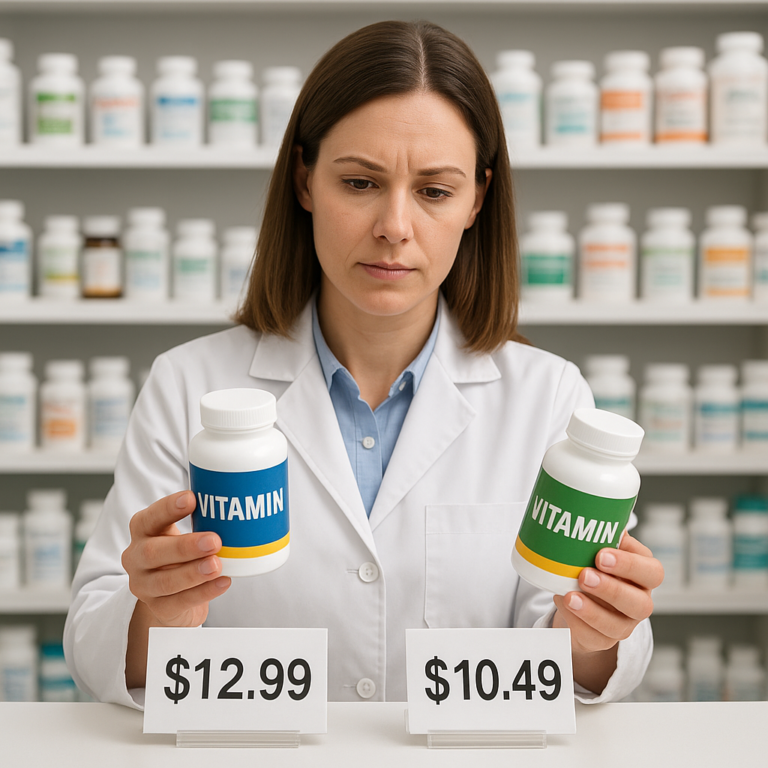
Are there any vitamin brands that pharmacists generally advise against? Usually, no single brand is universally blacklisted. Pharmacists more often advise avoiding specific products with hidden doses, weak quality controls, disease-cure claims, excessive megadoses, or questionable online sellers.
That distinction matters. A familiar bottle on a pharmacy shelf is not automatically perfect, while an expensive “practitioner-grade” supplement is not automatically superior. Pharmacists judge the ingredient list, dose, testing, interactions, seller, and your health history before judging the logo.
A pharmacist once told us about a patient taking a multivitamin, a hair-growth gummy, an immune powder, and a separate zinc capsule. Nothing looked alarming alone, but together they created a nutritional traffic jam—with overlapping zinc and vitamin B6. The solution was not another premium supplement; it was a label audit.
The FDA does not pre-approve dietary supplements for safety and effectiveness before they reach stores, so third-party verification from organizations such as USP, NSF, or ConsumerLab can provide useful quality signals. The smartest “brand to avoid” is any product that cannot clearly explain what is inside it, how much you get, and who made it.
Key Takeaways
- There is no universal pharmacist blacklist. Concerns usually focus on individual products, doses, sellers, or formulas rather than an entire brand.
- Avoid vague labeling. Proprietary blends, undisclosed amounts, missing lot numbers, and unsupported “detox” or disease-treatment claims are major warning signs.
- Look for independent quality verification. USP Verified, NSF, Informed Choice, and credible ConsumerLab testing can help confirm identity, potency, and purity.
- More is not better. High-dose vitamin A, D, E, B6, iron, zinc, and other nutrients can cause harm or interact with medicines.
- Store brands can be perfectly reasonable. Compare the exact product’s dose, form, testing, and ingredients instead of judging it by price or prestige.
- Online seller quality matters. Check the seller, packaging, tamper seal, expiration date, and lot number before taking a marketplace supplement.
- Ask a pharmacist before stacking products. Multivitamins, gummies, powders, herbal blends, and fortified drinks can quietly duplicate the same nutrients.
- Choose need over novelty. A targeted supplement for a documented deficiency is usually more sensible than a complicated “complete wellness” formula.
Table of Contents
- ⚡️ Quick Tips and Facts
- 💊 Why Pharmacists May Warn Against Certain Vitamin Brands
- Brand Reputation Versus Product-Specific Concerns
- Why “Pharmacist-Recommended” Does Not Mean Every Product Is Ideal
- 🔍 Are There Vitamin Brands Pharmacists Generally Advise Against?
- No Universal Blacklist: What Pharmacists Actually Evaluate
- Red Flags That Can Apply to Any Supplement Company
- 🚩 10 Types of Vitamin Brands and Supplements Pharmacists May Recommend Avoiding
- 1. Brands Without Independent Third-Party Testing
- 2. Products With Proprietary Blends and Hidden Dosages
- 3. Mega-Dose Vitamins With Little Evidence of Benefit
- 4. Supplements Making Disease-Treatment or “Cure” Claims
- 5. Products With Dubious Detox, Cleanse, or Fat-Burning Claims
- 6. Unverified Online Marketplace Supplements
- 7. Products With Contamination or Recall Concerns
- 8. Gummies With Excessive Sugar or Inaccurate Labels
- 9. Herbal-Vitamin Blends With Medication Interaction Risks
- 10. Expired, Damaged, or Poorly Stored Supplements
- 🏷️ How Pharmacists Judge Vitamin Quality
- USP, NSF, ConsumerLab, and Informed-Choice Certification
- Reading a Supplement Facts Label Like a Pharmacist
- Dosage, Bioavailability, and Ingredient Forms
- Expiration Dates, Lot Numbers, and Contact Information
- ✅ Vitamin Brands Pharmacists Commonly Trust
- Nature Made: Widely Available and USP-Verified Options
- Kirkland Signature: Value With Selected Third-Party Certifications
- Thorne: Practitioner-Focused Formulas and Testing
- Pure Encapsulations: Hypoallergenic Supplement Options
- NOW Foods: Broad Selection and Quality Controls
- Garden of Life, Ritual, and MegaFood: What to Check Before Buying
- ⚖️ Store Brands Versus Premium Vitamins: Which Is Better?
- Are Generic and Private-Label Vitamins Safe?
- When Paying More May or May Not Make Sense
- 🧪 FDA Regulation and Supplement Safety: What the Label Does Not Tell You
- How Dietary Supplements Differ From Prescription Drugs
- Good Manufacturing Practices and Quality Control
- Why FDA Approval Is Not the Same as Supplement Certification
- ⚠️ Common Vitamin Ingredients Pharmacists Urge You to Use Carefully
- Vitamin A and Beta-Carotene
- Vitamin D
- Vitamin E
- Vitamin B6
- Iron
- Calcium
- Magnesium
- Zinc
- Biotin
- Herbal Ingredients and Stimulant Additives
- 💥 Vitamin and Medication Interactions to Know
- Blood Thinners and Vitamin K
- Thyroid Medication and Mineral Supplements
- Antibiotics and Calcium, Iron, Magnesium, or Zinc
- Diabetes, Blood Pressure, and Immunosuppressant Medicines
- Biotin and Misleading Lab Test Results
- 👨 👩 👧 👦 Who Should Be Especially Cautious With Supplements?
- Children and Teenagers
- Pregnancy and Breastfeeding
- Older Adults
- Kidney or Liver Disease
- People Preparing for Surgery
- People Taking Multiple Prescription Medicines
- 🛒 How to Buy Safe Vitamins Online and In Stores
- How to Spot Unsafe Online Vitamin Sellers
- Amazon, Marketplace Sellers, and Authorized Retailers
- Avoiding Counterfeit, Recalled, and Tampered Products
- Questions to Ask a Pharmacist Before You Buy
- 📋 A Pharmacist-Approved Vitamin Shopping Checklist
- Before Purchase
- After Purchase
- When to Stop Taking a Supplement
- 🩺 Symptoms of a Bad Reaction to Vitamins
- Mild Side Effects
- Signs That Need Prompt Medical Attention
- How to Report Supplement Problems
- 🌿 Food First: When You May Not Need a Vitamin Supplement
- Targeted Supplementation Versus Daily Multivitamins
- Blood Tests and Clinically Appropriate Dosing
- When a Pharmacist May Recommend a Specific Supplement
- 🔎 How to Check Vitamin Recalls, Warnings, and Adverse Events
- FDA Recalls and Safety Alerts
- NIH Office of Dietary Supplements Fact Sheets
- USP and Third-Party Verification Databases
- 💬 What Pharmacists Say About Popular Vitamin Marketing Claims
- “Natural” Does Not Automatically Mean Safe
- “Clean,” “Non-Toxic,” and “Pharmaceutical Grade”
- “Whole Food” and “Methylated” Vitamins
- “Detox,” “Immune Boost,” and “Clinically Proven”
- ❓ FAQ: Vitamin Brands Pharmacists May Advise Against
- Do pharmacists have a list of vitamin brands to avoid?
- Are cheap vitamins unsafe?
- Is Nature Made a good vitamin brand?
- Are gummy vitamins less effective than tablets?
- Are vitamins sold on Amazon safe?
- What vitamin brands are third-party tested?
- Should I stop taking a supplement my pharmacist dislikes?
- Can vitamins cause liver or kidney damage?
- How can I verify whether a vitamin brand is legitimate?
- 🎯 Conclusion
- 🔗 Recommended Links
- 📚 Reference Links
Quick Tips and Facts
If you arrived here searching for pharmacist-recommended vitamin brands, here’s the short answer: pharmacists usually do not maintain one universal “do-not-buy” list of vitamin brands. They assess the specific product, dose, ingredient list, testing, seller, and your medications.
A familiar logo is not a safety certificate. A dramatic “detox” promise is not clinical evidence. And a bargain bottle can be perfectly reasonable—or a label-reading puzzle wearing a shiny cap. 🧴
The pharmacist’s fast screening test
✅ Prefer products that:
- Clearly list every ingredient and amount
- Use a reputable manufacturer with accessible contact information
- Carry credible third-party verification, such as USP Verified, NSF Certified, or ConsumerLab testing
- Provide a lot number and expiration date
- Match a genuine nutritional need
- Come from an authorized retailer
❌ Approach cautiously when a product:
- Promises to cure diabetes, arthritis, infertility, cancer, or other diseases
- Hides doses inside a “proprietary blend”
- Uses extreme megadoses without a clear medical reason
- Is sold through anonymous marketplace seller
- Includes unexplained stimulants, hormones, or multiple herbs
- Has a broken seal, missing lot number, or vague labeling
- Adds vitamins to an unrelated compounded medication without evidence of benefit
The NIH Office of Dietary Supplements explains that supplements can help in selected situations, but they cannot replace a varied diet or prescribed treatment. The FDA also states that dietary supplements are not approved for safety and effectiveness before sale in the same way prescription medicines are (FDA supplement overview).
A quick quality comparison
| What you see | What it may mean | Pharmacist’s response |
|---|---|---|
| USP Verified seal | Product was tested against USP standards for ingredients, potency, and contaminants | Strong positive signal |
| NSF Certified | Independent testing and manufacturing review | Strong positive signal |
| “Third-party tested” with no tester named | Marketing language may be difficult to verify | Ask who tested it |
| “Pharmaceutical grade” | Often undefined for dietary supplements | Do not treat it as certification |
| Proprietary blend | Total blend is disclosed, but individual doses may not be | Usually less transparent |
| Disease-treatment claim | May violate supplement marketing rules and signal poor oversight | Avoid |
| Lot number and expiration date | Supports traceability | Positive |
| Imported product with no U.S. contact details | Harder to verify or report | Use caution |
The first featured video takes a stricter view, advising viewers to look beyond drugstore shelves and seek independent testing. That perspective is useful, although “sold in a drugstore” does not automatically mean unsafe. Large retailers can sell excellent products and mediocre ones side by side—rather like a supermarket produce aisle, except the apples do not claim to repair your mitochondria.
The key distinction
A pharmacist may advise against:
- A particular product
- A formulation
- A dose
- A retailer or seller
- An ingredient combination
That does not necessarily mean the entire brand is unsafe.
For example, a pharmacist may support a verified vitamin D product from one manufacturer but discourage a high-dose “immune complex” from that same company because the latter contains unnecessary ingredients or excessive amounts.
Why Pharmacists May Warn Against Certain Vitamin Brands
Pharmacists are trained to think in terms of benefit, risk, dose, interactions, and evidence. They are less interested in whether a bottle looks luxurious and more interested in whether its contents make sense for you.
Brand reputation versus product-specific concerns
The question “Which vitamin brands should I avoid?” sounds simple, but it bundles together several different problems:
- Manufacturing quality: Was the product made consistently?
- Label accuracy: Does the bottle contain what it claims?
- Contamination: Could it contain heavy metals, microbes, allergens, or undeclared drugs?
- Clinical usefulness: Is the nutrient needed?
- Safety: Is the dose appropriate?
- Interactions: Could it interfere with medicines or lab tests?
- Retail integrity: Was it stored properly and sold by an authorized source?
The FDA’s Current Good Manufacturing Practice guidance addresses manufacturing controls, but following manufacturing rules does not mean a product has been proven effective for every claim on its label.
Why “pharmacist-recommended” does not mean every product is ideal
A pharmacist might recommend:
- Nature Made Vitamin D3 for a straightforward, widely available option
- Kirkland Signature Calcium when the formulation and dose fit the patient
- Thorne Basic Nutrients 2/Day when a practitioner-focused formula is appropriate
- Pure Encapsulations Magnesium Glycinate when excipient sensitivity matters
- Nordic Naturals Ultimate Omega when an omega-3 supplement is clinically reasonable
But recommendations still depend on:
- Age
- Pregnancy status
- Kidney and liver function
- Diet
- Laboratory results
- Prescribed medicines
- Allergies
- The reason for taking the supplement
A bottle that is sensible for one person can be unnecessary—or risky—for another.
A real-world example from our practice conversations
We once reviewed a “hair, skin, and nails” supplement that looked impressively comprehensive. It contained biotin, zinc, selenium, vitamin A, vitamin E, and several herbal extracts. The consumer’s concern was hair shedding after an illness.
The problem? She was already taking a multivitamin and a separate zinc product. Her combined intake was far higher than she realized. The better recommendation was not “buy the most premium hair formula.” It was to check causes of hair loss, review total intake, and avoid stacking overlapping products.
That is the part of supplement advice that rarely fits on an Instagram carousel.
Pharmacists often question the following claims
| Marketing phrase | What a pharmacist asks |
|---|---|
| “Clinically proven” | Proven for which outcome, dose, and population? |
| “Whole-food vitamins” | Is the nutrient amount reliable and appropriate? |
| “Natural energy” | Which stimulant or stimulant-like ingredient is included? |
| “Detoxification support” | Detoxification from what, and supported by which trial? |
| “Maximum absorption” | Is there human evidence for this formulation? |
| “Doctor formulated” | Which doctor, and what quality controls exist? |
| “No side effects” | Has the product actually been tested, and for whom? |
| “Pharmaceutical grade” | Is this a recognized, independently verified standard? |
Are There Vitamin Brands Pharmacists Generally Advise Against?
No universal blacklist: what pharmacists actually evaluate
There is no authoritative, universal list of vitamin brands that all pharmacists advise patients to avoid. The competing sources summarized for this article do not identify a specific vitamin manufacturer as broadly prohibited.
The Stanford discussion cited in the source material warns about unapproved compounded GLP-1 products containing added vitamins, not ordinary vitamin brands. The pharmacist’s concern is the unapproved drug formulation, unclear concentration, dosing errors, storage, and untested additives, rather than a particular vitamin company.
That distinction matters. A compounded semaglutide product containing B12 or B6 is not equivalent to a standard B12 tablet purchased from a reputable manufacturer.
Similarly, the NHS omeprazole guidance does not name vitamin brands to avoid. It simply advises patients to tell a doctor or pharmacist about vitamins, supplements, and herbal remedies because some may interact with medicines. That is sensible medication reconciliation—not a brand blacklist.
Red flags that can apply to any supplement company
A pharmacist may discourage a product when several warning signs appear together:
- No identifiable manufacturer
- No customer-service address or phone number
- No lot number
- No expiration date
- Vague ingredient quantities
- Unsupported treatment claims
- Unusually complex blends
- “Miracle” testimonials replacing evidence
- Unclear country of manufacture
- No meaningful quality documentation
- Repeated regulatory warnings or recalls
- Product sold only through anonymous social-media account
One warning sign does not automatically prove a product is dangerous. Five warning signs? That bottle deserves a polite farewell.
What about brands sold in pharmacies?
Retail availability is not the same as endorsement. Pharmacies and big-box stores carry many brands because customers want choice, not because pharmacists have personally validated every label.
The first video’s advice to seek third-party testing is a practical consumer shortcut. However, we would refine it:
- Do not assume every drugstore product is poor quality.
- Do not assume every premium online brand is superior.
- Look for verifiable testing and transparent labeling wherever you shop.
A product sold at CVS, Walgreens, Walmart, Costco, or a local independent pharmacy still deserves label scrutiny. So does a product sold directly from a polished brand website.
10 Types of Vitamin Brands and Supplements Pharmacists May Recommend Avoiding
This list focuses on product characteristics, not blanket judgments about entire companies.
1. Brands Without Independent Third-Party Testing
Third-party testing means an organization separate from the manufacturer evaluates some aspect of the product, such as identity, purity, potency, contaminants, or manufacturing controls.
Credible programs include:
- USP Verified
- NSF Certified for Sport
- NSF Dietary Supplements Certification
- ConsumerLab
- Informed Choice
Third-party testing does not prove that a supplement will deliver a health benefit. It supports confidence that the contents more closely match the label and meet specified standards.
What to verify
Do not stop at “third-party tested.” Ask:
- Who performed the testing?
- What exactly was tested?
- Is the certification current?
- Does it apply to this product or only the company’s facility?
- Can the certification be searched in a public database?
A logo copied onto a label is not the same as a searchable certification.
2. Products With Proprietary Blends and Hidden Dosages
A proprietary blend may list ingredients but conceal the amount of each one. For instance:
Herbal matrix: ashwagandha, green tea extract, ginseng, yohimbe, and caffeine — 1,200 mg
You cannot tell how much caffeine or yohimbe you are taking. That creates a problem for:
- Interaction screening
- Comparing products
- Avoiding duplicate ingredients
- Assessing whether the dose is effective or excessive
The FDA explains supplement labeling requirements and discourages misleading presentation, but consumers still need to inspect the Supplement Facts panel.
3. Mega-Dose Vitamins With Little Evidence of Benefit
More is not automatically better. Fat-soluble vitamins—A, D, E, and K—can accumulate in the body. High doses of certain water-soluble vitamins can also cause harm.
Examples:
- Excessive vitamin A may harm the liver and cause birth defects during pregnancy.
- High-dose vitamin B6 can cause peripheral neuropathy.
- Too much vitamin D can contribute to high calcium levels and kidney problems.
- Excessive zinc may impair copper status and cause gastrointestinal symptoms.
- High-dose niacin can cause flushing and liver toxicity in some formulations.
The NIH Vitamin D Fact Sheet and NIH Vitamin B6 Fact Sheet explain these risks in detail.
The stacking trap
Suppose you take:
- A multivitamin
- A “beauty” gummy
- An immune-support powder
- A separate zinc capsule
You may unknowingly duplicate vitamin A, B6, C, D, zinc, or selenium. Pharmacists frequently recommend adding up the total daily intake before adding a new bottle.
4. Supplements Making Disease-Treatment or “Cure” Claims
A supplement cannot legally be marketed as a treatment for a disease without meeting drug requirements. Be skeptical of claims such as:
- “Reverses diabetes”
- “Cures arthritis”
- “Eliminates depression”
- “Kills cancer cells”
- “Replaces blood-pressure medicine”
- “Guaranteed weight loss”
The Federal Trade Commission and FDA have repeatedly addressed deceptive health claims.
A responsible product may say a nutrient supports normal immune function. A reckless product promises to cure an infection overnight. The difference is not subtle; it is wearing a neon jacket.
5. Products With Dubious Detox, Cleanse, or Fat-Burning Claims
Your liver, kidneys, lungs, skin, and gastrointestinal tract already perform detoxification functions. A supplement may support a specific deficiency, but “detox” is often a marketing umbrella with no clear clinical endpoint.
Potential concerns include:
- Hidden laxatives
- Diuretics
- Stimulants
- Unlisted pharmaceutical ingredients
- Dehydration
- Electrolyte imbalance
- Interactions with antidepressants, blood-pressure drugs, or diabetes medicines
The FDA maintains a searchable health fraud product database that illustrates how products can be marketed deceptively.
6. Unverified Online Marketplace Supplements
Online marketplaces can offer convenience, but the seller may be difficult to verify. Watch for:
- “Ships from and sold by” details that change
- Product pages with inconsistent labels
- Reviews describing different packaging
- Unusually broad health claims
- Foreign-language-only labels
- Missing tamper seals
- Seller names that disappear after complaints
Buy from:
- The manufacturer
- An authorized pharmacy
- A reputable retailer
- A marketplace listing with a clearly identified, established seller
If you choose Amazon’s vitamin and supplement listings, check the seller, packaging, lot number, and return policy. Reviews can reveal packaging problems, but reviews are not laboratory analysis.
7. Products With Contamination or Recall Concerns
A recall may involve:
- Incorrect potency
- Microbial contamination
- Undeclared allergens
- Heavy metals
- Foreign material
- Undeclared drugs
- Labeling errors
Check the FDA’s Recalls, Market Withdrawals, and Safety Alerts before continuing a product after a safety concern.
Do not assume a recall makes an entire brand permanently unsafe. Recalls are product- and lot-specific unless regulators state otherwise. The sensible response is to:
- Stop using the affected lot.
- Check the recall notice.
- Contact the manufacturer.
- Ask a pharmacist what to use instead.
- Report an adverse event if one occurred.
8. Gummies With Excessive Sugar or Inaccurate Labels
Gummies can help people who dislike tablets, but drawbacks include:
- Added sugar
- Dental exposure
- Inconsistent texture or potency
- Attractive appearance that may encourage children to overconsume
- Limited room for minerals such as iron or calcium
- Lower doses than the label’s marketing suggests
Store gummies securely. The American Academy of Pediatrics advises keeping medicines and supplements away from children.
A gummy is not automatically inferior. It simply requires a different check: dose, sugar, serving size, and child safety.
9. Herbal-Vitamin Blends With Medication Interaction Risks
“Vitamin” products may contain herbs, botanicals, and stimulants. Examples include:
- St. John’s wort
- Ginkgo
- Ginseng
- Garlic extract
- Green tea extract
- Kava
- Yohimbe
- Ashwagandha
- Turmeric or curcumin
- High-dose fish oil
The NCCIH Herbs at a Glance resources provide evidence and safety information for many botanicals.
St. John’s wort, for example, can reduce the effectiveness of several medicines, including some contraceptives and immunosuppressants. “Natural” is a description of origin, not a safety rating.
10. Expired, Damaged, or Poorly Stored Supplements
Heat, humidity, oxygen, and light can degrade supplements. This matters particularly for:
- Probiotics
- Fish oil
- Liquid products
- Softgels
- Refrigerated products
- Products shipped during extreme weather
Do not use a product if:
- The seal is broken
- Capsules are leaking or stuck together
- The smell is rancid
- Tablets have changed color unexpectedly
- The label is unreadable
- The product arrived warm despite refrigeration instructions
The medicine cabinet above a steamy shower is a poor storage location. A cool, dry drawer is usually better.
How Pharmacists Judge Vitamin Quality
USP, NSF, ConsumerLab, and Informed-Choice Certification
These programs are not identical.
| Program | What it generally evaluates | Best use |
|---|---|---|
| USP Verified | Product quality, identity, potency, contaminants, manufacturing controls | General supplement quality |
| NSF | Product testing and manufacturing standards; sport certification includes banned-substance screening | General and athletic use |
| ConsumerLab | Independent product testing and comparative reviews | Consumer research |
| Informed Choice | Screening for prohibited substances in sports supplements | Athletes subject to drug testing |
A certification is a quality signal, not a guarantee of clinical benefit. A USP-verified vitamin can still be unnecessary for you. A non-certified product is not automatically dangerous, but the burden of evidence is lower.
Reading a Supplement Facts label like a pharmacist
Use this sequence:
Step 1: Identify the serving size
A bottle may say “100 capsules,” but the serving size could be two or four capsules.
Step 2: List every active ingredient
Write down nutrients and botanicals. Include powders, drinks, gummies, and fortified foods.
Step 3: Compare the dose with recommended amounts
Use NIH fact sheets and the Dietary Reference Intakes from the National Academies as reference points.
Step 4: Look for duplicate ingredients
Compare the label with every supplement and fortified product you use.
Step 5: Check the chemical form
Examples include:
- Magnesium glycinate versus magnesium oxide
- Methylcobalamin versus cyanocobalamin
- Calcium citrate versus calcium carbonate
- Retinyl palmitate versus beta-carotene
The form may influence absorption, tolerability, or suitability for a particular person, but “fancier” does not always mean better.
Step 6: Inspect inactive ingredients
Check for:
- Artificial colors
- Sweeteners
- Gelatin
- Gluten-containing ingredients
- Major allergens
- Sugar alcohols
- Lactose
- Soy
Step 7: Check warnings
Look for pregnancy warnings, allergen statements, stimulant disclosures, and storage instructions.
Dosage, bioavailability, and ingredient forms
The word “absorption” is frequently used as a marketing confetti cannon. Pharmacists ask a more precise question:
Absorption of what, at what dose, in which person, and with what outcome?
Examples:
- Vitamin D is fat-soluble and is generally absorbed better with a meal containing fat.
- Calcium carbonate may better tolerated or absorbed when taken with food, while calcium citrate can be useful in some people with reduced stomach acid.
- Magnesium oxide contains substantial elemental magnesium but may cause more gastrointestinal upset than some other forms.
- Iron absorption can be affected by calcium, coffee, tea, and certain medicines.
The NIH Office of Dietary Supplements offers nutrient-specific fact sheets that are more reliable than a product’s own advertisement.
Expiration dates, lot numbers, and contact information
A legitimate label should make it possible to identify:
- Manufacturer or distributor
- Address or phone number
- Lot or batch number
- Expiration or “best by” date
- Serving size
- Ingredients and amounts
- Storage conditions
Keep the bottle until you finish the product. If a problem occurs, the lot number is the detective’s fingerprint.
Vitamin Brands Pharmacists Commonly Trust
These are examples of brands with recognizable quality programs, transparent products, or widespread professional use, not blanket endorsements. Always evaluate the individual product.
Rating table: selected vitamin brands
| Brand | Label transparency | Third-party testing visibility | Product range | Formulation options | Overall pharmacist appeal |
|---|---|---|---|---|---|
| Nature Made | 8/10 | 9/10 | 9/10 | 8/10 | 8.5/10 |
| Kirkland Signature | 8/10 | 8/10 | 8/10 | 7/10 | 8/10 |
| Thorne | 9/10 | 9/10 | 8/10 | 9/10 | 8.8/10 |
| Pure Encapsulations | 9/10 | 8/10 | 8/10 | 9/10 | 8.7/10 |
| NOW Foods | 8/10 | 8/10 | 10/10 | 8/10 | 8.3/10 |
| Nordic Naturals | 9/10 | 9/10 | 7/10 | 8/10 | 8.5/10 |
| MegaFood | 8/10 | 7/10 | 8/10 | 8/10 | 7.8/10 |
| Ritual | 8/10 | 7/10 | 6/10 | 8/10 | 7.5/10 |
Ratings are editorial assessments of transparency, testing visibility, and practical usability—not laboratory scores or guarantees.
Nature Made: widely available and USP-verified options
Nature Made is often considered for basic nutrients because selected products carry the USP Verified mark. That can make routine products—such as vitamin D, magnesium, or a multivitamin—easier to evaluate.
Strengths
- Broad availability
- Familiar labels
- Selected USP Verified products
- Straightforward single-nutrient options
- Useful for shoppers who prefer mainstream retail
Limitations
- Not every Nature Made product necessarily carries the same verification
- Some formulas include doses that may not suit everyone
- Gummies may contain sweeteners
- “Widely available” does not eliminate the need to compare labels
Best fit: Someone seeking a conventional, clearly labeled product with selected independent verification.
Kirkland Signature: value with selected third-party certifications
Kirkland Signature vitamins are private-label products commonly sold through Costco. Selected products have carried USP verification, but shoppers should check the exact product and current label.
Strengths
- Broad range
- Familiar retailer
- Often simple formulations
- Selected products with quality verification
Limitations
- Product quality signals can vary by formula
- Large bottles may encourage unnecessary stockpiling
- Availability is tied closely to the retailer
- The lowest unit cost is not useful if the dose is wrong for you
Best fit: A consumer who wants a mainstream store brand and can verify the specific product.
Thorne: practitioner-focused formulas and testing
Thorne is widely used in practitioner settings and offers extensive information about formulation and testing.
Strengths
- Detailed ingredient disclosures
- Broad selection of single nutrients and combination formulas
- Many products designed with excipient sensitivities in mind
- Strong quality-control reputation
- Sport-related testing available for selected products
Limitations
- Premium positioning can tempt shoppers into buying more products than needed
- Some formulas are high potency
- “Professional” appearance is not a substitute for medical advice
- Not every person requires a complex regimen
Best fit: Consumers who need specific formulations and are willing to review dosing carefully with a clinician.
Pure Encapsulations: hypoallergenic supplement options
Pure Encapsulations emphasizes formulas free from many common allergens and unnecessary additives.
Strengths
- Clear labels
- Useful options for people avoiding certain excipients
- Broad clinician familiarity
- Many single-ingredient products
Limitations
- A hypoallergenic formula can still be inappropriate at the wrong dose
- Some products contain potent combinations
- “Clean” labeling does not prove clinical benefit
- People may overbuy because the brand feels medically sophisticated
Best fit: Someone with specific excipient concerns who has a targeted reason to supplement.
NOW Foods: broad selection and quality controls
NOW Foods offers a large selection of vitamins, minerals, sports products, and herbal supplements.
Strengths
- Extensive range
- Many dosage and formulation options
- Quality-testing information is available
- Useful for consumers comparing different nutrient forms
Limitations
- Large product catalogs can be confusing
- Herbal products require interaction screening
- Different products may have different testing or certification status
- Variety increases the risk of supplement stacking
Best fit: A label-savy consumer or clinician choosing a specific ingredient and dose.
Garden of Life, Ritual, and MegaFood: what to check before buying
Garden of Life, Ritual, and MegaFood are recognizable brands with different approaches, including organic positioning, traceable sourcing, subscription delivery, and food-based marketing.
Before choosing one, check:
- Exact nutrient doses
- Whether “whole food” means meaningful nutrient content or simply a blend
- Third-party certification for the specific product
- Added herbs and botanicals
- Subscription cancellation terms
- Whether the formula duplicates another supplement
A beautiful origin story is pleasant. A complete Supplement Facts panel is more useful.
Store Brands Versus Premium Vitamins: Which Is Better?
Are generic and private-label vitamins safe?
Store-brand vitamins can be safe and effective when they are correctly manufactured, accurately labeled, appropriately dosed, and suitable for the user.
The real comparison is not:
Cheap versus expensive
It is:
Transparent, verified, appropriate product versus poorly documented, inappropriate product
A store brand may contain the same active nutrient form as a premium product. A premium product may offer:
- Different capsule materials
- Fewer excipients
- Specialized nutrient forms
- Practitioner support
- More detailed testing information
- Allergen-free manufacturing
Those features can matter, but not for every consumer.
When paying more may or may not make sense
| Paying more may be reasonable when… | Paying more may not add value when… |
|---|---|
| You need a specialized formulation | You are buying a basic nutrient with identical dose and form |
| You have allergies or excipient sensitivities | The premium claim is vague |
| A sport certification is required | The bottle mainly offers trendy language |
| You need a liquid, chewable, or prescription-adjacent formulation | You are buying multiple overlapping products |
| You value transparent batch testing | You cannot verify what “tested” means |
A practical decision rule
Use this four-part test:
- Need: Do you have a reason to take it?
- Dose: Is the amount appropriate?
- Quality: Can you verify the product?
- Cost-effectiveness: Does the premium feature solve a real problem?
If the answer to the first question is no, an expensive bottle is still an unnecessary bottle.
FDA Regulation and Supplement Safety: What the Label Does Not Tell You
How dietary supplements differ from prescription drugs
Prescription drugs generally undergo premarket review for safety, quality, and effectiveness. Dietary supplements do not follow that same approval pathway.
The FDA explains that manufacturers are responsible for ensuring their products are safe and that labels are truthful, while the FDA can take action against unsafe or misbranded products.
That means:
- FDA does not pre-approve every vitamin bottle
- A supplement can be legally sold without proving it treats a disease
- Post-market complaints, inspections, and recalls are important safety tools
- “FDA registered facility” does not mean “FDA approved product”
Good Manufacturing Practices and quality control
Good Manufacturing Practices, or GMPs, are intended to help ensure that products are:
- Made consistently
- Correctly identified
- Protected from contamination
- Packaged and labeled accurately
- Traceable by batch
GMP compliance is a baseline, not a trophy. It does not answer whether a high-dose formula is medically useful for you.
Why FDA approval is not the same as supplement certification
These phrases are often confused:
| Phrase | What it means |
|---|---|
| FDA-approved | Applies primarily to drugs and certain medical products after regulatory review |
| FDA-registered facility | Facility has registered with FDA; not product approval |
| GMP-compliant | Manufacturing follows specified quality practices |
| USP Verified | Product meets defined USP quality standards |
| NSF Certified | Product or facility meets NSF certification requirements |
| Clinically studied | Some research exists; details and quality matter |
A pharmacist may be comfortable with a GMP-made supplement but prefer a product with additional independent verification when available.
Common Vitamin Ingredients Pharmacists Urge You to Use Carefully
Vitamin A and beta-carotene
Vitamin A is essential for vision, immune function, and reproduction, but excess preformed vitamin A can be harmful.
Use extra caution if:
- Pregnant or trying to conceive
- Taking a retinoid medication
- You have liver disease
- Your multivitamin overlaps with a beauty product
The NIH Vitamin A Fact Sheet distinguishes preformed vitamin A from provitamin A carotenoids.
Vitamin D
Vitamin D deficiency can be clinically significant, but mega-dosing without a reason is not automatically beneficial.
Pharmacists may review:
- Blood levels
- Kidney function
- Calcium levels
- Other vitamin D products
- Prescription vitamin D
- Calcium intake
The NIH lists an adult tolerable upper intake level of 4,000 IU per day from all sources, although clinicians may temporarily prescribe more for documented deficiency (NIH Vitamin D).
Vitamin E
High-dose vitamin E is not a universal heart-health solution. It may increase bleeding risk, particularly alongside anticoagulants or antiplatelet medicines.
The NIH Vitamin E Fact Sheet provides evidence and safety details.
Vitamin B6
B6 is needed for metabolism and nervous-system function, but chronic high intake can cause nerve damage.
Check whether B6 appears in:
- Multivitamins
- Energy drinks
- Magnesium products
- “Stress” formulas
- Hair and nail supplements
The Therapeutic Goods Administration warning on vitamin B6 highlights that neuropathy can occur even when consumers do not realize they are taking multiple B6-containing products.
Iron
Iron is not a general energy booster unless low iron is part of the problem. Unecessary iron can cause constipation, nausea, and toxicity.
Pharmacists may ask:
- Has iron deficiency been confirmed?
- Are you pregnant?
- Do you have anemia, bleeding, or a gastrointestinal condition?
- Are you taking thyroid medicine or antibiotics?
- Is the dose appropriate?
The NIH Iron Fact Sheet explains dosing and risks.
Calcium
Calcium products may interact with thyroid medicine and certain antibiotics. They may also cause constipation or kidney stone concerns in susceptible individuals.
Compare:
- Dietary calcium
- Supplement dose
- Calcium carbonate versus citrate
- Vitamin D intake
- Timing with medicines
The NIH Calcium Fact Sheet is a useful reference.
Magnesium
Magnesium supplements vary widely in elemental magnesium and tolerability.
- Magnesium citrate may loosen stools.
- Magnesium oxide may cause gastrointestinal upset for some people.
- Magnesium glycinate is often chosen for tolerability, but it is not automatically superior for every purpose.
People with kidney disease should ask a clinician before using magnesium because reduced kidney clearance can increase risk.
Zinc
Zinc may support normal immune function, but chronic high intake can reduce copper absorption and cause nausea.
Avoid stacking:
- Zinc lozenges
- Immune gummies
- Multivitamins
- Cold formulas
The NIH Zinc Fact Sheet provides upper-intake guidance.
Biotin
Biotin is heavily marketed for hair and nails, but deficiency is uncommon in many healthy people. High-dose biotin can interfere with certain lab tests, including some cardiac and hormone assays.
Tell your clinician and laboratory about biotin before blood testing. The FDA has issued a biotin interference safety communication.
Herbal ingredients and stimulant additives
The greatest risk may not come from the vitamin itself. It may come from:
- Caffeine
- Yohimbe
- Bitter orange
- Green tea extract
- Kava
- St. John’s wort
- Concentrated botanicals
Always treat “vitamin plus energy blend” as a multi-ingredient drug-interaction question, not a simple vitamin purchase.
Vitamin and Medication Interactions to Know
Blood thinners and vitamin K
Vitamin K can affect warfarin therapy. The goal is often consistent intake, not necessarily complete avoidance, but changes should be discussed with the anticoagulation clinic.
Do not start or stop a vitamin K-containing supplement casually.
Thyroid medication and mineral supplements
Calcium, iron, magnesium, and some fiber products can reduce absorption of levothyroxine.
A pharmacist may recommend separating doses, often by several hours, according to the prescription instructions and individual plan. The American Thyroid Association provides patient information, but your pharmacist should confirm the exact schedule.
Antibiotics and calcium, iron, magnesium, or zinc
Certain antibiotics bind to minerals and become less absorbable. This includes some tetracyclines and fluoroquinolones.
Ask a pharmacist about timing rather than guessing. “I’ll take everything with breakfast” is convenient—but sometimes chemically unhelpful.
Diabetes, blood-pressure, and immunosuppressant medicines
Supplements may affect:
- Blood glucose
- Blood pressure
- Bleding
- Drug metabolism
- Immune activity
- Kidney function
This is especially relevant for concentrated herbs, high-dose niacin, potassium, and products marketed for weight loss or performance.
Biotin and misleading lab test results
Biotin can interfere with certain tests even when the product is marketed as a harmless beauty vitamin. Bring a complete supplement list to appointments, including gummies and powders.
Who Should Be Especially Cautious With Supplements?
Children and teenagers
Children are not small adults. Doses must account for age, weight, development, and dietary intake.
Keep supplements locked away, especially:
- Iron
- Gummies
- Melatonin combinations
- Stimulant-containing products
- High-dose vitamin D
- Herbal products
Pregnancy and breastfeeding
Pregnancy changes nutrient needs, but it also changes the safety profile of many ingredients. Choose prenatal supplements with an obstetric clinician rather than stacking a prenatal, beauty formula, detox tea, and herbal blend.
The ACOG nutrition guidance discusses key nutrients and food sources.
Older adults
Older adults may have:
- More prescription medicines
- Reduced kidney function
- Lower appetite
- Swallowing difficulty
- Greater sensitivity to iron, calcium, or sedating herbs
A pharmacist can simplify a supplement schedule and identify duplicates.
Kidney or liver disease
Kidneys and liver help process and eliminate many compounds. High doses of minerals, fat-soluble vitamins, and herbal extracts may be unsafe without medical oversight.
People preparing for surgery
Some supplements increase bleeding, alter blood pressure, or affect anesthesia. Tell the surgical team about every supplement and follow their instructions about stopping or continuing products.
People taking multiple prescription medicines
Polypharmacy makes a pharmacist-led medication review especially valuable. Bring:
- Prescription bottles
- Over-the-counter medicines
- Vitamins
- Protein powders
- Herbal teas
- Energy products
- Sleep aids
The forgotten “just a gummy” is often the ingredient that changes the answer.
How to Buy Safe Vitamins Online and In Stores
How to spot unsafe online vitamin sellers
Use this step-by-step process:
- Identify the seller, not merely the marketplace.
- Compare the label with the manufacturer’s official website.
- Check the lot and expiration date when the product arrives.
- Inspect the seal and packaging before opening.
- Search the exact product in FDA recall notices.
- Confirm third-party certification through the certifier.
- Avoid products that require urgency, such as “buy before regulators remove this.”
- Save the receipt and lot number.
Amazon, marketplace sellers, and authorized retailers
A marketplace can be legitimate and still contain listings from multiple sellers. Look for:
- Manufacturer storefront
- Authorized seller information
- Consistent product photographs
- Current packaging
- Return protections
- Clear storage and shipping details
For examples, compare Nature Made products on Amazon, Thorne products on Amazon, and Nordic Naturals products on Amazon. Then cross-check the exact product on the official manufacturer site.
Avoiding counterfeit, recalled, and tampered products
Do not use a product if:
- The inner seal is broken
- The capsules differ from previous purchases without explanation
- The lot number is missing or smeared
- The product smells rancid
- The label has spelling errors
- The seller refuses a refund for a damaged item
- The packaging does not match the official website
Questions to ask a pharmacist before you buy
- Do I need this supplement?
- Is this dose appropriate?
- Does it duplicate another product?
- Could it interact with my medicines?
- Should I choose a particular form?
- Do I need a blood test first?
- Should I take it with food?
- How long should I use it?
- What side effects should prompt a call?
- Is there a simpler product?
A Pharmacist-Approved Vitamin Shopping Checklist
Before purchase
✅ Confirm the health goal
✅ Review diet and relevant lab results
✅ Check total daily intake from all products
✅ Verify the ingredient form and dose
✅ Look for credible third-party testing
✅ Check allergens and inactive ingredients
✅ Confirm the seller and return policy
✅ Ask about drug interactions
After purchase
✅ Photograph the label and lot number
✅ Store according to instructions
✅ Use the correct serving size
✅ Track side effects
✅ Avoid adding similar products without review
✅ Bring the bottle to medical appointments
When to stop taking a supplement
Stop and seek advice if you develop:
- Rash, swelling, whezing, or trouble breathing
- Severe vomiting or diarrhea
- Yellowing skin or eyes
- Dark urine
- Unusual bleeding or bruising
- Severe weakness or confusion
- New numbness or tingling
- Palpitations or chest discomfort
For severe allergic symptoms, fainting, chest pain, or breathing difficulty, seek emergency care.
Symptoms of a Bad Reaction to Vitamins
Mild side effects
Common effects may include:
- Nausea
- Constipation
- Loose stools
- Metallic taste
- Headache
- Flushing
- Stomach cramps
Taking a product with food may help some people, but it should not conceal a persistent problem.
Signs that need prompt medical attention
Seek medical advice for:
- Severe abdominal pain
- Persistent vomiting
- Fainting
- Confusion
- No urination for many hours
- Yellow skin or eyes
- Severe weakness
- New nerve symptoms
- Abnormal bleeding
- Chest pain or racing heartbeat
Do not assume symptoms are “detox.” That phrase has excused far too many bad reactions.
How to report supplement problems
In the United States, report suspected adverse events through the FDA’s MedWatch program. Include:
- Product name
- Manufacturer
- Lot number
- Dose
- Dates used
- Other medicines
- Symptoms
- Medical treatment received
Food First: When You May Not Need a Vitamin Supplement
Targeted supplementation versus daily multivitamins
A multivitamin can be reasonable when diet is limited, appetite is poor, or nutritional needs are increased. It is not a magical insurance policy against every health problem.
Targeted supplementation may make more sense for:
- Confirmed deficiency
- Pregnancy-specific needs
- Vegan diets requiring B12
- Malabsorption conditions
- Clinically indicated vitamin D or iron deficiency
- Certain age-related needs
The Dietary Guidelines for Americans emphasize nutrient-dense foods and dietary patterns rather than supplement megadoses.
Explore our guides to Essential Vitamins and Multivitamin Supplements for nutrient-by-nutrient considerations.
Blood tests and clinically appropriate dosing
Testing is not required for every supplement, but it can prevent guesswork for nutrients such as:
- Iron
- Vitamin B12
- Vitamin D
- Folate
- Calcium-related conditions
Do not order a dozen tests simply because a social-media influencer has a coupon code. Discuss symptoms, risk factors, and appropriate testing with a clinician.
When a pharmacist may recommend a specific supplement
A pharmacist may suggest a product when:
- The indication is clear
- The dose is known
- The product has credible quality controls
- Interactions have been reviewed
- The expected benefit outweighs cost and inconvenience
That is why pharmacists often recommend a simple, single-ingredient product before a 27-ingredient “complete wellness matrix.”
How to Check Vitamin Recalls, Warnings, and Adverse Events
FDA recalls and safety alerts
Search the FDA recall database using:
- Brand name
- Product name
- Ingredient
- Manufacturer
Match the exact lot number whenever possible.
NIH Office of Dietary Supplements fact sheets
The NIH ODS fact sheet index covers:
- Recommended amounts
- Food sources
- Deficiency
- Interactions
- Upper limits
- Research findings
It is one of our preferred starting points because it separates established facts from enthusiastic marketing.
USP and third-party verification databases
Use:
- USP Verified product search
- NSF Certified product search
- ConsumerLab product reviews
- Informed Choice product search
A certification should be current and connected to the exact product—not simply the manufacturer’s homepage.
What Pharmacists Say About Popular Vitamin Marketing Claims
“Natural” does not automatically mean safe
Natural substances can:
- Affect liver enzymes
- Alter blood pressure
- Increase bleeding
- Cause allergic reactions
- Interfere with anesthesia
- Contain toxic compounds
The NCCIH explains that evidence and safety vary widely across natural products (NCCIH).
“Clean,” “non-toxic,” and “pharmaceutical grade”
These terms may sound reassuring but are often poorly standardized for supplements.
Ask:
- What is excluded?
- What is tested?
- By whom?
- Against which specification?
- Is the claim legally defined?
A shorter ingredient list may be helpful, but it is not proof of purity.
“Whole food” and “methylated” vitamins
Whole-food formulas may appeal to consumers who prefer food-based marketing. Methylated folate or B12 may be useful in specific situations, but these forms are not automatically required for everyone.
The correct form depends on:
- Medical history
- Diet
- Tolerance
- Dose
- Clinician advice
“Detox,” “immune boost,” and “clinically proven”
These terms can range from reasonable structure-function language to outright deception.
A trustworthy label identifies:
- The ingredient
- The amount
- The intended function
- Supporting research
- Warnings
- The manufacturer
A product that says “clinically proven” should tell you what was studied and whether the finished product—not merely one ingredient—was tested.
Vitamin-Brand Product and Shopping Links
👉 CHECK PRICE on:
- Nature Made vitamins: Amazon | Walmart | Nature Made Official
- Kirkland Signature vitamins: Amazon | Costco | Costco Official
- Thorne vitamins: Amazon | Thorne Official
- Pure Encapsulations: Amazon | Pure Encapsulations Official
- NOW Foods supplements: Amazon | Walmart | NOW Foods Official
- Nordic Naturals: Amazon | Nordic Naturals Official
- MegaFood vitamins: Amazon | MegaFood Official
- Ritual vitamins: Amazon | Ritual Official
- AG1: Amazon | AG1 Official