Support our educational content for free when you purchase through links on our site. Learn more
12 Prenatal Vitamin Brands with Methylfolate: What to Know 🧬

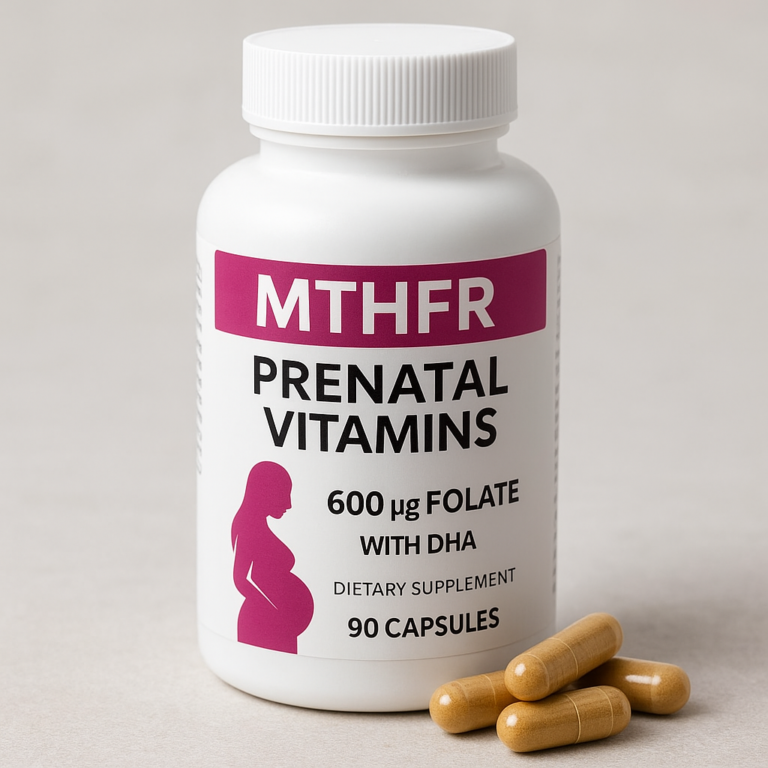
Prenatal vitamin brands with methylfolate can be worth comparing, but don’t assume methylfolate is better than folic acid for preventing neural-tube defects. Check the exact folate form and dose, then choose a prenatal that fits your clinician’s advice, your nutrient needs, and the format you can actually take.
The label can make this trickier than it sounds: “600 mcg DFE” and “600 mcg methylfolate” aren’t necessarily the same thing. And a one-a-day tablet may feel like a tiny triumph when nausea turns a handful of capsules into a daily obstacle course.
Below, we compare 12 brands and explain what to check for folate, iron, iodine, choline, DHA, serving size, and quality claims. One important surprise: a product marketed with “active folate” does not automatically replace the CDC’s recommendation for folic acid before and during early pregnancy.
Key Takeaways
- Folic acid remains the form specifically recommended by the CDC for people who could become pregnant; ask your clinician how a methylfolate prenatal fits your care plan.
- Compare labels carefully: Check folate form and units, serving size, iron, iodine, choline, vitamin D, and whether DHA is included.
- Methylfolate-only formulas aren’t automatically superior, including for people with common MTHFR variants.
- The best prenatal is one that meets your needs and is tolerable enough to take consistently.
- Verify current formulas directly with the manufacturer: prenatal labels and availability can change.
Explore the brands mentioned:
- Thorne Basic Prenatal: Thorne Official
- FullWell Prenatal Multivitamin: FullWell Official
- Needed Prenatal Multi: Needed Official
- Perelel Prenatal Packs: Perelel Official
- Ritual Essential Prenatal: Ritual Official
- MegaFood Baby & Me 2: MegaFood Official
- New Chapter One Daily with Methylfolate + Choline: Target | New Chapter
Table of Contents
- ⚡ Quick Tips and Facts: Prenatal Vitamins with Methylfolate
- 🧬 Background: What Methylfolate Means in Prenatal Nutrition
- Folate, folic acid, and 5-MTHF: What’s the difference?
- Why folate matters before and during pregnancy
- 🔎 How We Evaluated Prenatal Vitamin Brands with Methylfolate
- Label checks: folate form, dose, and serving size
- Third-party testing, ingredient quality, and transparency
- 🏆 12 Prenatal Vitamin Brands with Methylfolate to Compare
- 1. Thorne Basic Prenatal
- 2. FullWell Prenatal Multivitamin
- 3. Needed Prenatal Multi
- 4. Perelel Prenatal Packs
- 5. Ritual Essential Prenatal
- 6. MegaFood Baby & Me 2 Prenatal Multi
- 7. New Chapter Perfect Prenatal
- 8. Garden of Life mykind Organics Prenatal Multi
- 9. SmartyPants Prenatal Formula
- 10. Designs for Health Prenatal Pro
- 11. Seeking Health Optimal Prenatal
- 12. Nature Made Prenatal Multi + DHA
- 📊 Prenatal Methylfolate Brands at a Glance
- Compare folate form, amount, and key nutrients
- Capsules, tablets, gummies, powders, and daily packs
- 🧠 How to Choose the Right Methylfolate Prenatal
- Match your prenatal to your dietary needs
- Consider nausea, pill size, and ease of taking it
- Check iron, iodine, choline, vitamin D, and DHA
- When a separate supplement may be needed
- 🧪 Methylfolate vs. Folic Acid in Pregnancy
- What research says about folate forms
- MTHFR variants: What they do and don’t mean
- Can a prenatal contain both folic acid and methylfolate?
- 📏 How Much Folate Do You Need Before and During Pregnancy?
- Recommended amounts for preconception and pregnancy
- Understanding mcg DFE and folate label claims
- When high-dose folic acid requires medical guidance
- 🗓️ Prenatal Methylfolate Through Each Stage
- Preconception and trying to conceive
- First trimester
- Second and third trimesters
- Postpartum and breastfeeding
- ⚠️ Safety, Side Effects, and Medication Considerations
- Common prenatal vitamin side effects
- Taking prenatal vitamins with food or other supplements
- Who should ask a clinician before choosing methylfolate
- 🛒 Where to Buy Prenatal Vitamins with Methylfolate
- How to spot misleading labels and quality claims
- Storage, expiration dates, and subscription considerations
- ❓ Frequently Asked Questions
- Is methylfolate better than folic acid in a prenatal vitamin?
- Do all prenatal vitamins contain methylfolate?
- Can I take methylfolate while trying to conceive?
- Can methylfolate cause side effects?
- Should I take extra folate if I have an MTHFR variant?
- What if my prenatal vitamin makes me nauseated?
- Conclusion
- Recommended Links
- Reference Links
⚡ Quick Tips and Facts: Prenatal Vitamins with Methylfolate
This guide to vitamin brands and supplements is for comparing labels and asking better questions—not replacing prenatal care.
- Folic acid is the form specifically recommended by the CDC for people who could become pregnant: 400 mcg daily, including before conception. Evidence that methylfolate prevents neural-tube defects as well as folic acid is not established. CDC folic acid guidance
- Methylfolate is also called 5-MTHF or L-5-methyltetrahydrofolate. It is a form of folate used in the body, but “active” does not automatically mean “clinically superior.”
- Don’t choose by the front label alone. Check folate form and amount, iron, iodine, vitamin D, choline, serving size, and whether DHA is included.
- A prenatal vitamin is a nutritional back-up, not a substitute for food or individualized medical advice. Your needs can change with diet, labs, pregnancy stage, medications, and health history.
- Gummies often leave gaps. Many omit iron, and some contain little or no choline. Read the Supplement Facts panel rather than trusting the gummy’s cheerful packaging.
- Methylfolate-only is not automatically the safest option for preventing neural-tube defects. Ask your clinician whether your prenatal should provide folic acid, methylfolate, or both—especially if you have a history of neural-tube defects or take medications that affect folate.
- Prenatal vitamins are regulated as dietary supplements, not approved by the FDA for effectiveness before sale. Look for transparent labels and credible independent quality testing, while remembering that testing does not prove a product prevents pregnancy complications. FDA: Dietary Supplements
Quick comparison
| Label question | Why it matters |
|---|---|
| Does it list folic acid, 5-MTHF, or both? | The form affects how you compare the product with guidelines and your clinician’s advice. |
| Is the quantity stated as mcg DFE, folic acid, or 5-MTHF? | These units and forms are not always directly interchangeable. |
| Does it contain iron and iodine? | Prenatal formulas vary; a “complete” label may still leave nutrients out. |
| Is choline included in a meaningful amount? | Many prenatals provide only a fraction of the pregnancy Adequate Intake of 450 mg. |
| Can you tolerate the serving size? | A theoretically excellent formula is no help if it lives unopened in the cupboard. |
We’ll compare familiar brands and their label claims below. One recurring surprise: the product with the most nutrients is not necessarily the best fit—and the answer to “Which folate form wins?” is more nuanced than a label slogan suggests.
🧬 Background: What Methylfolate Means in Prenatal Nutrition
Folate is a B vitamin involved in DNA production and cell division. Those jobs matter throughout life, and especially during early pregnancy, when the neural tube forms. The neural tube develops very early—often before someone knows they’re pregnant—which is why preconception guidance matters. CDC: About Folic Acid
Folate, folic acid, and 5-MTHF: What’s the difference?
Folate is the umbrella term for vitamin B9 forms found naturally in food and in supplements. Folic acid is the stable form used in many supplements and fortified foods. 5-MTHF, also called methylfolate or L-5-methyltetrahydrofolate, is a reduced folate form used in the body.
| Term on a label | What it refers to | What to remember |
|---|---|---|
| Folate | General name for vitamin B9 | May refer to food folate or supplemental forms. |
| Folic acid | A specific form used in supplements and food fortification | It is the form with direct public-health evidence for reducing neural-tube defects. |
| 5-MTHF / L-methylfolate | A reduced, metabolically active folate form | Some people prefer it, but proven superiority for neural-tube-defect prevention has not been demonstrated. |
| mcg DFE | Dietary folate equivalents | A label unit intended to account for differences in folate forms and absorption. |
| mcg folic acid | Amount of folic acid itself | Compare this with guidance carefully; it is not always the same number as mcg DFE. |
The National Institutes of Health (NIH) notes that supplemental folate may appear as folic acid or 5-MTHF, while public-health recommendations for preventing neural-tube defects specifically emphasize folic acid. NIH Office of Dietary Supplements: Folate
The practical takeaway: Don’t assume “methylated” means better for everyone. Ask what the serving provides, in which form, and whether it meets the folic-acid recommendation relevant to your situation.
Why folate matters before and during pregnancy
Folate supports normal cell division and the formation of genetic material. Adequate folic acid before and during early pregnancy lowers the risk of neural-tube defects, including spina bifida and anencephaly. The CDC recommends 400 mcg of folic acid daily for people who could become pregnant, in addition to folate from food. CDC guidance
Pregnancy nutrient targets cover more than folate. For example, the NIH lists pregnancy RDAs of 27 mg iron, 220 mcg iodine, 600 IU vitamin D, 2.6 mcg vitamin B12, and 450 mg choline for adults. These are reference targets—not instructions to stack supplements until every box is checked. NIH ODS: Dietary Supplements and Pregnancy
| Nutrient | Pregnancy reference amount for adults | Common prenatal label question |
|---|---|---|
| Folate | 600 mcg DFE (RDA) | Does the product also provide folic acid in the form recommended for neural-tube-defect prevention? |
| Iron | 27 mg (RDA) | Is it included, and can you tolerate it? |
| Iodine | 220 mcg (RDA) | Is it present, and is your thyroid history relevant? |
| Vitamin D | 600 IU / 15 mcg (RDA) | Does your clinician recommend more based on your status? |
| Choline | 450 mg (Adequate Intake) | Is there enough in the prenatal, or will food contribute the rest? |
| DHA | No U.S. pregnancy RDA | Is it included, or is a separate fish- or algae-based product appropriate? |
Reference values vary by age and circumstances. These numbers are not a personalized prescription.
🔎 How We Evaluated Prenatal Vitamin Brands with Methylfolate
Our health-professional team compares what the label says, how usable the formula appears, and whether claims are supported by dependable evidence. We do not treat marketing language, testimonials, or a long ingredient list as proof of better pregnancy outcomes.
Label checks: folate form, dose, and serving size
For each product, check the current Supplement Facts panel and confirm:
- Folate form: Is it folic acid, 5-MTHF, or a blend?
- Amount and units: Is the listed amount in mcg DFE, mcg folic acid, or both?
- Daily serving: Does the label require one tablet, several capsules, or a packet?
- Other key nutrients: Note iron, iodine, vitamin D, choline, B12, and any DHA.
- Directions and cautions: Look for food instructions, allergen statements, and medication warnings.
Formulas can change. Retailer pages may also show an old label or incomplete nutrient list, so the manufacturer’s current label should be the final check.
Third-party testing, ingredient quality, and transparency
Independent testing seals can offer reassurance about identity or contaminants, but they do not mean the FDA has approved a product or that the formula has been proven to prevent birth defects. The FDA explains that dietary supplements are not approved for safety and effectiveness before marketing in the way prescription drugs are. FDA supplement overview
Useful questions to ask a brand:
- Does it publish a full Supplement Facts panel and ingredient list?
- Can it explain the folate form and serving amount clearly?
- Does it identify relevant testing or certification and what that testing covers?
- Are allergens and excipients disclosed?
- Does customer support answer questions about the exact lot or formula?
A beautiful bottle and a “clean” claim are not substitutes for readable facts. We’d rather see a plain label that tells the truth than a botanical parade that obscures the dose.
🏆 12 Prenatal Vitamin Brands with Methylfolate to Compare
The list below is a comparison starting point, not a ranking of medical effectiveness. Brands may reformulate, and retailer listings can lag behind. Before buying, verify the current folate form and amount on the brand’s own label. A product’s presence in this list does not mean every version contains methylfolate.
| Product | Label/format note | What to verify before purchase | Best suited to consider if… |
|---|---|---|---|
| Thorne Basic Prenatal | Multi-capsule daily serving | Current folate form, iron, iodine, and serving size | You want a professional-channel brand and can manage several capsules |
| FullWell Prenatal Multivitamin | Multi-capsule formula | Folate form, full nutrient amounts, and separate DHA needs | You prefer a comprehensive capsule formula |
| Needed Prenatal Multi | Brand markets a multi-nutrient formula | Confirm the current folate form and amount; don’t infer from brand messaging | You value a detailed nutrition approach |
| Perelel Prenatal Packs | Stage-oriented daily packs | Exact contents and folate form of the pack for your stage | Pre-sorted daily packets appeal to you |
| Ritual Essential Prenatal | Two-capsule daily product | Current folate form, iron amount, and included/excluded nutrients | You prefer a streamlined formula and clear ingredient sourcing |
| MegaFood Baby & Me 2 Prenatal Multi | Tablet format | Current folate form, iron, iodine, and serving size | You prefer tablets and a food-based marketing approach |
| New Chapter Perfect Prenatal | Multi-tablet formula | Check its current label; do not assume it matches the separate One Daily product | You want to compare a whole-food-style formula |
| Garden of Life mykind Organics Prenatal Multi | Tablet format | Current folate form, iron, iodine, and label claims | You’re looking for an organic-branded option |
| SmartyPants Prenatal Formula | Gummy format | Whether iron is included; check folate form and serving size | Gummies are easier for you to take consistently |
| Designs for Health Prenatal Pro | Multi-capsule formula | Current label, folate form, and clinician fit | You use practitioner-guided supplements |
| Seeking Health Optimal Prenatal | Multi-capsule formula | Current label and whether the folate blend suits your needs | You’re comparing formulas with active folate forms |
| New Chapter Prenatal with Methylfolate + Choline One Daily | One-tablet product listed by Target | Current availability, label amount, and full nutrient panel | A one-tablet format is a priority |
Important: We cannot responsibly claim every product above contains methylfolate based on its brand name or an outdated listing. For a methylfolate-specific purchase, verify the exact phrase 5-MTHF, L-5-methyltetrahydrofolate, or methylfolate on the current label.
1. Thorne Basic Prenatal
Thorne’s Basic Prenatal is a multi-capsule formula. Its professional-facing brand profile and current Supplement Facts panel are the best places to confirm its exact folate form, dose, and accompanying nutrients. A multi-capsule serving may make it harder to take during nausea, but it can also allow a formula to spread nutrients across several capsules.
Potential advantages
- Established supplement brand with a detailed product page.
- Capsule format may suit people who dislike gummies or chewables.
- The brand offers label information to check against your clinician’s advice.
Potential drawbacks
- Several capsules can feel like a chore.
- Don’t assume “prenatal” means it covers DHA or the full choline target.
- Confirm the current folate form rather than relying on third-party descriptions.
Thorne Basic Prenatal Official Website
2. FullWell Prenatal Multivitamin
FullWell presents its prenatal as a comprehensive multi-capsule formula. Its “more is better” appeal depends on the actual nutrient amounts and your needs—not simply the number of capsules or ingredients. Check the current label for whether folate is provided as 5-MTHF, folic acid, or another form, and consider whether a separate DHA product is appropriate.
Potential advantages
- Detailed formulation information from the manufacturer.
- A capsule format allows more room for nutrients than many gummies.
- May appeal to people who prefer a broader nutrient profile.
Potential drawbacks
- The daily capsule count may be substantial.
- A detailed formula can still be a poor fit for a particular medication, diet, or lab result.
- Verify whether the product includes DHA and enough choline for your individual plan.
FullWell Prenatal Multivitamin Official Website
3. Needed Prenatal Multi
Needed describes its product as a prenatal multi for fertility, pregnancy, and postpartum, and markets a 22-nutrient formula. The product page has used claims such as “8x more nutrition” compared with an average of leading prenatals across selected nutrients and “1,000,000+ Prenatals Sold.” These are brand claims, not independent proof of better pregnancy outcomes. The supplied product information does not establish the folate form or dose, so check the current label directly. Needed Prenatal Multi
Potential advantages
- Intended for multiple reproductive stages.
- Provides a detailed nutrient-focused product page.
- Could suit someone comfortable with a multi-capsule routine.
Potential drawbacks
- “8x more” depends on which nutrients and products are compared; it does not mean eight times better.
- The folate form and amount must be verified on the current Supplement Facts panel.
- The brand’s claim that many women remain nutritionally depleted is not a substitute for an individual assessment.
Needed Prenatal Multi Official Website
4. Perelel Prenatal Packs
Perelel sells stage-oriented prenatal packs. Pre-sorted packets can reduce the “Which bottle did I already take?” morning scramble, but the exact contents may vary by pack and stage. Review each pack’s product label for folate form and amount, iron, choline, iodine, and any add-on products.
Potential advantages
- Convenient organization for people who prefer daily packets.
- Stage-based product options can make comparing needs easier.
- Product pages typically lay out the individual pack components.
Potential drawbacks
- Multiple capsules and add-ons can complicate the routine.
- A stage-specific label is not a substitute for care from your prenatal clinician.
- Check for duplicate nutrients if you add separate supplements.
Perelel Prenatal Official Website
5. Ritual Essential Prenatal
Ritual Essential Prenatal is a two-capsule daily product with a brand emphasis on traceable ingredients. Confirm its current folate form, iron amount, and what it does not include. A streamlined formula can be useful, but “fewer ingredients” may mean you need to plan for nutrients such as choline or DHA elsewhere.
Potential advantages
- Clear brand presentation and ingredient-sourcing information.
- A set two-capsule serving may be easier to track than a larger stack.
- Useful for comparison if you want a formula that states what is included and omitted.
Potential drawbacks
- May not provide every nutrient you need from supplements.
- Iron can be difficult for some people tolerate.
- Verify the exact folate form and dose on the current label.
Ritual Essential Prenatal Official Website
6. MegaFood Baby & Me 2 Prenatal Multi
MegaFood Baby & Me 2 is a tablet-format prenatal. The brand’s sourcing and food-based language may appeal to some shoppers, but the deciding details are still the Supplement Facts panel, daily serving size, and quality information. Check the label for the current folate form, iron, iodine, and choline.
Potential advantages
- Tablet format may suit people who dislike capsules.
- Brand provides product information for label comparison.
- A familiar option to discuss with a pharmacist or clinician.
Potential drawbacks
- Tablets may be large for people with nausea or swallowing difficulty.
- “Food-based” does not automatically mean more absorbable or more effective.
- Confirm whether the product covers the nutrients you’re specifically seeking.
MegaFood Baby & Me 2 Official Website
7. New Chapter Perfect Prenatal
New Chapter Perfect Prenatal is a different product from the brand’s Prenatal with Methylfolate + Choline One Daily. Don’t let similar names blur those labels together. Review the current Perfect Prenatal panel for folate form, serving size, iron, and other nutrients.
Potential advantages
- A long-running brand with an official product page.
- A useful comparison for shoppers interested in whole-food-style positioning.
- May suit someone who prefers a traditional multi-tablet format.
Potential drawbacks
- Do not assume it has the same methylfolate-and-choline formula as the One Daily product.
- Verify current availability and label details.
- Food-based or fermented positioning is not evidence of superior pregnancy outcomes.
New Chapter Perfect Prenatal Official Website
8. Garden of Life mykind Organics Prenatal Multi
Garden of Life mykind Organics Prenatal Multi is an organic-branded prenatal option. Organic certification may matter to your ingredient preferences, but it does not tell you whether the formula provides the folate form, iron, iodine, or choline you need. Compare the exact label, not just the front-panel seal.
Potential advantages
- Relevant for shoppers prioritizing organic-branded products.
- Brand publishes product and ingredient information.
- Tablet format may be preferable to a gummy.
Potential drawbacks
- Tablets may be difficult to swallow during nausea.
- Organic status does not guarantee a complete prenatal nutrient profile.
- Confirm the label’s folate form and dose.
Garden of Life mykind Organics Official Website
9. SmartyPants Prenatal Formula
SmartyPants Prenatal uses a gummy format. Gummies can be easier for some people tolerate, but they have less room for minerals and may not include iron. If you choose a gummy, check for iron, folate form, serving size, sugar or sweeteners, and the need for a separate supplement.
Potential advantages
- Chewable format may help people who struggle with pills.
- Convenient for a routine that needs to be easy to remember.
- Product label can be checked against your current nutrient plan.
Potential drawbacks
- Gummies commonly omit iron; confirm rather than assume.
- Multiple gummies may be required per daily serving.
- A gummy prenatal may leave gaps in choline, iodine, or other nutrients.
SmartyPants Prenatal Official Website
10. Designs for Health Prenatal Pro
Designs for Health Prenatal Pro is a practitioner-oriented product to compare with your clinician or dietitian. Carefully inspect the current Supplement Facts panel for folate form, amount, serving size, iron, iodine, and vitamin A form.
Potential advantages
- Product information is available directly from the manufacturer.
- May fit a clinician-guided supplement plan.
- Capsule format offers room for a broader nutrient formula.
Potential drawbacks
- Serving size may be more involved than a one-a-day.
- Practitioner-oriented branding does not remove the need to check for interactions.
- Confirm the label meets your folic-acid plan rather than assuming all folate forms are equivalent.
Designs for Health Prenatal Pro Official Website
11. Seeking Health Optimal Prenatal
Seeking Health Optimal Prenatal is another product worth checking when comparing active folate forms. The brand’s current label should specify the exact folate ingredient and dose. People with a complicated medical history, medication use, or a prior pregnancy affected by a neural-tube defect should ask their clinician before choosing a methylfolate-only product.
Potential advantages
- Brand provides a product page and detailed supplement information.
- Relevant to shoppers specifically comparing active folate forms.
- Capsule format may suit people who prefer non-gummy products.
Potential drawbacks
- Verify whether the formula supplies folic acid as well as 5-MTHF.
- Do not use an MTHFR result alone to self-prescribe a high dose.
- Confirm serving size and nutrient overlap with other supplements.
Seeking Health Optimal Prenatal Official Website
12. New Chapter Prenatal with Methylfolate + Choline One Daily
This is the clearest product in the list by name for shoppers looking specifically for methylfolate and choline: New Chapter Prenatal with Methylfolate + Choline One Daily. The Target listing describes a one-tablet daily product and highlights methylfolate, choline, fermented nutrients, probiotics, ginger, and iron. The listing supplied for this guide showed out of stock, and it did not provide a review score. Availability and formula can change, so confirm both before relying on it.
Potential advantages
- One-tablet format is unusually convenient.
- The product is explicitly marketed with methylfolate and choline.
- The listing identifies iron and ginger among its features.
Potential drawbacks
- A one-tablet serving does not guarantee that every nutrient is present in your desired amount.
- Check whether the folate amount is listed as mcg DFE and how much is 5-MTHF.
- Retail listing availability and reviews may be incomplete or change over time.
New Chapter One Daily at Target | New Chapter Official Website
What about customer reviews?
Reviews can reveal practical details—pill size, aftertaste, shipping, or whether a gummy sticks to your teeth like a tiny fruit-flavored tire. They cannot establish that a prenatal prevents a birth defect or is safe for every pregnancy. We did not rely on unverified star ratings as clinical evidence; check current retailer reviews for recent, product-specific experiences and weigh them as anecdotes.
📊 Prenatal Methylfolate Brands at a Glance
Compare folate form, amount, and key nutrients
A product comparison is useful only when the exact formula is verified. Use this table as a label-reading checklist, not as a claim that every product has the same or a confirmed methylfolate formula.
| Brand/product | Folate form to confirm | Iron | Choline | DHA | Serving format |
|---|---|---|---|---|---|
| Thorne Basic Prenatal | Check current label | Check label | Check label | Check label | Multiple capsules |
| FullWell Prenatal Multivitamin | Check current label | Check label | Check label | Check label | Multiple capsules |
| Needed Prenatal Multi | Check current label | Check label | Check label | Check label | Capsules |
| Perelel Prenatal Packs | Check pack-specific label | Check pack label | Check pack label | Check pack label | Daily packets |
| Ritual Essential Prenatal | Check current label | Check label | Check label | Check label | Capsules |
| MegaFood Baby & Me 2 | Check current label | Check label | Check label | Check label | Tablets |
| New Chapter Perfect Prenatal | Check current label | Check label | Check label | Check label | Tablets |
| Garden of Life mykind Organics | Check current label | Check label | Check label | Check label | Tablets |
| SmartyPants Prenatal | Check current label | Often needs verification | Check label | Check label | Gummies |
| Designs for Health Prenatal Pro | Check current label | Check label | Check label | Check label | Capsules |
| Seeking Health Optimal Prenatal | Check current label | Check label | Check label | Check label | Capsules |
| New Chapter One Daily | Methylfolate marketed; verify amount | Listed feature; verify amount | Methylfolate + choline marketed | Check label | One tablet |
The table is deliberately cautious: labels can change, and we don’t want you buying based on an old formula screenshot. NIH’s pregnancy fact sheet offers nutrient reference values and discussion of folate, iron, iodine, vitamin D, choline, and more. NIH ODS: Pregnancy
Capsules, tablets, gummies, powders, and daily packs
| Format | Potential upside | Potential trade-off |
|---|---|---|
| Capsules | Often easier to split across the day; room for more nutrients | May require several capsules and can be hard during nausea |
| Tablets | Familiar, sometimes one-a-day | Can be large or dense |
| Gummies | Easier for some people to chew and tolerate | May omit iron or have limited space for minerals |
| Powders | Can be mixed into food or drinks | Taste, texture, and accurate serving size matter |
| Daily packs | Convenient organization | May include multiple pills and increase duplicate-supplement risk |
Real-life tip: If nausea is the barrier, ask your clinician or pharmacist whether changing timing, taking the vitamin with food, or switching format is appropriate. Don’t stop a prescribed iron or folate plan without discussing it.
🧠 How to Choose the Right Methylfolate Prenatal
There is no universally best prenatal. The best match is one that fits your clinical plan, diet, tolerability, and label needs—and that you can take consistently.
Match your prenatal to your dietary needs
Start with what you already eat and any known deficiencies. A vegan diet, food allergies, thyroid condition, prior bariatric surgery, anemia, or gastrointestinal condition can change the conversation. For example, vitamin B12 is naturally found mainly in animal foods, while iodine intake depends partly on food choices and whether salt is iodized. NIH ODS: Vitamin B12 | NIH ODS: Iodine
Ask:
- Do I eat animal products, dairy, eggs, seafood, or fortified foods?
- Have I been diagnosed with anemia, low vitamin D, thyroid disease, or a nutrient deficiency?
- Do I take thyroid medication, anti-seizure medication, methotrexate, or another medicine that may affect nutrient needs?
- Has my clinician recommended a specific folic-acid dose based on pregnancy or family history?
Our broader essential vitamins guide and multivitamin supplement resources can help you understand label terminology—but your care team should personalize the plan.
Consider nausea, pill size, and ease of taking it
A prenatal with an impressive nutrient panel is not a win if you can’t keep it down. Try this step-by-step approach with clinician approval:
- Check timing instructions. Some products are intended to be taken with food.
- Consider the format. A smaller capsule, tablet, gummy, or split dose may be easier.
- Avoid doubling up. Don’t take a second product simply because the first one was vomited without advice.
- Tell your clinician if vomiting is persistent. Dehydration or inability to keep supplements and food down deserves medical attention.
The video perspective referenced in this article at #featured-video emphasizes a practical truth: the prenatal you can consistently take matters. But consistency does not mean every formula is interchangeable; folic acid’s evidence base still deserves its own place in the decision.
Check iron, iodine, choline, vitamin D, and DHA
Folate gets the spotlight, but the supporting cast matters.
- Iron: Pregnancy RDA is 27 mg for adults. Iron can cause constipation or nausea; do not add extra iron without checking your total intake and medical advice. NIH ODS: Iron
- Iodine: Pregnancy RDA is 220 mcg for adults. Not all prenatal products contain it, and thyroid conditions warrant individualized advice. NIH ODS: Iodine
- Choline: Pregnancy Adequate Intake is 450 mg for adults. Many people get some from food, especially eggs and meat, but prenatal supplements may include only a portion. NIH ODS: Choline
- Vitamin D: Pregnancy RDA is 600 IU (15 mcg) for adults; a clinician may recommend a different plan based on testing or risk factors. NIH ODS: Vitamin D
- DHA: Some prenatals include it; others don’t. Ask about dietary fish intake, fish-oil quality, or an algae-based option if appropriate. NIH discusses omega-3s and pregnancy as part of its omega-3 fact sheet.
When a separate supplement may be needed
A prenatal may not cover your full needs for choline, DHA, calcium, iron, or vitamin D. That does not mean you should stack supplements at random. Add-ons should be chosen with a clinician or pharmacist because duplicate doses can create problems, and some nutrients have upper limits. For instance, excessive preformed vitamin A (retinol) can be harmful in pregnancy; beta-carotene is a different form. NIH ODS: Vitamin A
🧪 Methylfolate vs. Folic Acid in Pregnancy
What research says about folate forms
Methylfolate is a biologically active folate form. That fact is useful, but it does not establish that it prevents neural-tube defects better than folic acid. The CDC’s guidance specifically recommends folic acid for people who could become pregnant, while NIH describes folate forms and the evidence around them. CDC | NIH ODS: Folate
A useful perspective from the video discussion at #featured-video: it notes that methylfolate has good bioavailability but that evidence has not shown it is superior to folic acid for preventing neural-tube defects. The video suggests adding folic acid if a prenatal contains only methylfolate. Treat that as a cautionary opinion, not a self-prescribing instruction: ask your obstetric clinician or pharmacist before combining products.
How to reconcile the claims:
- Brand claim: “Active folate” may describe the form in the product.
- Clinical evidence: A form’s biological activity does not alone prove superior prevention of a specific birth defect.
- Public-health recommendation: CDC specifically recommends 400 mcg folic acid daily for people who could become pregnant.
- Personal decision: Your clinician can account for your history, dose, other supplements, and medications.
MTHFR variants: What they do and don’t mean
Common MTHFR gene variants can affect folate metabolism, but they do not mean that everyone with a variant must avoid folic acid or take high-dose methylfolate. The CDC states that people with common MTHFR variants can process folic acid, and folic acid intake is more important than knowing MTHFR genotype for raising blood folate. CDC: MTHFR Gene Variant and Folic Acid
Be cautious about online claims that an MTHFR result diagnoses “methylation failure” or automatically dictates a particular prenatal. If you have a known variant and are planning pregnancy, discuss the report with a qualified clinician rather than escalating supplements on your own.
Can a prenatal contain both folic acid and methylfolate?
Yes, a formula may provide more than one folate form, but the label should make the amounts and units understandable. Don’t add a separate folic-acid pill just because a product contains methylfolate—or stack multiple prenatal products—without checking the total daily amount with a clinician. The CDC recommendation and your individual care plan should guide the decision.
📏 How Much Folate Do You Need Before and During Pregnancy?
Recommended amounts for preconception and pregnancy
The CDC recommends 400 mcg folic acid daily for people who could become pregnant. During pregnancy, the folate RDA for adults is 600 mcg DFE; this is a dietary reference value, not a direct instruction to take that amount of a single supplement form. CDC | NIH ODS: Folate
Some people need a clinician-directed higher dose because of specific medical or pregnancy-history factors. Do not use a high-dose product based only on a social-media post or a genetic test result.
Understanding mcg DFE and folate label claims
Labels may show mcg DFE and also list the amount and form of supplemental folate. DFE accounts for differences in how folate forms are absorbed. That means two labels showing the same number in different units may not represent the same thing.
Step-by-step label check:
- Find the folate line in Supplement Facts.
- Read the unit: mcg DFE, mcg folic acid, or another stated form.
- Look for the ingredient source in parentheses, such as folic acid or L-5-MTHF.
- Confirm the serving size; the amount may be for two or more pills.
- Compare the product with your clinician’s recommendation—not just with another label’s headline number.
When high-dose folic acid requires medical guidance
A history of a pregnancy affected by a neural-tube defect, certain medications, malabsorption, or other clinical factors may change the recommended dose. The appropriate amount depends on the situation, and high-dose folic acid should be clinician-directed. The CDC advises people with a prior affected pregnancy to consult a healthcare provider about the appropriate dose. CDC folic-acid guidance
🗓️ Prenatal Methylfolate Through Each Stage
Preconception and trying to conceive
Because neural-tube development happens early, folic-acid guidance applies before pregnancy, not only after a positive test. If you’re trying to conceive, ask your clinician which prenatal best matches your health history and whether it should contain folic acid, methylfolate, or both.
First trimester
Early pregnancy is when nausea often turns the supplement routine into an Olympic event. If you can’t tolerate a prenatal, tell your clinician; they can help you assess alternatives without losing sight of folic-acid guidance. Avoid starting multiple products to “make up” for a difficult week unless advised.
Second and third trimesters
Iron needs rise during pregnancy, and your clinician may recommend checking blood counts or adjusting supplementation. This is also a good time to review whether your prenatal covers iodine, choline, vitamin D, and any dietary gaps. Pregnancy nutrient needs are not solved by simply choosing the formula with the most ingredients. NIH ODS: Pregnancy
Postpartum and breastfeeding
Nutrition remains relevant after delivery, particularly if breastfeeding, but a pregnancy formula may not automatically be the ideal long-term choice. Discuss how long to continue your prenatal, whether you need iron based on blood loss or lab results, and whether your diet supports ongoing needs. The NIH’s pregnancy fact sheet also addresses lactation reference values. NIH ODS: Pregnancy and Lactation
⚠️ Safety, Side Effects, and Medication Considerations
Common prenatal vitamin side effects
Possible issues include nausea, constipation, stomach upset, or difficulty swallowing. Iron is a frequent suspect in constipation, though pregnancy itself can also affect digestion. Don’t stop or alter a prescribed supplement without discussing it with your care team.
| What you notice | What to do |
|---|---|
| Nausea after taking the prenatal | Ask whether taking it with food, at a different time, or using another format is appropriate. |
| Constipation | Review iron and total supplements with a clinician; hydration, fiber, and movement may help if medically suitable. |
| Vomiting or inability to keep fluids down | Contact your healthcare provider promptly, especially if persistent. |
| Rash, swelling, or breathing difficulty | Seek urgent medical care for a possible serious allergic reaction. |
| Unclear overlapping doses | Ask a pharmacist to review all products and medications together. |
Taking prenatal vitamins with food or other supplements
Follow the product’s directions. Iron absorption can be affected by certain foods, calcium, and medications; thyroid medication and some antibiotics can also interact with minerals. A pharmacist can help plan timing. NIH ODS: Iron
Bring the full list—prenatal, extra folate, iron, DHA, antacids, prescriptions, and herbal products—to your appointment. “Natural” does not mean interaction-free.
Who should ask a clinician before choosing methylfolate
Get personalized guidance before switching or adding supplements if you:
- Have had a pregnancy affected by a neural-tube defect.
- Take anti-seizure medication, methotrexate, or another medicine that affects folate.
- Have anemia, a thyroid condition, malabsorption, bariatric surgery, or a diagnosed nutrient deficiency.
- Have a known MTHFR result and are unsure how to interpret it.
- Already take a prenatal plus separate folate, iron, or other high-dose vitamins.
- Are pregnant and cannot tolerate your current product.
🛒 Where to Buy Prenatal Vitamins with Methylfolate
Purchase from the manufacturer or a reputable retailer, and check the exact product name, serving size, seal, expiration date, and current Supplement Facts panel. Availability may differ by region; the Target page for New Chapter’s One Daily product, for example, has shown an out-of-stock listing. Target product listing
How to spot misleading labels and quality claims
Watch for:
- “Active folate” used as if it proves better outcomes. It describes a form, not a clinical result.
- “Complete” without a full label. Check each nutrient and amount.
- “Clinically dosed” with no clear basis. Ask which ingredient, dose, and study support the claim.
- “Third-party tested” without naming what was tested. Identity, contaminants, and potency are different checks.
- A product name that resembles another formula. New Chapter Perfect Prenatal and New Chapter Prenatal with Methylfolate + Choline One Daily are not interchangeable.
Storage, expiration dates, and subscription considerations
Store supplements according to the label, away from excess heat, moisture, and children. Check the expiration date and package integrity. Before choosing automatic delivery, make sure you can change or cancel it easily and that the formula is still the one your clinician recommended.
❓ Frequently Asked Questions
Can I take a methylfolate supplement with my current prenatal vitamin?
Possibly, but don’t add it automatically. Your prenatal may already contain folate, and a separate supplement can raise your total intake or duplicate ingredients. Ask a clinician or pharmacist to review the precise forms and doses on both labels.
Which prenatal vitamins with methylfolate are gluten-free?
Gluten-free status depends on the exact product and manufacturing practices, not just the brand. The Target listing for New Chapter Prenatal with Methylfolate + Choline One Daily identifies that product as gluten-free, but verify the current package and any certification or allergen statement. For celiac disease or severe sensitivity, contact the manufacturer about cross-contact controls.
How much methylfolate should be in a prenatal vitamin?
There is no single methylfolate dose that can be recommended for everyone as a substitute for folic acid guidance. The pregnancy folate RDA is 600 mcg DFE for adults, while CDC recommends 400 mcg folic acid daily for people who could become pregnant. Because these refer to different forms and units, compare the label carefully and ask your clinician how it fits your needs. CDC | NIH ODS
Do any store-bought prenatal vitamins have active folate?
Yes, some retail prenatal products advertise methylfolate or 5-MTHF. New Chapter’s One Daily prenatal is one example by product name and listing. Still, “active folate” is not proof that a product is superior for preventing neural-tube defects; check the current label and discuss folic-acid guidance with your clinician.
What is the best methylfolate prenatal vitamin for an MTHFR gene mutation?
There is no single best product based only on an MTHFR result. The CDC says people with common MTHFR variants can process folic acid, and recommends folic acid for neural-tube-defect prevention. Choose with a clinician who can consider your history, medications, diet, and the specific label. Avoid high-dose self-treatment based on genotype alone. CDC: MTHFR and Folic Acid
Are methylfolate prenatal vitamins better than folic acid?
Not on the basis of proven neural-tube-defect prevention. Methylfolate is a biologically active form, but evidence has not established that it is better than folic acid for preventing neural-tube defects. CDC’s public-health recommendation specifically calls for folic acid. Ask your provider how to choose if you prefer methylfolate or have a medical reason to consider it.
Which prenatal vitamin brands contain 800 mcg of methylfolate?
Formulas change, and “800 mcg” may refer to mcg DFE rather than 800 mcg of 5-MTHF itself. We can’t responsibly assign that amount to a brand without confirming the current label. Search the product’s official Supplement Facts panel for the exact folate form, quantity, and serving size, then verify with the manufacturer or pharmacist.
Which prenatal vitamin brands contain 5-MTHF methylfolate?
Brands may change formulas, so verify the current label rather than relying on an old comparison chart. Look for “5-MTHF,” “L-5-methyltetrahydrofolate,” or “methylfolate” in the ingredient details. The New Chapter One Daily product listing explicitly markets methylfolate; other formulas should be checked directly with their manufacturers.
What should I look for in a prenatal vitamin with methylfolate?
Check the folate form and amount, mcg DFE, serving size, iron, iodine, choline, vitamin D, B12, vitamin A form, allergens, and quality-testing details. Also confirm whether it includes DHA. Most importantly, ask whether it fits your clinician’s folic-acid plan and your personal health history.
Which prenatal vitamins with methylfolate also contain iron and DHA?
Do not assume a prenatal includes all three just because it is marketed as comprehensive. Check the current Supplement Facts panel for methylfolate, iron, and DHA separately. If DHA is absent, ask your clinician whether a separate fish- or algae-based product makes sense; if iron is absent, do not add it without checking your needs.
Can you take prenatal vitamins with methylfolate before pregnancy?
Prenatal vitamins are commonly used before conception, but the key public-health advice is to take 400 mcg folic acid daily if you could become pregnant. If your chosen prenatal contains methylfolate only, ask your clinician whether it meets your preconception plan. CDC folic-acid guidance
Are methylfolate prenatal vitamins safe for everyone?
No supplement is right for everyone. Allergies, medications, thyroid conditions, prior pregnancy history, nutrient deficiencies, and overlapping products matter. Ask a healthcare professional before switching, adding high-dose folate, or combining several supplements.
How do you compare the dosage of methylfolate in prenatal vitamin brands?
Use the current manufacturer label and compare like with like:
- Confirm the daily serving size.
- Identify whether the amount is in mcg DFE, mcg folic acid, or mcg 5-MTHF.
- Note whether the product contains one folate form or a blend.
- Multiply only if the label’s serving requires multiple tablets or capsules.
- Have a clinician or pharmacist interpret the total alongside your diet and other supplements.
A larger number on the front of the bottle does not automatically mean a better or more appropriate prenatal.